RAMALLAH, (Palestine Foundation Information Center), The Palestine Center for Prisoners Studies revealed that 26 Palestinian prisoners in Israeli prisons suffer from cancer in its various types, amid extremely dangerous health conditions that threaten their lives with death at any moment, while they are deprived of proper treatment and what is provided to them is limited to painkillers only.
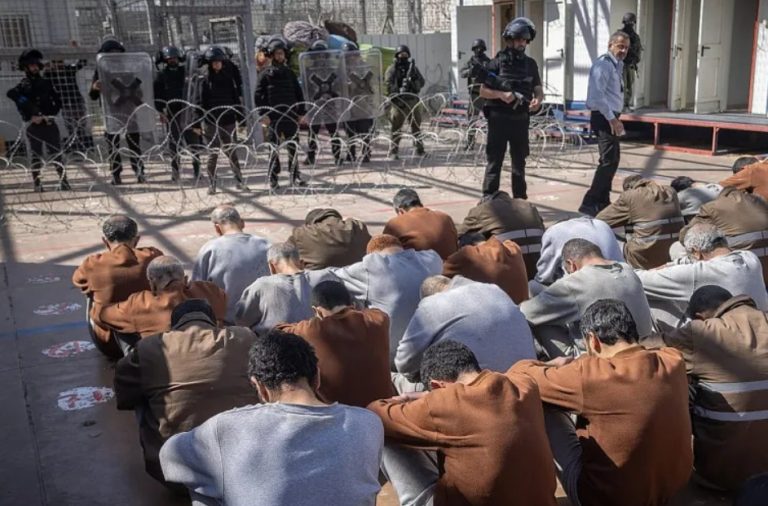
The director of the center, researcher Riyad Al-Ashqar, explained in a report issued on the occasion of World Cancer Day, which falls on February 4 every year, that prisoners with cancer are subjected to a policy of “slow death” as a result of deliberate medical negligence, the severity of their health conditions, in addition to harsh detention conditions that deprive them of the most basic necessities of life, without any distinction between a sick prisoner and a healthy one.
Al-Ashqar pointed out that the suffering of these prisoners is compounded between the pain of a serious disease that may not give its victim much time, and the tightening of detention measures and continuous abuse, especially since October 7, 2023, as Israeli prison administrations escalated restrictions against them and deprived them of their basic rights, foremost among them treatment, healthcare, and adequate food.
He clarified that cancer is the primary cause of the deaths of prisoners inside Israeli prisons prior to October 7, due to deliberate medical negligence, as Israeli authorities refuse to transfer them to civilian hospitals to receive necessary treatment and suffice with providing painkillers.
Al-Ashqar noted that the latest prisoner to die due to cancer was prisoner Mahmoud Talal Abdullah, 49, from Jenin, whose medical examinations showed that he had the disease at advanced stages, and despite the seriousness of his health condition Israeli prison service refused to release him or provide appropriate treatment, before he was transferred to Ramla Prison Hospital and then to Assaf Harofeh Hospital, where his death was announced in October of last year. He also pointed to the death of prisoner Mohammad Anwar Labad, 57, from the Gaza Strip, who was arrested during the war of genocide and died in December 2024 as a result of deliberate medical negligence after his cancer diagnosis was confirmed.
Al-Ashqar revealed that among the prisoners with cancer are two female prisoners, prisoner Fidaa Assaf, 47, from Qalqilya, who suffers from leukemia and has been detained for one year despite the seriousness of her health condition, and prisoner Suhair Zaaqiq from Al-Khalil, who suffers from fibroids and cancerous masses without receiving any appropriate treatment.
He also pointed out that a number of prisoners with cancer are among the veteran prisoners who have spent long years in Israeli prisons, most notably prisoner Jamal Ibrahim Amr from Al-Khalil, detained since 2004 and sentenced to life imprisonment, who was diagnosed with intestinal cancer in 2018 and the disease spread to the liver and kidneys as a result of medical negligence, and his health condition is described as poor. He also referred to the case of prisoner Fawaz Saba’a Ba’ara from Nablus, detained since 2004 and sentenced to life imprisonment 3 times, who suffers from cancer and serious heart problems and needs open heart surgery that Israeli authorities refuse to perform for him.
Al-Ashqar considered that the harsh detention conditions and ongoing violations inside prisons constitute a fertile environment for prisoners to contract serious diseases, pointing to the repeated announcements of new cases of cancer and incurable diseases as a result of the accumulation of medical negligence over many years, which threatens the lives of prisoners with imminent death.
He warned of the danger of the conditions experienced by prisoners with cancer, in light of Israel’s disregard for their lives and the absence of real treatment, especially urgent chemotherapy that a number of them need, stressing that this negligence has led in many cases to the release of prisoners after they reached critical health stages, while others died as a result.
Al-Ashqar called on international organizations and bodies, foremost among them the World Health Organization, to urgently intervene to save the lives of sick prisoners in general, and those with cancer in particular, and to work seriously for their release before it is too late.