BEIRUT, (Palestine Foundation Information Center), The confrontation between Israel and Hezbollah is entering a more intense and expansive phase, shifting from sporadic exchanges of fire to heavy air and missile strikes.
The escalation has been accompanied by mass evacuation warnings and the displacement of thousands of civilians from southern Lebanon. The rapid developments reflect a major shift in the rules of engagement along the northern front, raising fears that the conflict could slide into a full-scale war.
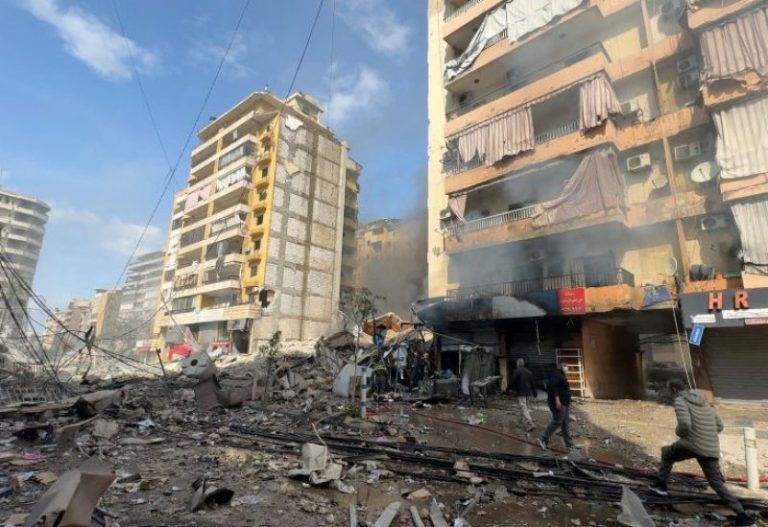
At least 11 people were killed, and no fewer than 23 others were injured early Wednesday following Israeli airstrikes on southern and eastern Lebanon.
Lebanon’s Ministry of Health reported that six people were killed and eight others wounded in Israeli attacks on the towns of Aramoun and Saadiyat in Mount Lebanon, according to local broadcaster Al-Manar.
In the eastern Lebanese city of Baalbek, Israeli strikes targeted a four-story residential building, causing multiple casualties. Lebanon’s National News Agency reported that the initial toll from the strike was four people killed and six wounded.
This brings the total number of Lebanese casualties since early Monday to 60 killed and 349 injured, according to data compiled by Anadolu based on official statements.
Meanwhile, the United Nations Children’s Fund (UNICEF) said that seven Lebanese children were killed and 38 others injured in hostilities in Lebanon within 24 hours.
The agency also reported that about 60,000 people, 18,000 of them children, were displaced from southern Lebanon within 24 hours. UNICEF noted that its emergency preparedness plan requires $48 million to assist up to one million people in Lebanon.
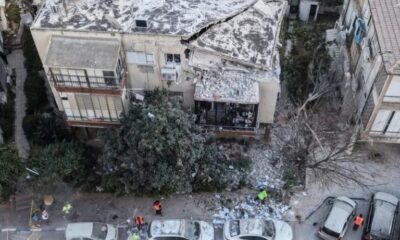
Israeli authorities have not released an official death toll from the latest rocket attacks launched from Lebanon, though Hebrew media reported material damage and a limited number of injuries.
The Israeli military said two of its soldiers were moderately wounded after an anti-tank missile struck a unit operating in southern Lebanon.
In a statement posted on the platform X, the Israeli army said the two soldiers from the 401st Brigade were injured on Wednesday when an anti-tank missile was fired toward forces operating in southern Lebanon.
Hezbollah released footage showing the targeting and destruction of a Merkava tank near Tel al-Nahas on the outskirts of the town of Kfarkela in southern Lebanon.
Israeli media reported Wednesday that Hezbollah had used a cluster rocket for the first time during the current escalation, causing material damage and destruction in the town of Metula near the border.
An Israeli official said there are attempts by Hezbollah and Iran to carry out coordinated or simultaneous missile attacks, adding that authorities are investigating whether this was the case in a recent double barrage toward Tel Aviv.
At the same time, the Israeli army issued evacuation warnings to residents across southern Lebanon, instructing them to move north of the Litani River, claiming Hezbollah’s activities were forcing it to take strong military action.
The military ordered the forced evacuation of residents from 30 towns and villages in southern Lebanon, and later expanded the warning to include 16 additional communities.
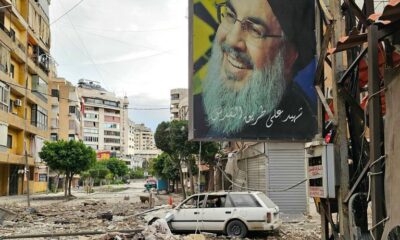
Israel also warned residents to evacuate several buildings in Beirut’s southern suburbs before launching strikes on them.
In a statement, the Israeli army said: “You must evacuate your homes immediately. Anyone located near Hezbollah operatives, facilities, or military equipment is putting their life at risk. Any house used by Hezbollah for military purposes may become a target.”
The Israeli military said it had struck more than 250 Hezbollah targets in Lebanon, including 100 targets within the past 24 hours. These included Hezbollah commanders, members of the Radwan Unit, rocket launchers, headquarters, and weapons depots.
Israel also announced that its 146th Division had returned to the western border with Lebanon after previously participating in ground incursions into Lebanese territory until May 2025.
According to the Israeli military, the move aims to “strengthen defense and readiness along the northern front.” Reserve forces attached to the division are reportedly deployed across multiple sectors as a central element in Israel’s defensive posture.
Meanwhile, the Israeli news outlet Walla reported, citing senior officers in the Northern Command, that the army has decided to continue reinforcing forces along the Lebanese border in preparation for further escalation. Additional troops are reportedly being assembled in anticipation of a potential ground operation deeper into Lebanese territory to seize more areas.
The escalation comes as part of a broader regional conflict that intensified after a US–Israeli strike on Iran on February 28, followed by Iranian responses and multi-front missile exchanges.
Senior officials within Israel’s Northern Command say the offensive in Lebanon aims to severely weaken Hezbollah while coordinating with the broader campaign currently focused on Iran.
Israeli military officials estimate that a strategic blow to Tehran could potentially lead to the collapse of Hezbollah, which relies heavily on Iranian funding. According to their assessment, damage to Iran’s capabilities would directly weaken the group.
Since October 2023, Israeli forces have killed more than 4,000 people and injured around 17,000 others during operations in Lebanon, which escalated into a full-scale war in September 2024.
Despite a ceasefire agreement reached in November 2024 between Israel and Hezbollah, Israel has continued near-daily violations, resulting in hundreds of additional casualties.