OCCUPIED JERUSALEM, (Palestine Foundation Information Center), Palestine’s Ministry of Endowments and Religious Affairs said that the month of February had witnessed a “dangerous and unprecedented escalation” in Israeli actions at the Aqsa Mosque in Jerusalem and the Ibrahimi Mosque in al-Khalil, particularly with the start of Ramadan.
In its monthly report, the ministry said Israeli occupation police forces and settlers stormed the Aqsa Mosque more than 24 times during February. At the Ibrahimi Mosque, the call to prayer was blocked 45 times.
According to the report, settler incursions into the Aqsa took place almost daily during both morning and evening hours, involving thousands of participants.
The ministry said some of the incursions included public Talmudic rituals inside the Mosque’s compound, such as prostration, singing, dancing, and the display of printed prayers, actions it described as attempts to impose a new religious reality and alter the historic status quo at the site.
The highest number of incursions was recorded on February 17 and 18, coinciding with the beginning of the Hebrew month.
Israeli forces reportedly imposed strict entry restrictions on Muslim worshippers, barred hundreds from accessing the Mosque, and conducted inspections at gates to the Old City, particularly near Bab al-Sahira and Bab al-Silsila.
The report also documented repeated incursions near the Qibli prayer hall and the Dome of the Rock during Friday sermons and prayers, even as tens of thousands of worshippers gathered, with attendance during some Ramadan Fridays exceeding 100,000, in addition to large numbers attending evening and Tarawih prayers.
Around the compound, the ministry said Israeli authorities facilitated events and rituals at the Western Wall plaza and intensified military measures in surrounding neighborhoods to restrict access for Palestinian worshippers.
The report also noted that Israel’s National Security Minister Itamar Ben-Gvir entered the Aqsa compound during the month, accompanied by the Israeli police chief and senior officers, and held a field meeting.
The ministry said Ben-Gvir’s statements about “imposing sovereignty” and tightening measures during Ramadan reflected an escalation in what it called a provocative policy toward the Mosque.
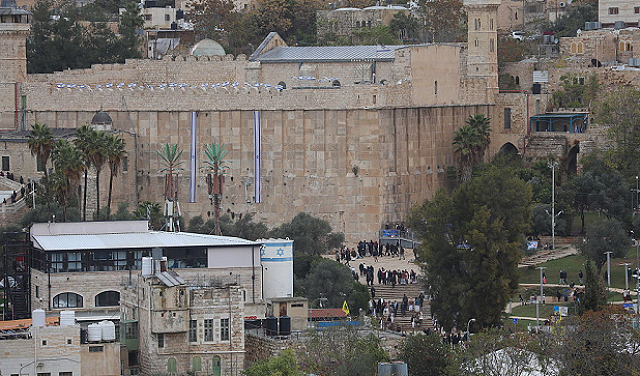
At the Ibrahimi Mosque in al-Khalil, the report said Israeli forces not only blocked the call to prayer 45 times but also held boisterous celebrations in the section of the site under Israeli control.
The eastern gate and the market entrance leading to the mosque were repeatedly closed, and some mosque custodians were barred from entry.
Ambulance and Red Crescent crews were reportedly prevented from reaching the mosque during the first two Fridays of Ramadan.
Beginning on the eleventh day of Ramadan, Israeli authorities fully closed the mosque to Muslim worshippers, citing the ongoing Israel-Iran war.
Beyond the two major religious sites, the ministry reported additional attacks on places of worship.
Settlers set fire to part of Abu Bakr al-Siddiq Mosque in the village of Tel, south of Nablus, and sprayed racist graffiti on its walls.
In a separate incident, settlers targeted the Church of the Visitation in the depopulated village of Ein Karem west of Jerusalem, vandalizing its walls and nearby vehicles with similar graffiti.
The ministry concluded that the pattern of actions in February reflects a systematic policy aimed at imposing temporal and spatial division at the Aqsa Mosque and paving the way for altering its Islamic identity.
It warned that continued escalation, coupled with what it described as international silence, poses serious risks to Islamic and Christian holy sites in occupied Jerusalem and called for urgent international intervention.