GAZA, (Palestine Foundation Information Center), Relief and food supplies to the Gaza Strip have witnessed a sharp decline amid the continued restrictions imposed by Israel on the crossings, which has worsened the humanitarian crisis experienced by more than 2.4 million Palestinians in the Strip.
The Director General of the Government Media Office in Gaza, Dr. Ismail Al-Thawabta, said that the crossings did not operate during the past period except in a very limited manner, indicating that what entered Gaza does not exceed a small fraction of the actual needs.
Al-Thawabta explained, in remarks to Anadolu Agency, that the Strip received only 640 aid trucks out of 6,000 trucks that were supposed to enter during the recent period according to the existing understandings, meaning a rate not exceeding 10% of the actual need.
A repeated pattern of restrictions
He added that these figures reflect a large gap between the growing humanitarian needs in the Strip and the volume of supplies that Israel allows to enter, which places vital sectors before major challenges in providing basic services to the population.
According to official data, these developments come within a repeated pattern of non-commitment to the understandings related to facilitating the entry of aid into Gaza.
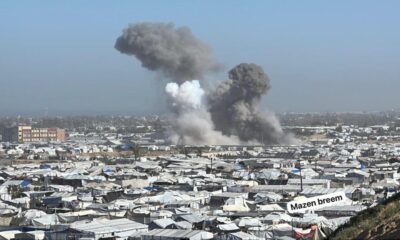
The Israeli army also continues carrying out daily violations of the ceasefire since 10 October 2025 through bombardment and gunfire, which has resulted, since the start of the truce until Monday, in the killing of 648 Palestinians and the injury of 1,728 others, according to Palestinian sources.
Israel, with American support, had launched a war of genocide on Gaza on 7 October 2023 that continued for two years, and resulted in more than 72,000 killed and about 172,000 wounded among Palestinians, in addition to widespread destruction that affected about 90% of the civilian infrastructure in the Strip.
Al-Thawabta pointed out that truck movement data shows the widening gap between the actual needs and what enters the Strip.
He said the total that has entered Gaza so far reached only 36,720 trucks out of 88,800 trucks that were supposed to enter during the past period, meaning a commitment rate not exceeding 41%.
This decline indicates the continued disruption of the flow of humanitarian and commercial supplies, including food materials and basic goods.
Escalating fuel crisis
The crisis is not limited to food materials, but extends to energy supplies that constitute a main artery for operating vital facilities in the Strip.
Al-Thawabta explained that Gaza received only 1,081 fuel trucks out of 7,400 trucks that were supposed to be brought in, meaning a rate not exceeding 14% of the actual need.
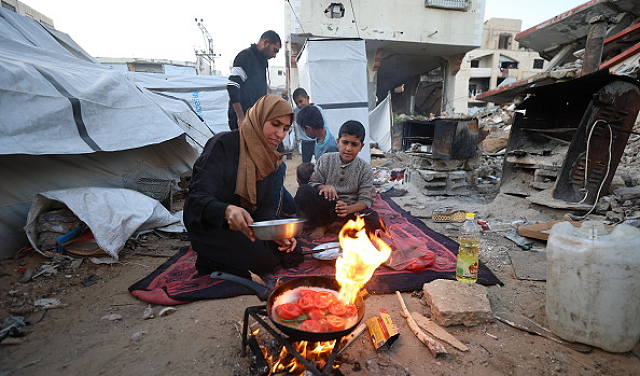
He added that the entry of cooking gas is still completely halted, which has caused a severe crisis affecting household uses and service activities.
The decline in the flow of supplies has directly affected local markets in Gaza, where vegetable markets, food items, and frozen products were affected due to the decrease in quantities arriving in the Strip, according to Al-Thawabta.
The shortage in supply also led to a noticeable rise in prices, at a time when residents suffer from declining purchasing power and rising poverty rates.
At the same time, the fuel shortage has caused the suspension or reduction of work in a number of vital sectors, particularly the water and sanitation sector due to the disruption of some pumping and treatment stations.
Municipalities were also forced to reduce waste collection operations and the operation of water wells due to the shortage of fuel needed to operate equipment and generators.
The impact of the fuel crisis extends to the health sector, as hospitals and medical facilities in Gaza mainly depend on electric generators.
Al-Thawabta warned that the continued restrictions on the entry of aid and basic supplies threaten food security for more than 1.5 million people in the Strip.