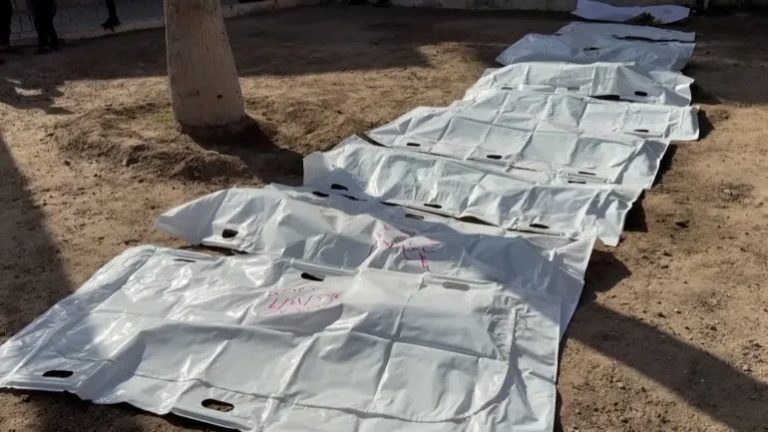
GAZA, (Palestine Foundation Information Center), Gaza’s Civil Defense teams recovered the bodies of 50 martyrs from a makeshift cemetery in the courtyard of Salah al-Din Mosque in the Zeitoun neighborhood, south of Gaza City, in preparation for their transfer to official burial sites.
Local sources reported that these bodies had been hastily buried during the Gaza genocide, due to the intensity of Israeli attacks and the collapse of emergency services. The Civil Defense confirmed that the remains were transferred to official cemeteries for proper burial according to established protocols and that search operations around the mosque are still underway.
Earlier, on December 7, Civil Defense teams had also recovered the remains of 48 Palestinians, including 25 unidentified, from makeshift graves at Al-Ahli Baptist Hospital.
Gaza’s Civil Defense and the Ministry of Health have since begun procedures to document and identify unknown victims. Each body is being assigned a unique identification number, and biological samples are collected for DNA testing, either locally if equipment becomes available or via external labs.
Civil Defense spokesperson Mahmoud Basal stated that the identification process is crucial for future recognition of the deceased and that the relocation of bodies aims to honor the martyrs through proper burials while also clearing hospital courtyards for critical medical operations.
During the Israeli genocidal war in Gaza, hundreds of bodies were buried in public squares, schoolyards, gardens, and streets. The Euro-Med Human Rights Monitor had earlier documented dozens of such improvised cemeteries across the Gaza Strip.
Since the ceasefire that began on October 10, Civil Defense units have been carrying out organized efforts to retrieve bodies from under rubble and makeshift graves. With limited resources, teams are working closely with families of the missing to identify victims through clothing or physical features.