By Dr. Sabir Abu Maryam
Secretary General, Palestine Foundation Pakistan
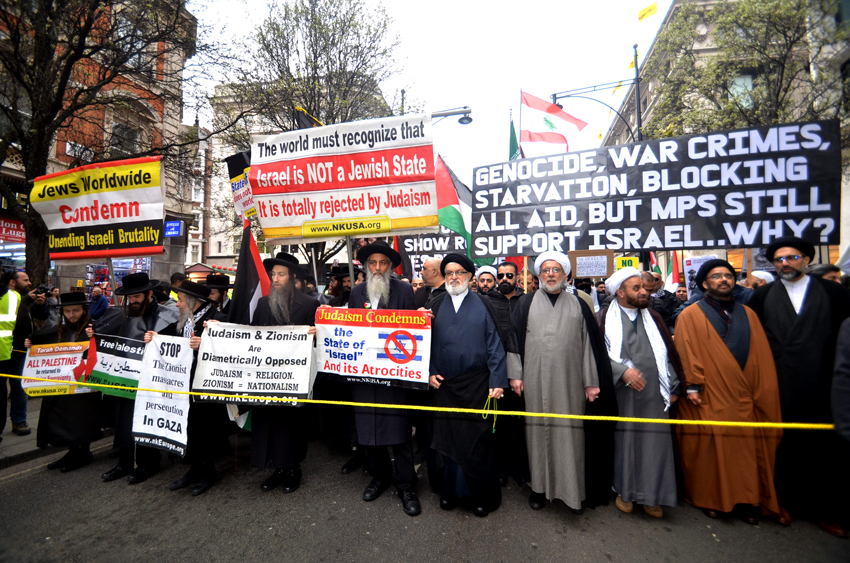
(Palestine Foundation Information Center), Across the world, the last Friday of the blessed month of Ramadan is dedicated to the first Qibla of Muslims, Al-Quds (Jerusalem). On this day, people around the globe observe International Quds Day. It is not merely a symbolic occasion; rather, it has become a powerful expression of global awareness, resistance, and solidarity with the oppressed.
The observance of this day began following a call by the founder of the Islamic Revolution in Iran, Aytollah Ruhollah Khomeini.
Imam Khomeini declared the last Friday of Ramadan as Quds Day and appealed to people across the world to unite on this day for the liberation of Palestine and the recovery of Jerusalem. He called upon the global community to raise a united voice so that the world would understand that supporters of Palestinian freedom stand together everywhere. In response to this historic appeal, Quds Day continues to be observed around the world, including in the occupied Palestinian territories themselves. Over the years, the day has become a symbol of unity for Muslims and a central occasion for freedom-loving people across the globe.
The primary objective of observing Quds Day is to ensure that the issue of Palestine remains alive in the conscience of the world. It is a reminder that Muslims and all supporters of justice must continue to raise their voices for the liberation of occupied Palestine and the holy city of Jerusalem.
Imam Khomeini emphasized in his messages that Quds Day is not an ordinary day; rather, it is a “Day of God” and a “Day of the Messenger of God.” He described it as a day for the downfall of oppressive powers. He also declared Quds Day as the day for the liberation of Palestine and stated that Israel was like a dagger planted in the heart of the Muslim world.
For several decades, Quds Day has been observed in many countries through rallies, demonstrations, conferences, and public gatherings. However, after October 7, 2023, the significance of this day has increased dramatically. On that date, the major defensive operation launched by Hamas against Israel, widely known as Operation Al-Aqsa Flood, transformed the political landscape of the entire region. The subsequent war in Gaza once again reminded the world of the gravity of the Palestinian issue.
The developments after October 7 clearly demonstrated that the question of Palestine is not merely a regional dispute but a humanitarian and global issue. The ongoing war in Gaza, the martyrdom of thousands of civilians, and the deepening humanitarian crisis have shaken the conscience of the international community. This is precisely why Quds Day has become more important than ever before, as it provides an opportunity not only to express sympathy with the Palestinian people but also to raise a collective voice against oppression.
The upcoming Quds Day in the current month of Ramadan, which will be observed globally on the 23rd of Ramadan, comes at a time when what many describe as the world’s oppressive powers, the United States, Israel, and parts of the Western world, after pursuing war and destruction in Palestine and Lebanon, are now turning their attention toward Iran. Iran is viewed by many in the region as a major obstacle to the project often referred to as “Greater Israel,” and therefore it has become a target of pressure by the United States, Israel, and their allies. If Iran were to be defeated today, it could make Israel’s complete control over Palestine easier and could potentially reshape borders across the region in line with that project.
The true message of Quds Day is resistance, perseverance, and public awakening. Over the past several decades, the Palestinian people have continued their struggle to defend their land with extraordinary patience and courage, becoming an inspiration for oppressed communities around the world. The people of Gaza and the West Bank, along with those in Lebanon, have demonstrated that even with limited resources the struggle for freedom can remain alive.
Today, the people of Gaza, Palestine, Lebanon, and Yemen have made immense sacrifices for the liberation of Jerusalem. Recently, these sacrifices have also included the former Supreme Leader of Iran, Ali Khamenei, along with his companions and family members, who are described by supporters as having embraced martyrdom in this cause.
It is a clear reality that the success of any movement is determined not only on the battlefield but also through public awareness and global public opinion. After October 7, large-scale demonstrations in support of Palestine were witnessed in many countries around the world. In cities across Europe, the United States, Asia, and Africa, millions of people took to the streets to express solidarity with the Palestinian people. This global awakening shows that the message of Quds Day has transcended borders.
The role of ordinary people in this struggle is extremely important. Despite the policies of governments, public pressure often shapes international politics. Therefore, the purpose of observing Quds Day is not merely to protest but also to build awareness, educate the younger generation about the Palestinian issue, and keep the conscience of the world awake. When millions of people across different countries raise their voices for Palestine, the message becomes clear: the struggle for justice cannot be suppressed.
All those who have sacrificed their lives in this cause have repeatedly emphasized that the voice of truth cannot be silenced. Today, Quds Day itself has become that voice of truth echoing across the world and awakening people of conscience. Although the personalities of Imam Khomeini and Imam Khamenei may no longer be physically present among us, their ideas remain alive. Their path is clear. Even if figures such as Ismail Haniyeh, Yahya Sinwar, Mohammed Deif, Hassan Nasrallah, and Hashem Safieddine, along with many others, have sacrificed their lives along this path, the direction remains the same and the objective remains clear: that through these sacrifices the downfall of Israel will ultimately come. In this sense, Quds Day represents the continuation of the blood and legacy of the martyrs of Islam.
It is within this context that the importance of Quds Day has multiplied. Today it is not only a religious or political observance but a day of awakening for the global conscience. It reminds us that remaining silent in the face of injustice in Palestine is equivalent to supporting oppression.
In conclusion, as the world passes through a new political phase and the balance of power in the region continues to shift rapidly, the message of Quds Day has become clearer than ever: resistance against oppression, solidarity with the oppressed, and a continued collective struggle for justice. This is the universal message of Quds Day and the vision of Imam Khomeini.
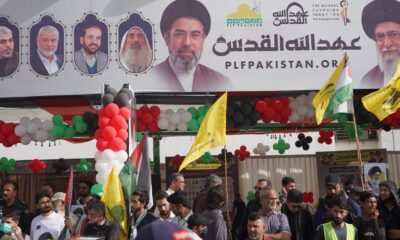
In Pakistan and throughout the Muslim world, Quds Day is observed with particular significance. In Pakistan especially, the day is marked in cities across the country with deep religious devotion and strong public sentiment. This is clear evidence that the people of Pakistan stand firmly with Palestine and with the cause of resistance.