
WEST BANK, (The Palestine Foundation Pakistan)
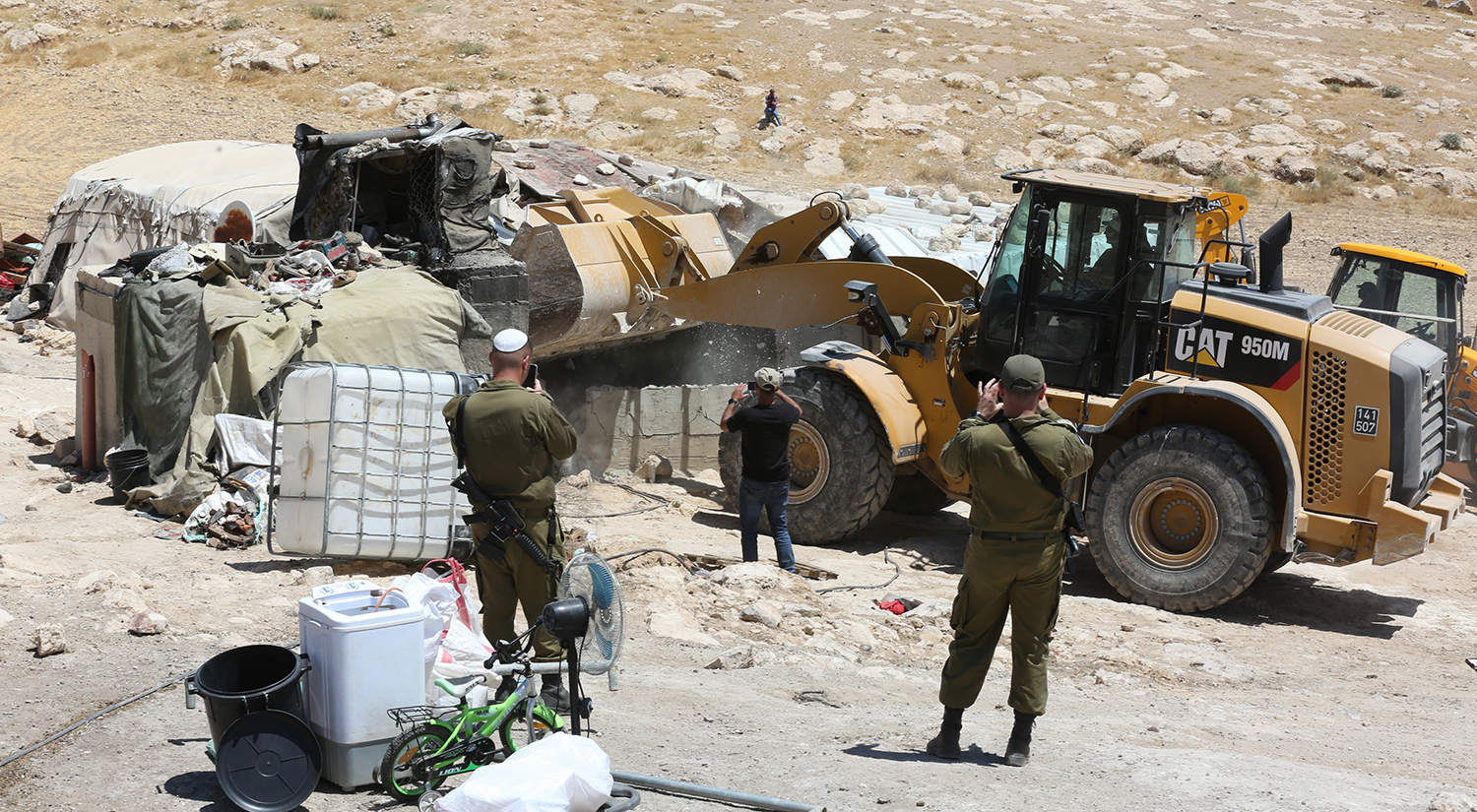
The Israeli occupation authorities issued new demolition orders on Sunday for residential and agricultural structures in the village of Atouf, east of Tammoun in the southern Tubas area.
Abdullah Bisharat, head of the Atouf Village Council, stated that Israeli forces handed demolition notices to five families, demanding the removal of residential and agricultural facilities within seven days.
Bisharat added that this notice comes about two weeks after a series of military orders through which the occupation seized around 1,000 dunums of land belonging to citizens in Tammoun, Tubas, and Khirbet Yarza east of the city, in preparation for constructing a settlement road stretching from Ein Shibli east of Nablus to the Tayasir checkpoint east of Tubas.
Last week, Israeli forces seized a total of 1,042 dunums of Palestinian-owned land in the Tubas governorate and northern Jordan Valley by issuing nine separate “land seizure orders.” The targeted areas included Tammoun, Tayasir, Talluza, and the city of Tubas, as part of a plan to build a 22-kilometer-long settlement road from Ein Shibli in the south to al-Aqaba in the north.
According to reports, the occupation promotes the road as a “security road,” a term typically used for bypass routes designated for the Israeli military. This enables rapid control over valleys and high ground in the Jordan Valley, linking military bases and securing future settler movement.
However, the scope and scale of the road indicate that it is not merely a tactical passage but a strategic corridor intended to reshape the geography and cement Israeli control over the area.
The confiscated land is not limited to a narrow path for a road, but forms a wide strip, creating a buffer zone between Tubas and surrounding Bedouin and agricultural communities. This facilitates settlement expansion and the integration of settlements into a higher-tier road network, undermining Palestinian agricultural expansion and threatening the farming-based economy of Tubas and the Jordan Valley.
The land grab comes amid a sharp increase in settler violence and expansionist activity in the northern Jordan Valley over the past two years, suggesting that the new road serves a broader Israeli strategy aimed at deepening the de facto annexation of the Valley and enforcing Israeli sovereignty through integrated infrastructure.
This is a long-term settler infrastructure project aiming to redraw the geopolitical map of Tubas and the Jordan Valley, creating a longitudinal axis that isolates and encircles Palestinian communities, reinforces settlement presence at the expense of agricultural land, and imposes new on-the-ground realities that obstruct any future political resolutions.