By Dr. Sabir Abu Maryam
Secretary General, Palestine Foundation Pakistan
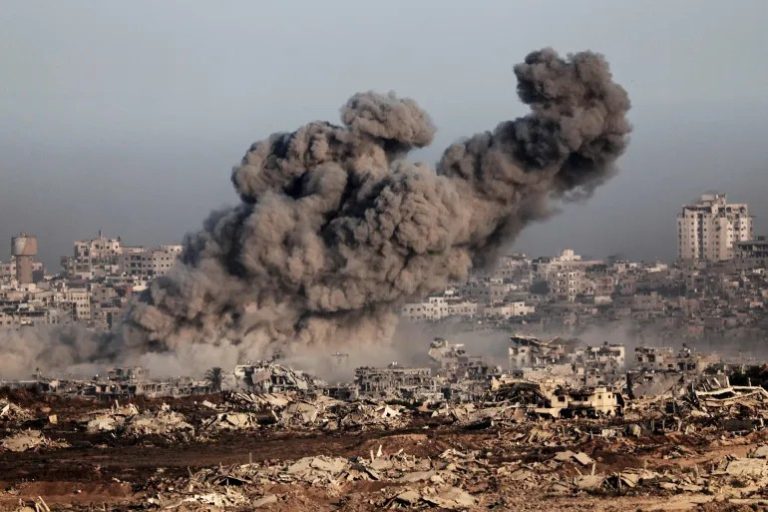
(Palestine Foundation Information Center), The occupied Palestinian territory of the Gaza Strip is once again engulfed in fire and blood. A few months ago, a ceasefire agreement was reached, and a mutual exchange of prisoners was carried out. Despite this, Israel has continued its bombardment of the people of Gaza.
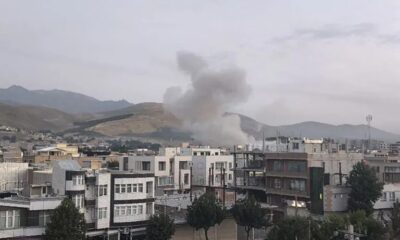
Similarly, in Lebanon, ceasefire violations have been ongoing for more than a year. Almost daily, Israel targets civilian populations in southern and suburban areas of Lebanon with dangerous airstrikes. Despite claims of ceasefire agreements, bombing, siege, and humanitarian suffering are increasing rather than decreasing.
The question is clear: if a ceasefire exists, why are innocent civilians still being killed in Gaza and Lebanon? If the international community is truly awake and aware, why does it remain silent? Perhaps the answer is that the so-called international community no longer exists in practice, or that it has failed to fulfill its responsibilities.
According to international media reports, Israel is using thermobaric bombs, which are among the deadliest weapons against human life. These weapons can completely disintegrate the human body, leaving no trace. The temperature generated by such bombs can reportedly reach up to 3,500 degrees Celsius.
The occupying Israeli government has repeatedly violated internationally brokered ceasefire agreements in both Gaza and Lebanon, and this pattern continues. Targeting civilian neighborhoods, hospitals, refugee camps, and essential infrastructure is not only a grave violation of human rights but also a clear breach of international law.
Reports from the United Nations and other global institutions highlight the severity of the humanitarian crisis, yet meaningful action remains absent. The situation has deteriorated to the point where the UN Special Rapporteur on human rights, Francesca Albanese, has faced pressure from certain Western governments to resign simply because she exposed alleged Israeli war crimes in Gaza and Lebanon. She has publicly declared that she will not resign under any circumstances.
Meanwhile, U.S. President Donald Trump, who has become a controversial figure globally, continues to shield Israel from accountability. Over the past year, Trump has welcomed Benjamin Netanyahu to the White House multiple times. Recently, Trump even established what he calls a peace board under his own leadership, in which Israeli officials are participants.
Individuals accused of war crimes are presented on the global stage as partners in peace, yet the reality on the ground tells a different story. If peace is truly the goal, why do military operations in Gaza & Lebanon continue? Are these forums merely diplomatic tools to ease pressure, or are they genuine efforts toward a sustainable solution?
On one hand, figures like Netanyahu are included in so-called peace initiatives; on the other hand, aggression and violence continue in Gaza and Lebanon. This raises a fundamental question: how can peace be achieved under such contradictions?
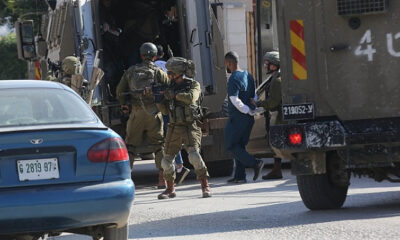
When discussing Palestine, the issue is not limited to Gaza alone. Across the occupied Palestinian territories, including the West Bank, tensions are rising. Raids, arrests, and the expansion of settlements have further complicated the situation. The local population lives under insecurity and political uncertainty. This demonstrates that the crisis is not a temporary conflict but a long-standing political dispute that cannot be resolved without a just and comprehensive solution. Many argue that U.S. and Israeli policies remain major obstacles to such a resolution.
While global institutions and governments remain largely silent regarding Israeli aggression in Gaza and Lebanon, the role of the Muslim world has also come under question. Many Muslim and non-Muslim countries limit themselves to statements, with no any practical action. Some Muslim governments have even refrained from issuing strong condemnations. This weak response has emboldened the United States and Israel to continue their actions without fear of consequences.
Economic interests, diplomatic calculations, and geopolitical priorities have overshadowed principled positions. This silence is deeply disappointing for the Palestinian people and raises serious questions about the credibility of the international system. If global justice and human rights are universal principles, why are they not applied equally?
Serious questions are also being asked of those Muslim governments that have aligned themselves with U.S. leadership while sidelining the Palestinian cause in pursuit of their own interests. Some of these governments are participants in so-called peace boards, yet remain silent about ongoing aggression in Gaza and Lebanon.
The world’s governments and institutions must understand that real peace cannot be achieved through paper ceasefires alone. It requires addressing the root political causes, respecting human rights, and ensuring impartial enforcement of international law. Without guaranteeing the Palestinian people their right to self-determination, security, and fundamental human rights, no peace process can maintain credibility.
In conclusion, the current situation in Gaza and Lebanon is not merely a regional conflict. It represents a profound challenge to the moral foundations of the global order. If the international system wishes to preserve its legitimacy, it must take concrete action against oppression and injustice.
It is unacceptable for mass violence to continue in Gaza and Lebanon while peace conferences echo with empty rhetoric. If the international community truly seeks peace, it must move beyond words and take meaningful action. Otherwise, ceasefire agreements will remain symbolic documents, and bloodshed will continue, not only in Gaza and Lebanon, but across the world.