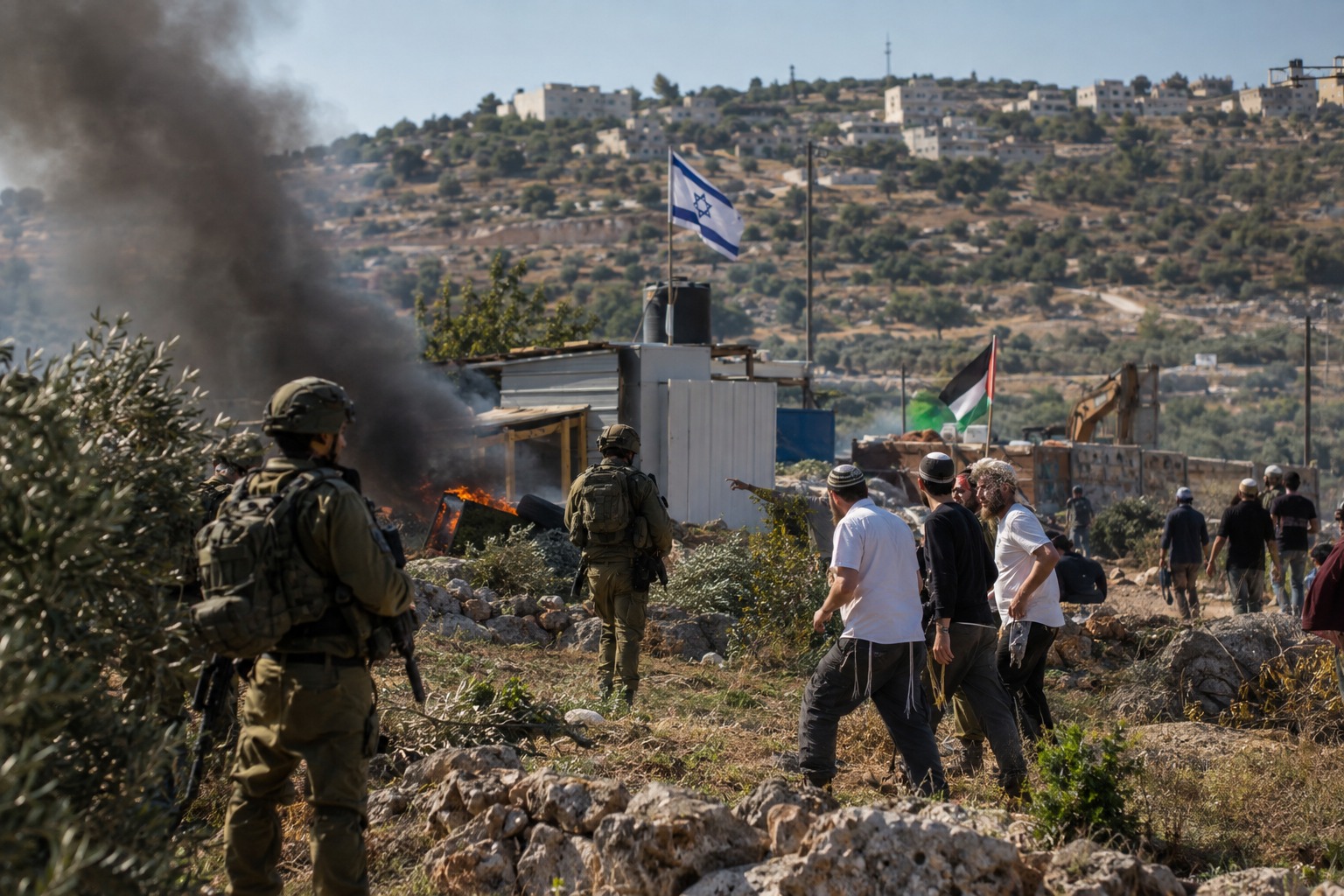
WEST BANK, (Palestine Foundation Information Center), The Israeli occupation forces (IOF) and Jewish settlers carried out 13 attacks against Palestinian olive harvesters and their farmland across eight West Bank governorates in just 12 hours on Thursday, injuring farmers, setting olive trees ablaze, stealing crops and preventing families from reaching their land.
According to the Palestinian Wall and Settlement Resistance Commission, the attacks took place between 6 a.m. and 6 p.m., highlighting the growing dangers facing Palestinian farmers during one of the most important seasons of the agricultural year.
The reported violations included physical assaults, pepper-spray attacks, live gunfire used to intimidate residents, the burning of decades-old olive trees, the theft of harvested olives and agricultural equipment, and the destruction of farmland.
The IOF also detained farmers and prevented them from continuing their harvest.
For generations, the olive harvest has been a cornerstone of Palestinian rural life, bringing families together to gather crops from trees inherited from parents and grandparents.
But amid escalating Israeli military operations and settler attacks, what was once a season of celebration and family tradition has increasingly become a struggle to protect land, livelihoods and personal safety.
Farmers beaten, olive trees burnt and crops targeted
In the Salfit governorate, a large group of Jewish settlers attacked Palestinian olive harvesters in the Wadi Abbas and Wadi al-Qibli areas, between the towns of Deir Istiya and Qarawat Bani Hassan.
The settlers beat farmers with sticks and sprayed them with pepper spray, leaving three Palestinians with bruises.
In occupied Jerusalem, the IOF entered the town of Beit Iksa, northwest of the city, and carried out land-clearing operations near the military checkpoint at the town’s entrance.
The operations included bulldozing agricultural land and uprooting trees, further restricting residents’ access to their property.
In the southern West Bank, Israeli forces detained members of the Adra family while they were harvesting olives in the Khallat Amira area, east of Yatta in the al-Khalil governorate.
The IOF soldiers prevented the family from continuing its agricultural work.
Meanwhile, armed settlers attacked olive harvesters in the Ramin plain, east of Tulkarem.
According to the reported accounts, the settlers arrived in three tuk-tuk vehicles and attempted to steal harvested olives, picking equipment and agricultural ground sheets.
The incidents, alongside attacks reported in other West Bank governorates, reflect the widespread threats confronting Palestinian farmers as they attempt to reach and cultivate their land.
Attacks threaten Palestinian livelihoods and generations–old olive groves
The consequences of these attacks extend far beyond the immediate loss of crops and agricultural equipment.
For Palestinian families, olive trees are both a vital source of income and a symbol of their historical connection to the land.
Many olive groves have been cultivated by the same families for generations, with mature trees representing decades, and sometimes centuries, of agricultural heritage.
Burning or uprooting these trees can deprive families of income for years, as newly planted olive trees require considerable time before reaching full productivity.
The destruction of agricultural land and the theft of harvested crops also threaten families who depend on olives and olive oil to meet their annual household needs.
For farmers who have spent an entire year tending their groves, being denied access during harvest season can mean losing much of the income they rely on.
Repeated attacks and access restrictions therefore threaten not only the current harvest but also the long-term viability of Palestinian farming communities.
Olive harvest becomes daily struggle for survival
The Wall and Settlement Resistance Commission’s latest figures add to growing concerns over the safety of Palestinian farmers during the olive harvest season.
Across the occupied West Bank, farmers increasingly face the risk of settler violence, military restrictions, crop theft and damage to agricultural land while attempting to carry out routine farming activities.
The repeated incidents have raised concerns about the lack of effective protection for Palestinian agricultural communities and the absence of accountability for attacks on farmers and their property.
For many families, the olive harvest is no longer simply a seasonal agricultural activity. It has become a daily struggle to reach their land, protect their trees and preserve a livelihood passed down through generations.
As attacks continue, Palestinian farmers face the possibility of losing not only this year’s harvest but also the olive groves that have sustained their families and communities for decades.