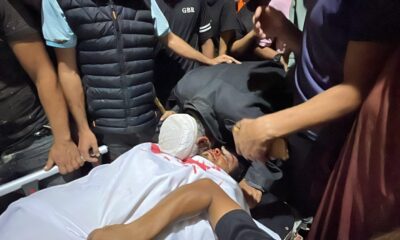
Palestine (Palestine Foundation Information Center), Murders and shootings in Palestinian towns inside the 1948-occupied territories are no longer isolated incidents but have evolved into an escalating security and social crisis that is claiming the lives of young people and women and affecting thousands of families. The situation is unfolding amid the widespread availability of weapons, the growing influence of organized crime groups, and mounting criticism of Israeli police over their failure to curb the phenomenon and pursue those responsible.
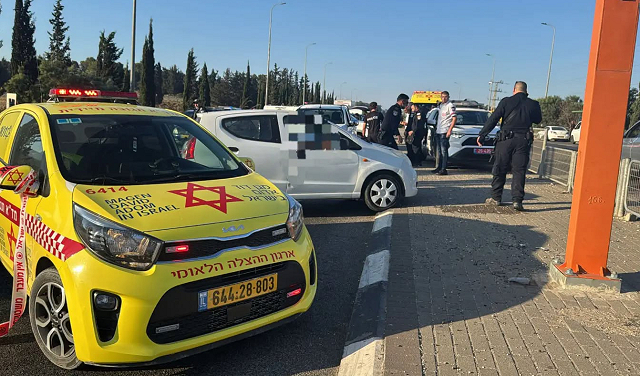
In the latest incident of this bloodshed, a man in his thirties was shot dead early Friday near the Wadi Salameh intersection on Highway 65 in the Galilee region in the north. According to local figures, the incident brought the number of people killed in murders over the past 24 hours to three.
Medical teams from the Magen David Adom emergency service confirmed the man’s death at the scene after he sustained critical injuries to various parts of his body and attempts to resuscitate him proved unsuccessful.
Paramedic Fadi Othman said the team found the victim unconscious on a pavement near a bus stop. One of the bystanders had already begun cardiopulmonary resuscitation (CPR) under the instructions of the emergency dispatch center. Medical personnel continued efforts to save his life, but he eventually succumbed to his injuries.
Meanwhile, Israeli police have launched an investigation into the circumstances of the shooting and begun search operations to locate the suspected perpetrators. However, no arrests have been announced in connection with the incident.
1948-occupied Palestine
The latest killing came just hours after a 25-year-old man from Qalansawe was shot dead inside a vehicle in the city of Baqa al-Gharbiyye. Four other people were wounded in the attack, three of whom are in critical condition.
Earlier, a shooting in the city of Tamra claimed the life of 22-year-old Yusuf Mahmoud Hammad, while two other people sustained serious and unstable injuries.
The violence has not been limited to these incidents, as separate shooting attacks were also reported in the towns of Nazareth, Kafr Qasim, and Qalansawe, leaving three people seriously wounded. These incidents highlight the widening scope of violence and the recurring armed attacks in Palestinian towns.
The continued attacks expose the growing threats to residents’ personal security, as shootings have spread to streets, neighborhoods, and public spaces without regard for age groups or specific locations.
Statistics reveal the scale of the crime crisis
Statistics compiled by organizations monitoring victims of crime and violence in Arab society indicate that the crisis has gone far beyond isolated incidents and has become one of the most serious security and social challenges facing Palestinians in the 1948-occupied territories.
According to the latest cumulative figures published by the Ibrahim Initiatives organization on November 1, 2026, the number of people killed in violent crimes in Arab society since the beginning of the year has reached 193. Of these, 164 were killed in shootings, including 13 women and girls, while nine others were killed by Israeli police gunfire.
The significance of these figures becomes clearer when compared with last year’s statistics, which recorded 252 deaths in Arab society. According to the organization’s monitoring, 2025 was the deadliest year in the history of Arab society.
In contrast, Israeli police announced on October 22 that murders in Arab society had declined by 14 percent during the beginning of 2026 compared with the same period last year. However, this does not mean that the crisis has ended or its severity has diminished.
This is particularly important because police statistics count murder incidents, whereas human rights organizations monitor the number of people killed, highlighting the difference between the two methods of data collection.
Figures presented by Israeli police before the Knesset’s National Security Committee show that 241 members of Arab society were killed in 2025, compared with 47 members of Jewish society. During the same year, 63 indictments were filed in murder cases.
Accusations of negligence and lack of protection
As the bloodshed continues, criticism of Israeli police and the occupation government by Palestinian leaders and officials in the 1948-occupied territories is intensifying. They accuse the authorities of negligence in confronting organized crime groups, preventing the spread of illegal weapons, and pursuing those involved in murders to bring them before the courts.
Arab community leaders and representatives hold the Israeli occupation authorities responsible for the deteriorating state of personal security. They are demanding serious measures to combat organized crime, dismantle its networks, pursue its sources of funding and weapons, and ensure the protection of civilians in Palestinian towns.
The rising murder rates have also raised growing concerns about the future of younger generations, as shooting incidents continue to recur and the number of victims expands, causing psychological, social, and economic consequences for families and the wider community.
While police investigations continue after every crime, the families of victims are left to cope with the loss of their loved ones. At the same time, demands are being renewed for official statements to be translated into practical measures that dismantle criminal networks and restore citizens’ fundamental rights to life and security.
Editorial note: The Urdu headline states that 179 people have been killed, while the article cites 193 deaths according to the Ibrahim Initiatives’ figures. I have retained both figures as presented in the original text.