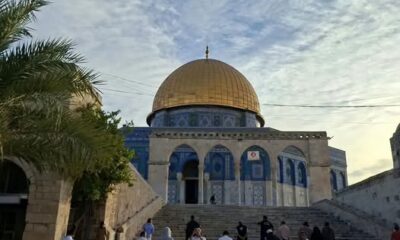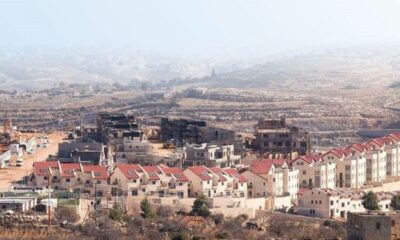
OCCUPIED JERUSALEM, (Palestine Foundation Information Center), 57 years after the arson attack on the Aqsa Mosque, the Jerusalem Governorate has warned that Israeli targeting of the Islamic holy site continues unabated, citing escalating efforts to change the long-standing status quo and impose new faits accomplis on the ground.
In a statement released on the 57th anniversary of the arson attack on the Aqsa Mosque on Friday, the Jerusalem Governorate described the targeting of the Islamic holy site as a “critical phase of the systematic aggression against Jerusalem.”
The Jerusalem Governorate expressed its belief that the 1969 fire was not an isolated incident, but part of an ongoing Israeli policy aimed at eroding the city’s identity and its religious, historical, and legal stature.
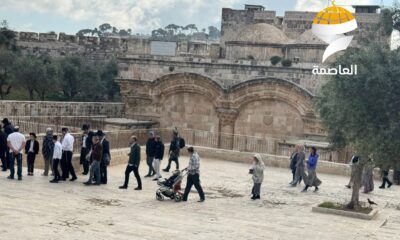
The Governorate also warned of intensifying attempts to impose new realities at Jerusalem’s holy sites, noting that the Aqsa Mosque, in particular, faces daily settler break-ins and police restrictions on Muslim access.
The Governorate affirmed that such Israeli practices directly violate the sanctity and legal status of the Aqsa Mosque, posing a fundamental threat to Jerusalem’s identity and its Arab, Islamic, and Christian character.
The Governorate highlighted that “the Aqsa Mosque, with its full area of 144 dunums, is an exclusive place of worship for Muslims, and that east Jerusalem is an inseparable part of the occupied Palestinian territory and the capital of the State of Palestine.”
On August 21 of each year, the painful anniversary of the Aqsa Mosque arson attack is remembered by Muslims around the world, although it remains a big dark spot in the nation’s history that can only be erased when they move one day to liberate Jerusalem.
Although this crime, which is considered a critical juncture in the history of the Aqsa Mosque and the Palestinian cause, happened a long time ago, the Zionist idea of seizing the Islamic holy site is very strongly present today.
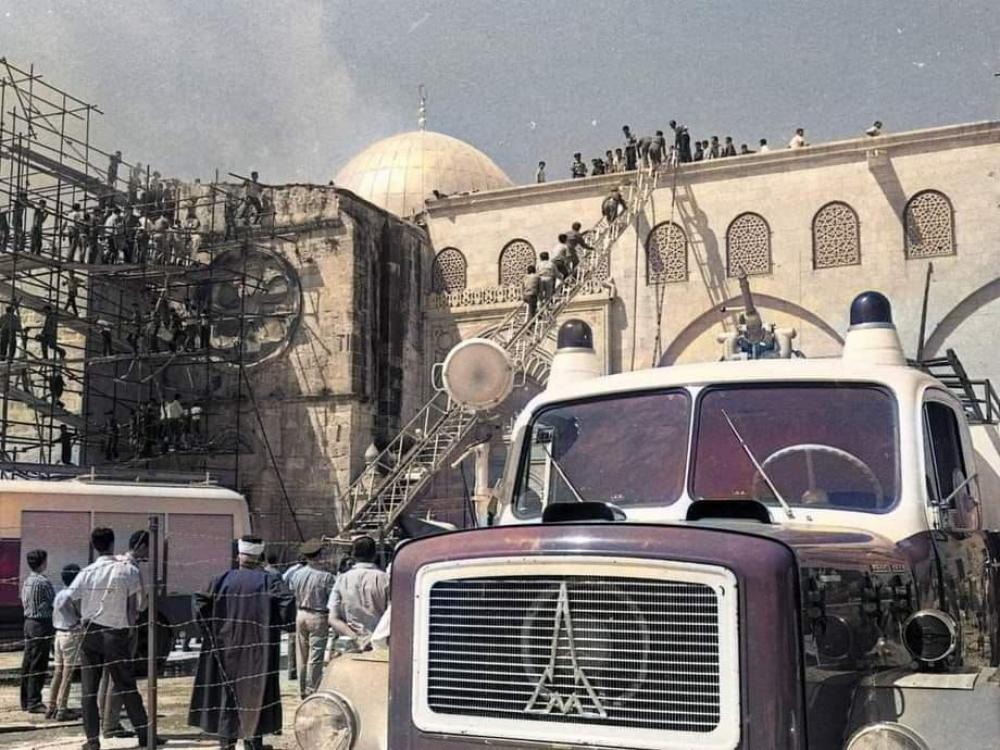
The fire, whose causes were not known immediately, caused considerable widespread damage to the southern section of the grey-domed Mosque, known locally as the Qibli Mosque.
The fire had swept through some of the oldest parts of the Mosque, devouring an area of around 1,500 square meters and destroying the 900-year-old wood and ivory pulpit gifted by Muslim leader Salahuddin al-Ayyubi, in addition to mosaic panels on the walls and ceilings; many areas within the Mosque were also blackened and charred.
At first, Israeli police and municipal officials claimed the fire resulted from an electrical short circuit, but the Jerusalem electricity company conducted a technical investigation into the incident and announced there was no fault in the network or connection between the fire and electricity.
At the time, Sheikh Hilmi al-Muhtaseb, the then head of the Higher Islamic Commission in Jerusalem, told a news conference that the fire was deliberate and not normal, affirming the Israeli authorities cut off water supply to the Aqsa Mosque compound immediately after the fire started.
Sheikh Muhtaseb also accused the Israeli authorities of delaying the arrival of fire trucks to extinguish the flames.
He asserted that crews from the Palestinian fire departments in Ramallah and al-Khalil rushed to the holy site and tackled the blaze despite an Israeli attempt to obstruct their entry to Jerusalem and the scene.
All the Muslim eyewitnesses, who took part in the efforts to put out the fire, also confirmed that piped water was not available at the Mosque or in nearby areas around it when the incident happened. They had to use primitive means to get water from wells in the Mosque’s main courtyard.
A suspect was soon identified by the police as 28-year-old Dennis Michael Rohan, an Australian Christian tourist, who was arrested two days later on August 23. Rohan was unafraid of revealing his motives for the crime, claiming to be “the Lord’s emissary.”
He told interrogators that he wanted to hasten the second coming of Jesus Christ which, in his view, could only be achieved by allowing the Jews to build the temple of Solomon in place of the Aqsa Mosque.