GAZA, (Palestine Foundation Information Center), The Palestinian Red Crescent Society (PRCS) has warned of a severe deterioration in Gaza’s healthcare system, with approximately 60% of medical imaging equipment out of service and critical shortages of medicines and medical supplies threatening hospitals’ ability to diagnose diseases and treat seriously ill patients.
Bashar Murad, the PRCS director of health programs, said approximately 60% of Gaza’s medical imaging equipment is completely inoperable, while nearly 21,000 patients urgently need medical evacuation for treatment abroad.
Despite the overwhelming need, he said only around 120 patients are permitted to leave Gaza each day.
In a statement on Thursday, Murad warned that cancer patients and people suffering from chronic illnesses are among those most severely affected by the collapse of diagnostic and treatment services.
Broken imaging equipment and delayed medical examinations are preventing doctors from detecting diseases, monitoring their progression, and assessing patients’ responses to treatment, placing lives at greater risk.
25 hospitals completely out of service
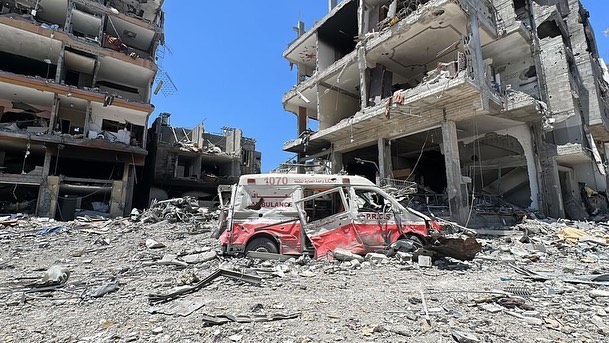
The warnings come as Gaza’s healthcare system continues to suffer the devastating consequences of Israel’s genocide, which has caused widespread destruction to hospitals, medical facilities, and essential healthcare infrastructure.
According to figures cited by Murad, 25 of Gaza’s 38 hospitals are completely out of service.
The remaining 13 hospitals are operating only partially, under extremely difficult conditions and with severe shortages of medical equipment and resources.
The destruction has also devastated Gaza’s primary healthcare network.
Of the Strip’s 157 primary healthcare centers, 103 have been destroyed, while the remaining 54 are providing only limited services with minimal resources.
The scale of the damage has drastically reduced the healthcare system’s capacity to respond to the growing needs of sick and wounded Palestinians.
Thousands face dangerous delays in diagnosis
With most medical imaging equipment unavailable, patients requiring urgent scans face prolonged delays in obtaining accurate diagnoses and receiving appropriate treatment.
The crisis is particularly dangerous for people with cancer and chronic diseases, whose conditions often require regular imaging to detect complications, monitor disease progression, and determine whether treatment is working.
Without access to these essential examinations, doctors face increasing difficulties identifying serious medical conditions and making timely treatment decisions.
The shortages have also placed additional pressure on the few hospitals and healthcare centers still functioning, where medical teams must care for large numbers of patients with severely limited equipment and supplies.
Nearly 21,000 patients need medical evacuation
Murad said approximately 21,000 patients urgently require medical evacuation because the specialized treatment they need is unavailable inside Gaza.
However, the limited number of patients permitted to travel has left thousands waiting for medical care outside the Strip.
The combination of damaged hospitals, inoperable imaging equipment, medicine shortages, and restrictions on medical evacuation has deepened the crisis facing patients with serious and chronic illnesses.
The Palestinian Red Crescent Society stressed the urgent need to restore diagnostic services by providing medical equipment, spare parts, and essential supplies.
It also called for facilitating the evacuation of patients whose medical conditions cannot be adequately treated inside Gaza.
With 60% of imaging equipment out of service and most hospitals unable to operate at full capacity, thousands of Palestinians remain at risk of delayed diagnoses, interrupted treatment, and life-threatening complications.