BARCELONA, (Palestine Foundation Information Center), A European regional conference marking 20 years of the Boycott, Divestment and Sanctions (BDS) movement opened Wednesday evening in Barcelona, Spain, bringing together activists, academics, artists, trade unionists and advocates for Palestinian rights from around the world.
The three-day conference, known as BDS@20, runs through November 20 under the theme “Resisting Might-Makes-Right: For Palestine, for Humanity.” It aims to review the movement’s achievements over the past two decades, strengthen international alliances and develop new strategies to challenge Israel’s military operations in Gaza, settlement policies and system of apartheid.
The event is organized by the Palestinian BDS National Committee (BNC), which includes the Palestinian Campaign for the Academic and Cultural Boycott of Israel (PACBI), in cooperation with European partners and allies.
The BNC describes itself as the largest coalition of Palestinian civil society organizations leading the global BDS movement, with partnerships extending to more than 130 countries.
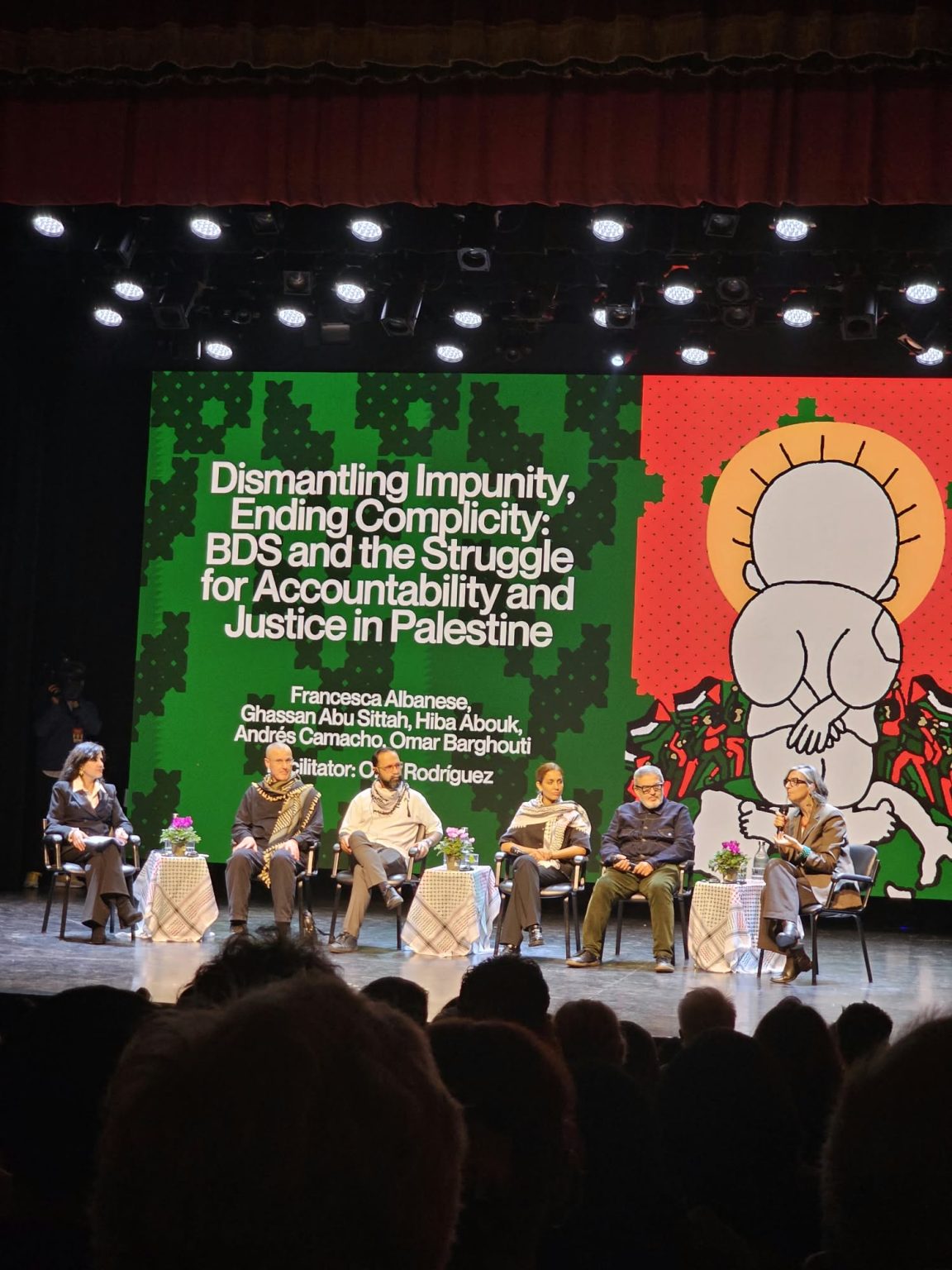
The opening session featured prominent supporters of Palestinian rights, including BDS co-founder Omar Barghouti, Palestinian British surgeon and academic Ghassan Abu-Sittah, and UN Special Rapporteur on the occupied Palestinian territories Francesca Albanese.
Hundreds of participants attended opening events
Organizers expect approximately 400 activists and representatives of solidarity organizations to participate in strategic sessions, with total attendance across the conference’s activities estimated at around 800.
Other participants include Palestinian American international law scholar Noura Erakat, former South African Foreign Minister Naledi Pandor, Massive Attack member Robert Del Naja, actress Hiba Abouk, writer and journalist Fatima Bhutto, and Malaysian activist and former lawmaker Nurul Izzah Anwar.
Accountability, sanctions and international law
A central focus of the conference is holding Israel accountable for violations of Palestinian rights and examining the legal obligations of governments and corporations to end their involvement in such violations.
Participants are discussing ways to strengthen boycott, divestment and sanctions campaigns, as well as how rulings and proceedings involving the International Court of Justice and the International Criminal Court can support efforts to hold those responsible for crimes against Palestinians accountable.
The conference also addresses the militarization of technology, artificial intelligence and military spending, alongside the role of artists and cultural institutions in campaigns to boycott Israel.
Another focus is the effort to exclude Israeli sporting institutions from international federations and competitions.
Expanding economic and institutional pressure
Sessions are examining ways to increase economic pressure on Israel by encouraging corporations, pension funds, municipalities, trade unions, churches and public institutions to end business relationships and investments linked to Israeli violations of Palestinian rights.
Participants are also addressing academic cooperation between Israeli and European universities, including partnerships associated with the European Union’s Horizon research program.
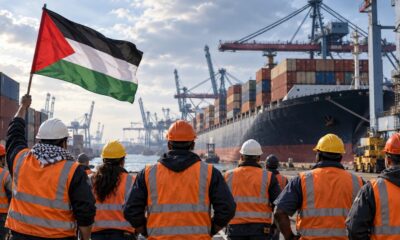
The agenda includes the #BlockTheBoat campaign and the role of trade unions and workers in disrupting arms shipments and military supply chains.
Organizers are seeking to strengthen coordination among labor, academic, cultural and political movements to expand the reach of BDS campaigns across Europe.
Building European alliances
The Democracy in Europe Movement 2025 (DiEM25) is also participating in the conference, following its formal endorsement of the BDS movement in November 2024.
The movement has emphasized that boycotts should go beyond symbolic solidarity with Palestinians and challenge government, corporate and institutional complicity in Israel’s policies.
Participants hope the Barcelona conference will provide an opportunity to exchange experiences, coordinate international campaigns and turn public solidarity with Palestinians into more effective political, economic and institutional pressure.
The gathering marks two decades since the Palestinian-led BDS movement was launched in 2005, with organizers seeking to build on its international network and expand efforts to hold Israel accountable for violations of Palestinian rights.