By Dr. Sabir Abu Maryam
Secretary General, Palestine Foundation Pakistan
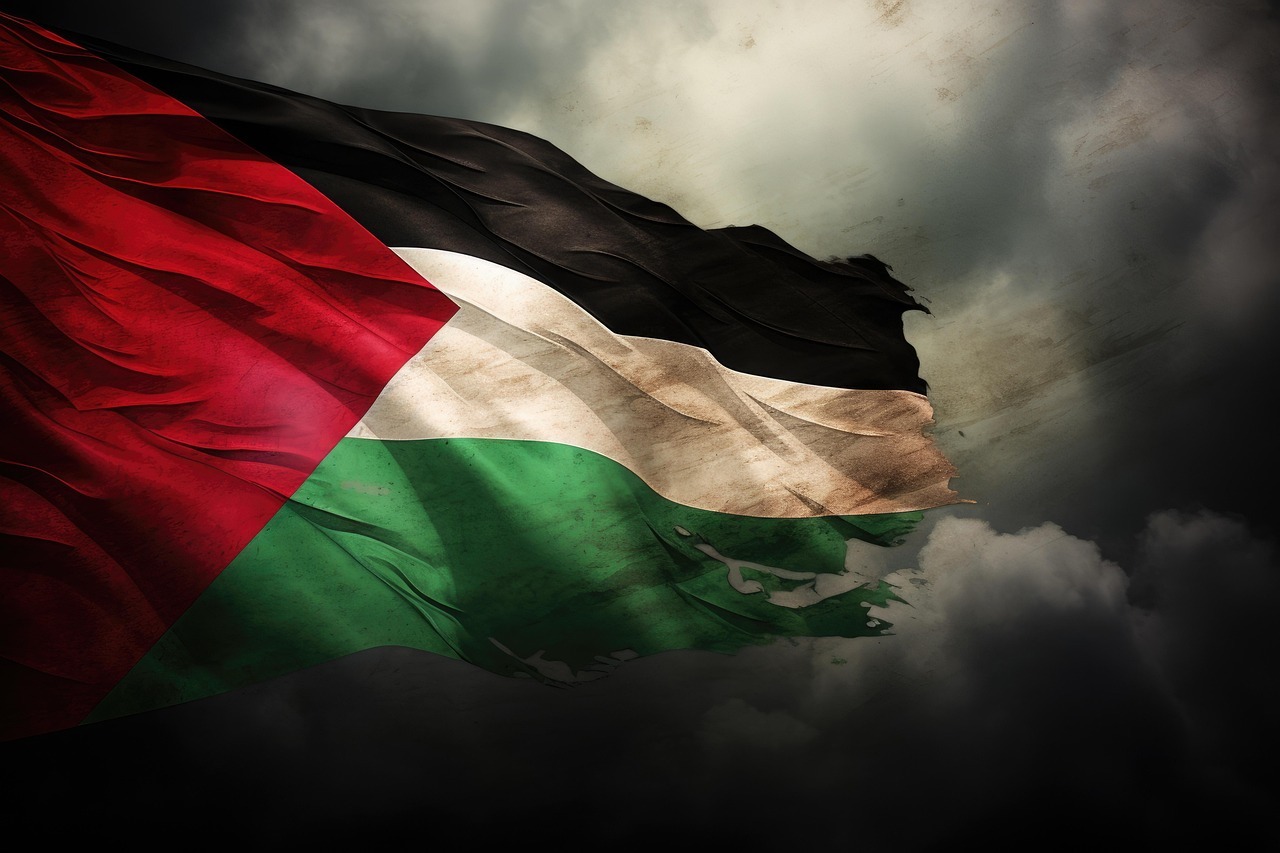
(Palestine Foundation Information Center), In the modern era, wars are not fought solely with weapons and military power; they are also fought in the arenas of narratives, information, and media. Narratives shape the true meaning of events, distinguish between the oppressed and the oppressor, and influence both local and international public opinion. For this reason, the battle for awareness and truth has become an indispensable part of the struggle for freedom and justice. Today, Zionist propaganda seeks to weaken the Palestinian cause by distorting facts and undermining the Palestinian narrative.
In recent days, supporters of the Palestinian cause from around the world organized the Global Palestine Conference in Karbala with the objective of confronting the American and Zionist narratives and presenting the Palestinian narrative in its authentic and accurate form. In this context, the Hussaini Revolution and the Palestinian cause converge on the same moral foundation. Both represent enduring examples of the struggle between truth and falsehood, where the oppressed strive to preserve the truth against powerful forces determined to manipulate reality and manufacture false narratives.
The Hussaini Revolution stands as a universal symbol of safeguarding truth and justice. The uprising of Imam Hussain (A.S.) was not merely a military confrontation; it was an ethical and communicative struggle against distortion, deception, and injustice. Imam Hussain understood that one of the most dangerous weapons of tyranny is the monopoly over public narratives. Therefore, from the very beginning of his movement, he clearly declared that his mission was to reform the nation of his grandfather, Prophet Muhammad (PBUH), to promote virtue, and to prevent evil.
Following the tragedy of Karbala, the historic role of Lady Zainab (S.A.) and Imam Zain-ul-Abideen (A.S.) proved decisive in exposing the false Umayyad narrative. Through their courage, speeches, and steadfastness, they conveyed the truth to the people. As a result, Karbala transformed from an attempt to silence the voice of justice into an eternal school of resistance against misinformation and manipulative propaganda.
From the very beginning of the Zionist project in Palestine, the conflict has never been limited to territory alone. It has also been a struggle over history, memory, and identity. Alongside military occupation, narratives have consistently been constructed to deny the existence of the Palestinian people, distort the image of Palestinian resistance, and portray the victims as aggressors.
Despite limited resources, Palestinians have preserved and strengthened their narrative through eyewitness testimonies, literature, art, journalism, historical documentation, survivor accounts, and modern digital media. Through these means, they have continued to present the truth to the world.
Recent developments have demonstrated that a truthful narrative supported by verified facts, authentic images, and credible evidence—possesses the power to overcome media censorship and significantly influence global public opinion.
This demonstrates the profound commonality between the Hussaini Revolution and the Palestinian narrative. Both prioritize moral and humanitarian principles over material power. They emphasize the importance of sacrifice in preserving truth and history, recognize the historic role of women in safeguarding and transmitting narratives to future generations, and affirm that conflicts do not end on the battlefield but continue in the realms of memory, ideas, and collective consciousness. Above all, they reinforce the belief that a truthful narrative, even if its triumph takes time, ultimately endures.
An important question therefore arises: How can an effective narrative be developed to counter misleading propaganda?
First, every injustice and violation must be documented professionally and according to legal standards so that a comprehensive and credible historical record is preserved. Investment in digital media and the production of multilingual content can significantly strengthen efforts to challenge the Zionist narrative.
Likewise, researchers, scholars, and spokespersons should be trained to communicate effectively with the international community and global public opinion. Strong cooperation among universities, research institutions, and media organizations can also help preserve and promote an accurate understanding of the Palestinian issue.
Furthermore, the Palestinian cause should be presented not only from its national and religious perspectives but also within the broader framework of universal justice and human rights. Such an approach can strengthen the Palestinian narrative and make it more accessible to audiences around the world.
Education, culture, literature, and the arts also play a vital role in instilling historical truth in younger generations and ensuring that the Palestinian narrative continues to endure.
In conclusion, the land of Karbala teaches humanity that truth may be surrounded and suppressed, but it can never be erased. A truthful narrative possesses the enduring power to overcome every form of propaganda.
The Palestinian experience likewise confirms the necessity of building a credible, evidence-based, and principled narrative. By embracing the moral and humanitarian lessons of the Hussaini Revolution, we can present the Palestinian narrative not merely as an emotional slogan, but as an intellectual and human project founded upon truth, justice, and the protection of human dignity.
This is one of the most urgent responsibilities of our time, and every individual has a role to play in preserving and promoting the truth.