
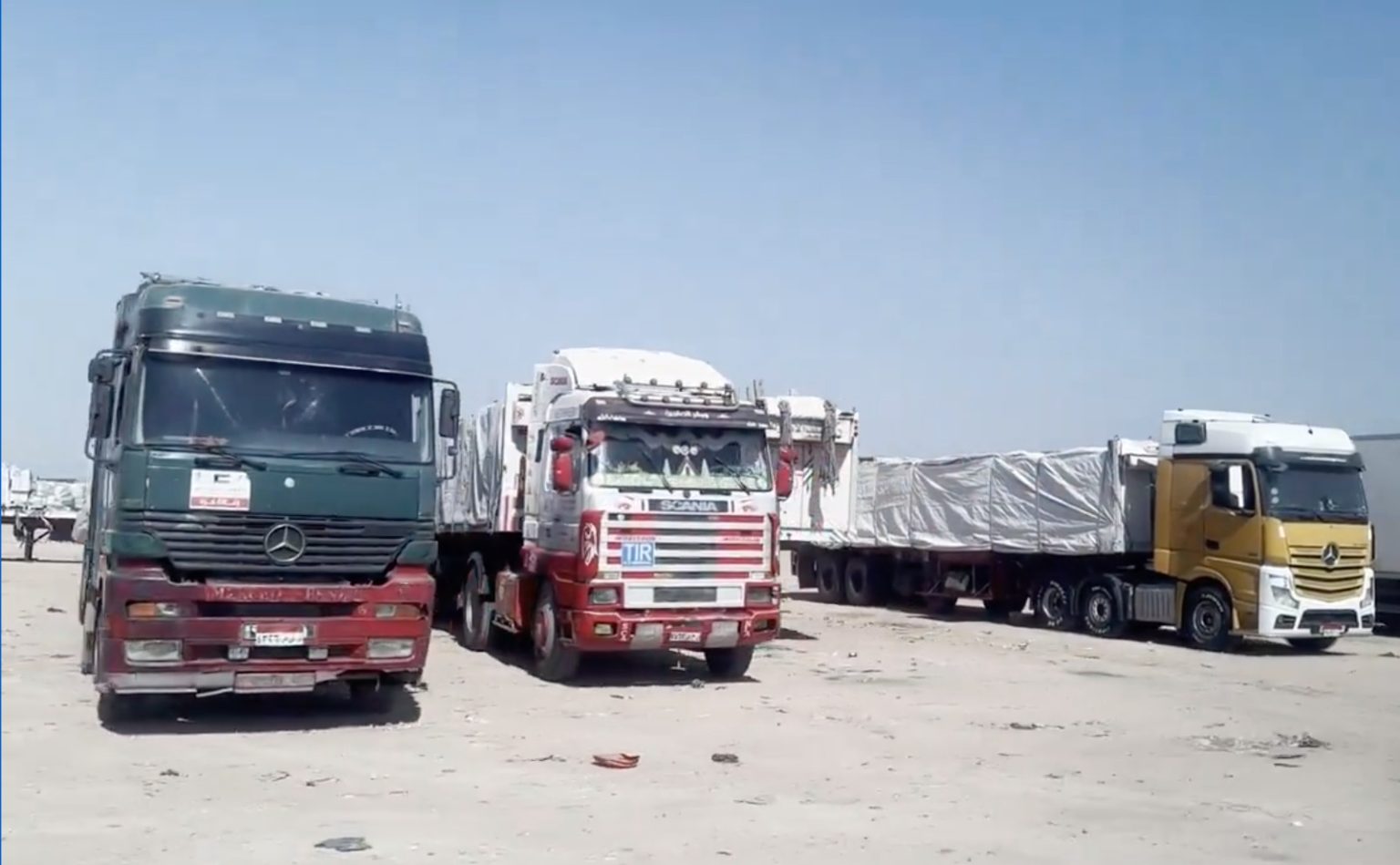
GAZA, (Palestine Foundation Information Center), Nahed Shuheiber, head of Gaza’s Private Transport Association, has warned that the territory’s freight transport sector faces imminent collapse as aging trucks struggle to deliver commercial goods and humanitarian aid amid severe shortages of engine oil, spare parts and replacement vehicles.
In a press statement on Wednesday, Shuheiber said most trucks operating in Gaza are severely deteriorated and at risk of breaking down permanently, with engine oil largely unavailable for more than three years.
He explained that officially imported engine oil has been limited to quantities designated for bakeries, while smuggled supplies circulating in local markets are often adulterated and of poor quality, causing additional engine damage.
“Oil is just as essential as diesel. No engine can operate without oil or fuel,” Shuheiber stressed.
He warned that the currently operating trucks may be unable to handle the transport of approximately 600 truckloads per day.
He also highlighted serious dangers facing truck drivers near the so-called Yellow Line, adding that drivers who leave their vehicles to repair breakdowns risk being shot by Israeli forces.
According to Shuheiber, three such incidents have occurred near the Kerem Shalom crossing and the Fash Farsh area on the outskirts of Rafah.
The crisis has been compounded by the destruction of most vehicle repair garages and spare parts shops along Salah al-Din Street, leaving drivers with few options for essential maintenance.
Shuheiber noted that most remaining trucks are more than 30 years old, making them increasingly vulnerable to mechanical failure.
He urged authorities to allow the immediate entry of engine oils, spare parts and new trucks, warning that continued Israeli restrictions could bring Gaza’s transport sector to a complete standstill and severely disrupt the delivery of humanitarian assistance.