Gaza (Palestine Foundation Information Center), Figures released by the Crossings and Border Authority have revealed that the humanitarian crisis in the Gaza Strip continued to worsen during September 2026 due to repeated closures of crossings and restrictions on the movement of people and the entry of essential supplies. This came as millions of Palestinians faced growing needs for food, medicine, shelter, and fuel.
The authority’s figures highlight the gap between Gaza’s severe humanitarian needs and the limited movement permitted through the crossings. Residents’ ability to leave the Gaza Strip for treatment or travel was almost paralyzed, while incoming supplies remained far below the levels required to address the effects of the war, displacement, and extensive destruction of homes, infrastructure, and health facilities.
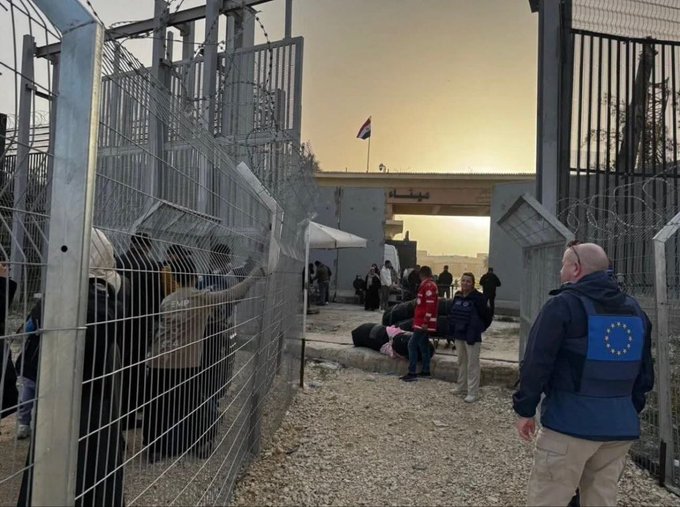
The report showed that the Rafah land crossing remained closed for 20 of the 30 days in September, representing a closure rate of 66.6 percent. Meanwhile, the movement of travelers through the Kerem Abu Salem crossing was suspended for 26 days, bringing its unavailability rate to 86.6 percent.
1,197 Travelers and Zero Movement Between Gaza and the West Bank
The near-total closure of crossings designated for passenger movement limited the number of people leaving the Gaza Strip throughout the month to just 1,197 travelers.
The figure included 485 patients who left the Strip to seek medical treatment outside Gaza, averaging no more than 16 patients per day. It also included 547 accompanying relatives and 165 evacuation cases. Meanwhile, movement between the Gaza Strip and the West Bank was recorded at zero throughout the entire month.
These figures concerning patients are particularly significant given the collapse of large parts of Gaza’s healthcare system, shortages of medicines, equipment, and medical supplies, and the unavailability of numerous specialized medical services. For many patients, leaving Gaza for treatment has therefore become a necessity to save their lives rather than an option that can be postponed.
Commercial and Humanitarian System Paralyzed
The impact of the closures was not limited to the movement of people. The Zikim and Kissofim crossings recorded a complete halt in September, remaining closed throughout all 30 days of the month, with an unavailability rate of 100 percent.
Commercial and humanitarian movement was restricted to the Kerem Abu Salem crossing, which itself was suspended for three days. A total of 5,265 trucks entered the Gaza Strip through the crossing during the month.
However, the total number of trucks does not necessarily reflect the actual scale of needs, as the distribution of supplies revealed a significant shortfall in the materials required to provide assistance to displaced people, operate vital sectors, and restore facilities and services destroyed by the war.
Fewer Than Five Shelter Trucks per Day
In the shelter and relief sector, only 139 trucks entered Gaza during the month, averaging fewer than five trucks per day. In addition, only five trucks carrying zinc sheets entered the Strip.
These quantities come as a large part of Gaza’s population continues to live in tents and makeshift shelters, which require increasing amounts of materials to provide protection from changing weather conditions, particularly with the approach of winter and the additional risks it poses to displaced people who lack adequate shelter and sufficient heating resources.
Fuel and Medical Supplies Under Tight Restrictions
Fuel figures continue to demonstrate the scale of pressure facing essential services and the healthcare sector. During September, only six gasoline trucks entered Gaza, compared with 147 trucks carrying diesel fuel and 87 trucks carrying gas.
Diesel is essential for operating hospitals, healthcare centers, water and sewage stations, and other vital services that depend on fuel to provide the population with minimum levels of essential services.
As for medical and healthcare supplies, their entry was limited to only 104 trucks carrying medical tools and equipment. These quantities arrived amid enormous healthcare needs in the Strip, while shortages of medicines, equipment, and spare parts, as well as the continued malfunction of numerous medical devices, persisted.
Closed Crossings: A Crisis Beyond the Halt in Movement
The figures demonstrate that Gaza is facing a humanitarian crisis that goes beyond the disruption of travel and commercial movement. The closure of crossings restricts patients’ access to treatment, limits the entry of food, medical supplies, shelter materials, and fuel, while the effects of war, destruction, and displacement continue to accumulate across the population.
With continued restrictions on movement through the crossings, thousands of patients remain in need of travel for medical treatment, while displaced families await materials that could protect them from winter conditions. Hospitals and vital facilities also require fuel and supplies to ensure the continuation of their operations.
The Crossings and Border Authority indicated that the September figures reflect continued restrictions and repeated closures at key crossings, keeping the flow of essential aid, supplies, construction materials, and shelter items below the growing needs of Gaza’s population.
The closure of a crossing in Gaza means more than stopping the movement of travelers and trucks. It can delay treatment for a patient, prolong displacement for a family, cause another shortage of medicine or fuel at a hospital, and add another day of waiting for thousands of displaced people seeking materials to protect them from the winter cold.