GAZA, (Palestine Foundation Information Center), Gaza Center for Human Rights expressed deep concern over the rapid deterioration in the transport and communications sector in the Gaza Strip, due to the continued Israeli occupation authorities’ tight blockade on the Strip, and their deliberate prevention of spare parts, engine oils, tires, and mechanical maintenance supplies under the pretext of classifying them as “dual-use materials.”
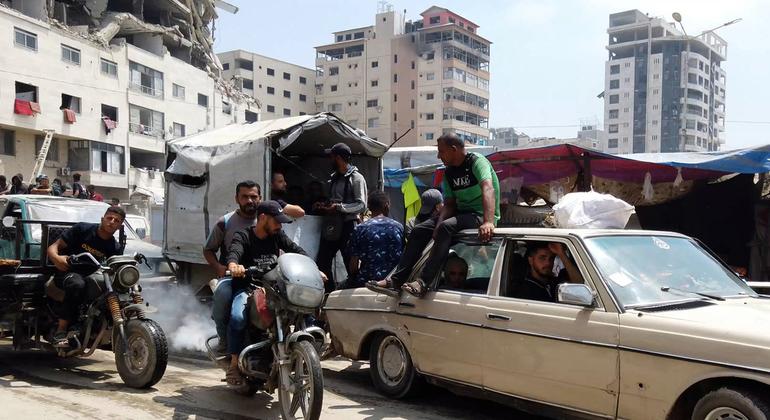
The Center said in a statement on Sunday that this ban has led to the total or partial breakdown of about 70 percent of civilian vehicles, according to official data from relevant authorities in the Strip, while direct losses in the transport and communications sector were estimated at about $2.8 billion due to the genocide war.
The human rights center warned that the ban on oils and spare parts affects the technical lifeline upon which the most vital facilities in the lives of the population depend, including hospitals, education, ambulances, water wells, bakeries, and relief trucks, in a continuation of the comprehensive blockade policy imposed since October 7, 2023, which continued to include basic maintenance materials alongside fuel and oils, despite the ceasefire agreement since October 2025.
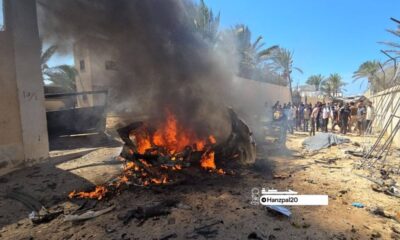
It pointed out that ambulance and civil defense vehicles have become among the most affected categories, as a large number of them went out of service due to worn-out engines, cooling systems, and depleted original oils, at a time when data from the Government Media Office in Gaza indicates that 211 ambulances were subjected to attack until the end of 2025, in addition to 23 vehicles belonging to civil defense, which exacerbated the fragility of the entire rescue system.
The Center warned that the breakdown of a single ambulance, amid continued Israeli bombardment and repeated injuries, could mean a delay leading to the loss of a human life that cannot tolerate postponement.
Tales from the heart of the crisis
On an individual level, a number of residents in the Strip tell how the transportation crisis turned into one of the most influential factors in the details of their daily lives.
Hamada Al-Sayyid, 33, says he spends long hours searching for a vehicle to take him to his work, often forced to walk long distances on foot due to the severe shortage of operational vehicles.
Abdul Aziz Ahmad, 36, an owner of a private car that stopped working months ago, explains that the cost of repairing it now exceeds its market value, forcing him to abandon using it permanently.
Said Shurrab, 45, describes how the lack of tires and mineral oils turned operating a single vehicle or maintaining it into a daily burden exhausting both driver and passenger alike, reflecting directly on the population’s ability to reach their jobs, schools, and health centers.
Price rises
The Gaza Center warned that vehicle breakdowns were accompanied by an unprecedented leap in prices of spare parts and vehicles themselves, as the price of a single engine oil canister reached about $3,500 in some cases.
Representatives of commercial sectors concerned with transport point out that more than 800 trucks were entering the Strip daily before the genocide war, compared to strict restrictions almost paralyzing import movement completely today, amid continued Israeli occupation forces’ control over about 70 percent of the area of the almost completely destroyed Strip.
The Center warned that the continuation of this crisis threatens the shutdown of water desalination plants and sewage pumps, opening the door to an additional environmental and health disaster, while bakeries face increasing difficulties to continue operating due to their reliance on equipment needing periodic maintenance and oils for operation.
It referred to a previous warning by UNICEF that the worsening severe shortage of tires, mineral oils, and spare parts has become a direct threat to the continuation of basic services, especially in water, sanitation, and humanitarian service sectors.
Systematic blockade
Gaza Center for Human Rights considered that this systematic ban on spare parts and engine oils cannot be separated from the broader context of the blockade policy continuing for nearly three years, which includes everything that would keep daily life in the Strip functioning at its bare minimum, starting from food, medicine, and fuel, reaching maintenance and transport supplies.
This pattern, in the Center’s assessment, constitutes proof of what Article Two of the 1948 Convention on the Prevention and Punishment of the Crime of Genocide states, regarding deliberately inflicting conditions of life calculated to bring about physical destruction of a human group in whole or in part, by depriving it of the necessary means for continuing its daily life, including the ability to access treatment, transport the sick and wounded, and secure water and food.
It stressed that accumulated Israeli policies pour in one direction, which is making the Gaza Strip an uninhabitable place for human life, in preparation for emptying it of its residents.
Gaza Center for Human Rights demanded the international community, the United Nations, and the Security Council to act urgently to compel Israeli occupation authorities to lift the ban on bringing spare parts, engine oils, tires, and maintenance supplies into the Gaza Strip unconditionally, as vital necessities that cannot be classified as dual-use materials.
The Center also called on state parties to the Genocide Convention to fulfill their legal obligations to prevent the continuation of this crime, and demanded the International Criminal Court to include the policy of restricting transport and rescue means within the scope of ongoing investigations into crimes committed in the Gaza Strip, warning that the continuation of the current situation will inevitably lead to further irreparable loss of life.