GAZA, (Palestine Foundation Information Center), The Palestinian Ministry of Health has reported that 74,237 Palestinians have been killed and 175,267 injured in the Gaza Strip since the beginning of Israel’s genocidal war three years ago, according to a statistical report documenting the devastating human toll, the impact on children and patients, and the destruction of Gaza’s healthcare system.
The report also highlights severe shortages of medicines and medical supplies, the collapse of essential healthcare services, and mounting obstacles to evacuating critically ill patients for treatment outside Gaza.
In the report released Friday by its Palestinian Health Information Center (PHIC), the ministry said children accounted for 29.6% of those killed, with 21,976 child victims. Women represented 15.2%, with 11,301 killed, while older adults accounted for 7.3%, or 5,405 victims. Men accounted for 47.9% of the fatalities, with 35,555 killed.
Among the injured, the ministry recorded 45,569 children, 24,537 women, 12,269 older adults, and 92,892 men.
Gaza’s children: Devastating losses and deprivation of basic rights
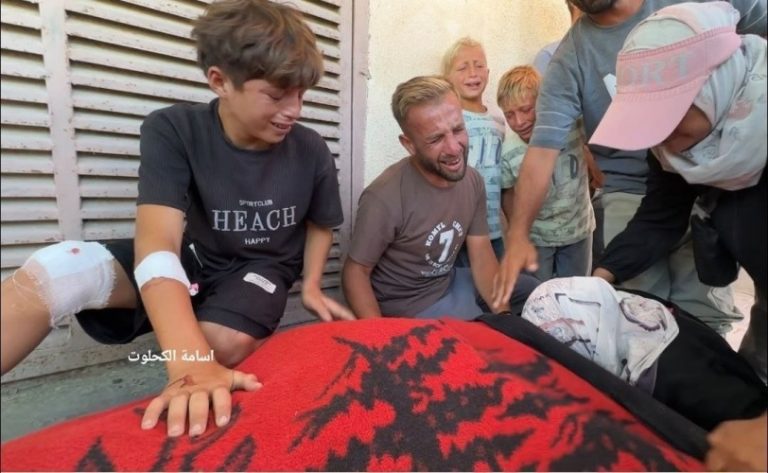
The report revealed the devastating impact of Israel’s war on Gaza’s children, showing that one Palestinian child has been killed every 71 minutes.
A total of 1,125 infants under the age of one have died, while 612 children born during the war were subsequently killed.
The number of children under five killed reached 5,444, while the mortality rate among children in this age group rose from 13.6 per 1,000 live births in 2022 to 33.4 in 2025.
The ministry also reported that 71,846 children have been orphaned, while 1,134 children have undergone amputations.
Meanwhile, 1,204,102 children are experiencing food insecurity, and 914,102 have been deprived of education.
These figures reflect the profound and lasting consequences of the genocide on an entire generation of Palestinian children, many of whom have lost family members, suffered permanent disabilities, or been denied access to food, education, and essential healthcare.
Gaza’s healthcare system faces widespread collapse
The report documented extensive damage to Gaza’s healthcare infrastructure, stating that all 38 hospitals in the Strip have been targeted during the war.
Of these, 19 hospitals have been rendered completely inoperable, while the remaining 19 are functioning only partially. According to the report, the facilities still operating include five government hospitals and 12 field hospitals.
The attacks have also affected 158 primary healthcare centers, leaving 64 completely out of service and 94 partially operational. Among the partially functioning facilities are 24 government centers and 10 centers operated by the United Nations Relief and Works Agency for Palestine Refugees (UNRWA).
The ministry reported that 1,723 healthcare workers have been killed and another 362 detained.
It also documented attacks on 216 ambulances and damage to or attacks on 825 healthcare facilities.
Hospital bed capacity has declined sharply. The number of beds operated by the Ministry of Health fell from 2,674 in 2022 to just 1,205 in 2026, while the total number of hospital beds across Gaza decreased from 3,412 to 2,623 over the same period.
The report also revealed a severe deterioration in the availability of essential medical equipment.
Only 44 of Gaza’s 116 power generators remain operational, along with just 12 of 35 oxygen stations and three of 18 computed tomography (CT) scanners.
All nine magnetic resonance imaging (MRI) machines have stopped functioning.
These shortages have severely undermined hospitals’ ability to diagnose illnesses, perform complex procedures, and provide emergency and intensive care to patients.
Critical shortages of medicines and medical supplies threaten treatment
The report highlighted the worsening shortage of essential medicines and medical supplies, warning that the lack of critical resources is threatening the continuity of treatment across Gaza’s remaining healthcare facilities.
According to the ministry, 54% of essential medicines are unavailable, along with 71% of medical consumables, 83% of laboratory testing materials, and 44% of laboratory consumables.
The shortages are particularly severe in specialized medical services.
In 2026, the ministry recorded a 96% shortage of medicines required for cardiac catheterization and open-heart surgery, an 85% shortage affecting ophthalmic surgery, and a 59% shortage in medicines used to treat cancer and blood disorders.
These figures come as Gaza’s hospitals face growing demand for diagnostic and therapeutic services while their capacity to provide treatment continues to decline.
The combination of damaged facilities, unavailable medications, and shortages of specialized equipment has left patients with complex medical conditions facing increasingly limited treatment options.
Malnutrition and anemia deepen Gaza’s humanitarian crisis
The report documented 466 deaths associated with malnutrition, reflecting the severe deterioration of food security and living conditions across the Gaza Strip.
Children accounted for 40.5% of malnutrition-related deaths, followed by older adults at 33.7%, women at 15.5%, and men at 10.3%.
The ministry also reported that the prevalence of anemia among pregnant women had risen to 61% in 2026.
Between January and August 2026, healthcare authorities recorded 23,883 cases of malnutrition among children under five, including 3,148 cases of severe acute malnutrition.
The findings underscore the growing health risks associated with deteriorating access to adequate food and nutrition, particularly among the most vulnerable groups, including children, pregnant women, and older adults.
For children already weakened by displacement, illness, and inadequate healthcare, malnutrition poses additional risks to their growth, development, and survival.
21,000 patients await medical evacuation from Gaza
The ministry reported that approximately 21,000 patients are waiting to be evacuated from Gaza for medical treatment unavailable inside the Strip.
Among them are 5,803 children and 4,800 cancer patients who require specialized care outside Gaza.
The report revealed that 2,027 patients have died while awaiting medical evacuation, including 264 children and 505 cancer patients.
These deaths highlight the dangers facing patients whose conditions require urgent specialized treatment but who remain unable to access medical services beyond Gaza.
The destruction of healthcare infrastructure, shortages of essential medicines, and continuing difficulties in arranging medical evacuations have compounded the suffering of patients with serious and life-threatening illnesses.
For many, delays in receiving treatment can lead to irreversible complications or death.
Gaza’s youth face severe psychological trauma
Beyond the devastating physical toll, the report documented widespread psychological distress among Gaza’s young people, reflecting the profound mental health consequences of prolonged exposure to war, displacement, and loss.
According to specialized survey studies cited by the ministry, 98% of participants reported experiencing persistent fear, as assessed using the Generalized Anxiety Disorder scale (GAD-7).
The findings also showed that 62% of participants met the criteria for post-traumatic stress disorder (PTSD), while 61% experienced moderate to severe depression and 57% reported moderate to severe anxiety.
These indicators reveal the extensive psychological impact of the war on young Palestinians, many of whom have endured the loss of relatives, repeated displacement, destruction of their homes, and prolonged deprivation of education and basic services.
The report suggests that the mental health consequences of the war will remain a major challenge alongside the physical injuries and destruction of healthcare infrastructure.
Three years of devastation leave Gaza facing long-term health emergency
The Palestinian Ministry of Health’s findings present a comprehensive picture of the humanitarian and healthcare catastrophe unfolding in Gaza after three years of Israeli military attacks.
The figures reveal how mass casualties, the destruction of medical facilities, shortages of essential medicines and equipment, malnutrition, and restrictions on medical evacuations have combined to overwhelm an already devastated healthcare system.
With tens of thousands of Palestinians killed, more than 175,000 injured, and thousands of critically ill patients still awaiting treatment abroad, Gaza faces enormous challenges in restoring even the most basic healthcare services.
The ministry emphasized that rehabilitating the healthcare system and responding to the population’s urgent humanitarian needs must remain central priorities.
The report also underscores that the consequences of the war extend far beyond the immediate number of people killed and injured, affecting children’s development, patients’ survival, families’ livelihoods, and the psychological well-being of an entire generation.
Three years into the genocide, Gaza’s healthcare emergency remains inseparable from the wider humanitarian catastrophe, with the population facing the combined effects of devastating human losses, widespread destruction, and the collapse of essential services.