GAZA, (Palestine Foundation Information Center), Gaza’s healthcare crisis is no longer limited to hospitals’ declining ability to receive patients and the wounded; it now threatens their ability to remain operational at all. The Gaza Health Ministry has warned that the healthcare system is being pushed toward collapse amid shortages of fuel, engine oil, spare parts, medicines and medical supplies, saying more than 70% of the main electricity generators are already out of service.
Speaking at a press conference Wednesday, Zaher al-Wahidi, director of the Health Information Center at the ministry, said healthcare facilities have become isolated structures that are “slowly dying” as the blockade and restrictions on essential operational supplies continue. He described the situation as having gone beyond a humanitarian crisis to a “full-scale health genocide.”
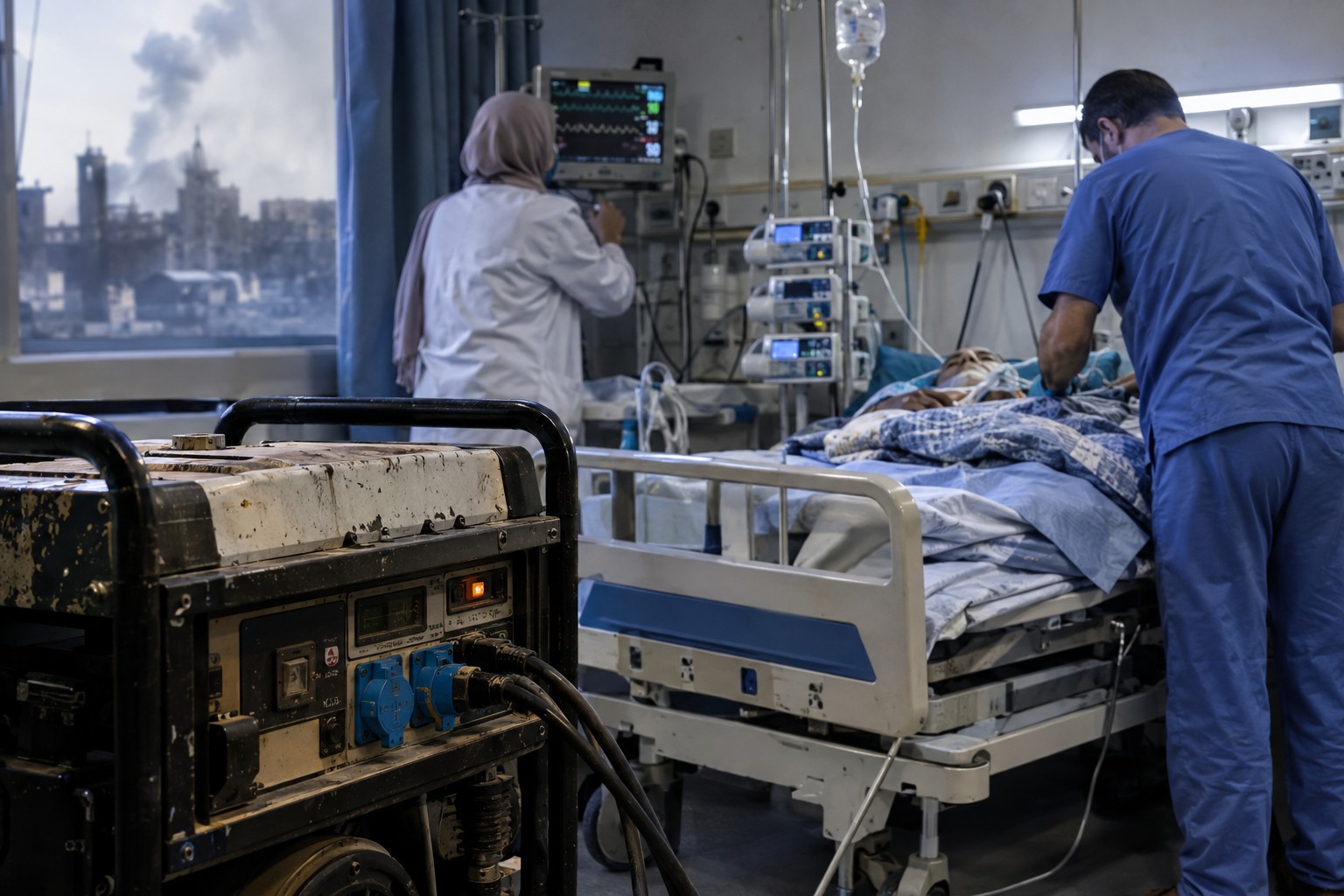
The energy crisis is particularly dangerous because Gaza’s healthcare system relies almost entirely on generators in the absence of a functioning electricity grid.
In a report issued September 11, the UN Office for the Coordination of Humanitarian Affairs (OCHA) warned that shortages of engine oil and spare parts threaten the operation of generators supplying power to hospitals, primary healthcare centers and blood banks, as well as water and sanitation facilities.
OCHA said only 13,445 liters of engine oil had been approved for entry since the beginning of March, while another 92,778 liters remained awaiting approval.
Hospitals running on what remains
Al-Wahidi warned that dwindling supplies of fuel, engine oil and generator spare parts could force critical and life-saving hospital departments to shut down at any moment. Hospitals are already struggling with severe shortages of medicines and medical supplies, as well as diagnostic equipment that is no longer functioning.
The crisis forms part of a broader deterioration documented by international health agencies. In its latest update on Gaza’s health resources and services, issued September 13 and based on data through the end of August, the World Health Organization continued to document the condition of healthcare services and the obstacles limiting their delivery across the Gaza Strip.
An UNRWA report in August described Gaza’s healthcare system as undergoing a “systematic collapse,” noting that no health facility had returned to full operational capacity amid continuing shortages of staff, medicines, supplies and fuel.
The report warned that deteriorating water, sanitation, food and shelter conditions, combined with displacement and overcrowding, are placing additional pressure on healthcare services and worsening crises involving infectious diseases, malnutrition and chronic illnesses.
Transport paralysis hits medical staff
According to the Health Ministry, the impact of the blockade extends beyond hospital doors. Shortages of spare parts and vehicle tires have brought public transportation companies and bus services to a near-total halt, preventing hundreds of doctors, nurses and technicians from reaching their workplaces.
Al-Wahidi said the transportation paralysis is further isolating healthcare facilities and restricting their ability to respond to emergencies at a time when hospitals and health centers are already operating at severely reduced capacity.
Patients and wounded Palestinians also continue to face major difficulties accessing treatment outside Gaza, with large numbers still requiring medical referrals for care that the exhausted healthcare system cannot provide inside the Strip.
On September 1, the World Health Organization said thousands of people with disabilities and amputations require long-term care, while rehabilitation and prosthetic services remain unable to meet the accumulated demand. WHO said approximately 6,600 people require long-term care related to limb amputations.
Supplies fall far below minimum needs
The Gaza Health Ministry rejected Israeli claims that the entry of medical aid and operational supplies is being facilitated, saying the quantities allowed into the Strip remain limited and fall far below the minimum needs of healthcare facilities.
Al-Wahidi said the situation leaves hospitals facing an increasingly difficult equation: keeping the remaining departments running with whatever resources are available while knowing that services could stop at any moment if fuel runs out, generators fail or spare parts become unavailable.
Earlier UN figures also illustrate the scale of the medical supply crisis. In May, WHO reported that 44% of essential medicines were at zero stock, while more than half of Gaza’s hospitals were operating only partially at the time.
The Health Ministry called on the international community, the UN Security Council, WHO, OCHA and human rights organizations to take urgent action to ensure the entry of medicines, medical supplies, fuel, spare parts and other essential operational equipment. It warned that continued restrictions risk turning hospitals from places of treatment into facilities incapable of providing even minimum levels of care.
As medical needs continue to accumulate after years of war, infrastructure destruction and displacement, Gaza’s hospitals are confronting far more than a shortage of medicine. The fuel that powers their generators, the oil that keeps them running and the spare parts that prevent them from breaking down have all become part of the healthcare system’s daily struggle for survival.