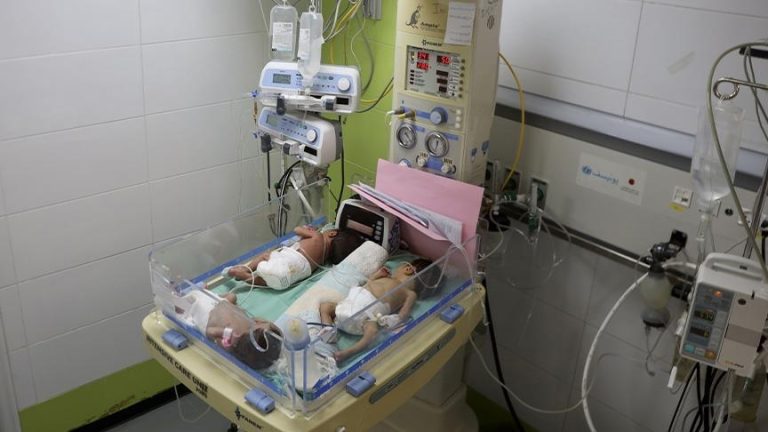
GAZA, (Palestine Foundation Information Center), The neonatal unit at al-Tahrir Hospital, part of Nasser Medical Complex, is facing growing pressure amid a rise in the number of newborns requiring specialized medical care, particularly premature babies and cases involving respiratory illnesses and complications.
Conditions inside the unit reflect the mounting strain on neonatal care services. On one occasion, 10 cases arrived at the unit at once, while no bed or additional oxygen source was available to receive new patients.
The situation highlights the growing need for neonatal beds and equipment, as more children suffer from respiratory problems and severe bronchiolitis, with some developing respiratory failure. The number of premature babies is also increasing.
Dr. Ahmed al-Farra, director of al-Tahrir Hospital at Nasser Medical Complex, said the neonatal unit is experiencing severe overcrowding, with many newborns suffering from respiratory illnesses and complications.
“There is a severe wave of bronchiolitis affecting a number of children, while some are suffering from respiratory system failure,” al-Farra said, adding that the unit is also receiving large numbers of premature babies.
Al-Farra attributed the situation to the impact of the war and the catastrophic health and humanitarian conditions in Gaza. He said overcrowding in the neonatal unit increases the risk of infection transmission among newborns and raises the likelihood that each child may not receive the level of medical care required.
The impact of overcrowding is not limited to the children, he added, but also places additional burdens on doctors and medical teams amid limited resources and rising numbers of cases requiring continuous monitoring and care.
Al-Farra stressed the need to reactivate hospitals and increase their capacity to receive cases, while providing the resources needed to care for newborns. He said Palestinian children are now paying the price of harsh health and humanitarian conditions from the time they are in their mothers’ wombs and immediately after birth.
He said continued pressure on neonatal units requires urgent intervention to expand capacity, provide additional oxygen sources and secure medical supplies to ensure proper care for this highly vulnerable group.
Amid these conditions, neonatal care faces a dual challenge: rising numbers of babies in need of treatment and limited beds and resources. Strengthening neonatal services has become an urgent necessity to prevent further risks to the most vulnerable children.