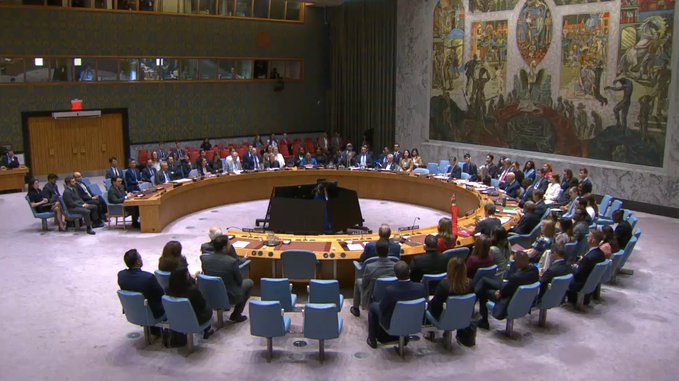
GAZA, (Palestine Foundation Information Center), Hamas has accused the Board of Peace of submitting misleading information to the UN Security Council regarding the implementation of the Gaza ceasefire agreement, saying its latest report provides political cover for Israel to continue its military operations and evade its obligations under the deal.
In a statement on Thursday, Hamas called on the board’s member states to press Israel to halt its military operations, complete its withdrawal from the Gaza Strip, and allow the transitional Palestinian administrative committee and international force to begin carrying out their responsibilities.
The Movement strongly condemned the board’s report submitted to the Security Council on November 17, accusing it of equating Hamas and other Palestinian factions, which it said remain committed to the ceasefire, with Israel, which continues to carry out bombardments, shootings and building demolitions.
Hamas described the approach as “blatant complicity” with Israel, arguing that the report effectively absolves it of responsibility for obstructing the agreement.
The Movement also highlighted the timing of the report, which coincided with the Israeli military’s announcement of a new operation in Gaza, described by Hamas as the first publicly announced operation since the ceasefire took effect.
It said the coincidence raised serious questions about the board’s role in protecting the agreement and its ability to prevent its collapse, a renewed genocidal war and further deterioration of Gaza’s humanitarian crisis.
Hamas challenges allegations of ceasefire violations
Outlining six major objections to the report, Hamas first criticized the board for citing allegations of attacks against Israeli forces without presenting documented evidence.
By contrast, the Movement said it had recorded 6,288 Israeli ceasefire violations over 404 days, averaging 15.5 violations daily.
According to Hamas, these violations resulted in the killing of 1,658 Palestinians, injuries to 6,000 others and the arrest of 223 people.
The Movement accused the board of disregarding these figures while presenting unsubstantiated allegations against Palestinian factions.
Hamas also criticized the report for overlooking the continued presence of Israeli forces and their military activities beyond the so-called Yellow Line.
It claimed that Israel had expanded the territory under its control by more than 20% beyond the agreed boundaries, arguing that such changes undermine the ceasefire and obstruct the transition to its subsequent phases.
Dispute over the ceasefire roadmap
Hamas said the report also failed to acknowledge its acceptance of the roadmap proposed by the Board of Peace itself, while overlooking the Israeli government’s rejection of the plan.
According to the Movement, the roadmap establishes a clear sequence of steps beginning with the completion of the ceasefire’s first phase.
This would be followed by the entry of a transitional Palestinian administrative committee and the deployment of an international force, before moving toward arrangements concerning weapons under agreed mechanisms and in coordination with Israeli withdrawal.
Hamas argued that disregarding its acceptance of this framework while failing to address Israel’s rejection misrepresented the parties’ respective positions and responsibilities.
The Movement further rejected the board’s criticism of its continued involvement in administering civilian services and security in Gaza.
It said the Israeli government was responsible for obstructing the entry of the committee designated to assume administrative responsibilities and delaying the deployment of Palestinian civilian police.
Hamas maintained that its continued management of essential services could not reasonably be presented as an obstacle to implementation while the arrangements intended to replace the existing administration remained blocked.
Humanitarian crisis and responsibility for implementation
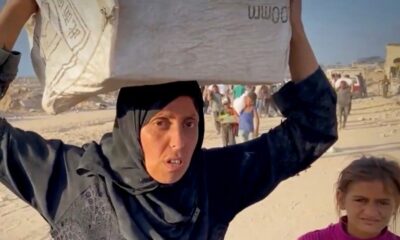
Another major objection concerned the report’s treatment of Gaza’s humanitarian crisis. Hamas accused the Board of Peace of adopting the Israeli account of developments and shifting responsibility for deteriorating living conditions onto the Palestinian side.
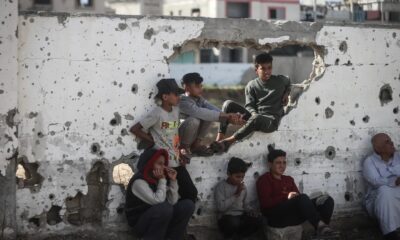
The Movement said the report failed to acknowledge Israel’s responsibility for the continuation and worsening of the humanitarian emergency, including restrictions and measures affecting the population.
Hamas also criticized the board’s repeated warnings that the ceasefire could collapse without exerting effective pressure on the party it accused of obstructing implementation.
It argued that warnings alone, without concrete measures to enforce compliance, provide Israel with additional political cover to avoid fulfilling its commitments.
According to Hamas, the board’s responsibility should extend beyond describing developments and preparing periodic reports to ensuring that the agreement is implemented and holding those responsible for obstructing it accountable.
Calls for Israeli withdrawal and unrestricted humanitarian aid
Hamas reaffirmed its commitment, alongside other Palestinian factions, to implementing the ceasefire agreement and its accompanying roadmap in accordance with the agreed arrangements and sequence of obligations.
It held the Israeli government responsible for maintaining the current situation and preventing progress toward subsequent stages of the agreement.
The Movement also accused the Board of Peace of providing justification for Israeli violations and allowing Israel to evade its obligations through misleading assessments.
Hamas urged the board to review the approach adopted in its report, stop repeating allegations it considers misleading and take concrete action to ensure compliance with the ceasefire.
It called for pressure on Israel to end military operations, guarantee the regular flow of humanitarian assistance and respect the arrangements established under the agreement.
These include completing the Israeli withdrawal, enabling the Palestinian administrative committee and international force to assume their responsibilities, and beginning reconstruction efforts across the devastated territory.
The Movement also appealed directly to the board’s member states to take a clear position on Israeli violations and exert pressure to correct the board’s biased approach.
Hamas warned that redistributing responsibility through official reports and political statements would not address the underlying causes of Gaza’s continuing humanitarian catastrophe.
It argued that achieving lasting security and stability requires effective pressure to enforce the agreement’s provisions and remove the obstacles preventing their implementation.
The disputed report is the second submitted by the Board of Peace to the UN Security Council under Resolution 2803, adopted in November 2025, which requires the board to submit written reports every six months.