GAZA, (Palestine Foundation Information Center), The Hamas Movement called on the International Criminal Court, UN bodies and specialized human rights institutions to open investigation and documentation tracks into the testimonies revealed by the documentary “Naza,” given by current and former Israeli military and intelligence personnel about targeting and bombing mechanisms in the Gaza Strip.
The Movement said the material presented in the film should be turned from documentary content into evidence subject to investigation and accountability.
In a press statement on Tuesday, Hamas said the world watched with great anger as the film was screened at the Venice International Film Festival, featuring direct testimonies from 24 army and intelligence personnel and officers about targeting operations in Gaza and dangerous admissions regarding the killing of Palestinian civilians.
Hamas said the significance of these testimonies lies in the fact that they come from people who worked inside Israel’s military and security establishment and took part in surveillance and targeting systems. It called for the testimonies to be documented and used in investigations related to war crimes and violations committed in the Gaza Strip.
The Movement stressed that what “Naza” revealed should not remain merely material for viewing and sympathy, but should become an additional motive for investigation, accountability, justice for victims and ensuring that those responsible for war crimes and violations do not escape accountability.
What does “Naza” reveal?
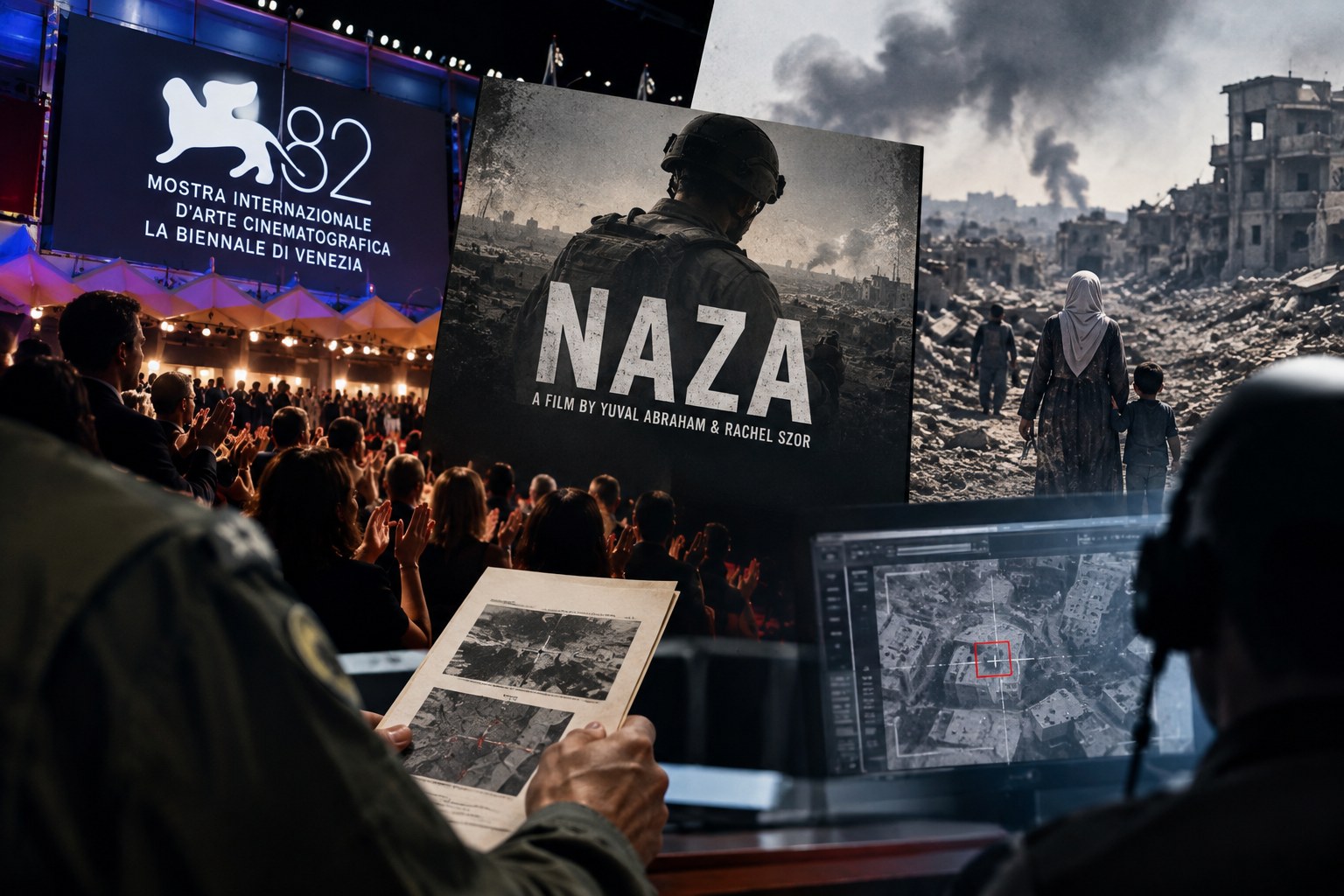
The 80-minute film was directed by Israeli journalists Yuval Abraham and Rachel Szor, two of the filmmakers behind the Oscar-winning documentary “No Other Land.” “Naza” was added to the official competition at the Venice Film Festival in August and premiered on September 10, before later winning the festival’s Special Jury Prize.
The film is based on secret interviews conducted over nearly three years with 24 soldiers and members of Israeli military intelligence. Their identities were concealed as they spoke about surveillance systems, target selection and the use of artificial intelligence technologies in bombing operations.
The filmmakers chose to shoot at night on rooftops in Tel Aviv, while concealing the participants’ identities, in an attempt to provide them with a safe space to speak about their experience inside the targeting system.
The film’s title refers to an Israeli military term used to refer to expected civilian casualties as “collateral damage,” according to the film’s sources and press coverage accompanying its screening.
The testimonies address surveillance and targeting systems, including AI-based systems, as well as how bombing decisions are made and the extent to which the presence of civilians in targeted areas is taken into account.
According to the film’s conclusions, the testimonies present a picture of a military system in which the killing of large numbers of civilians becomes an expected outcome of Israel’s criminal attacks.
25 minutes of applause
The screening of “Naza” in Venice sparked wide reaction, with the audience giving the film a standing ovation that lasted around 25 minutes, the longest recorded applause in the festival’s history, surpassing the mark set by “The Voice of Hind Rajab” in last year’s edition. Palestinian flags were also seen among the audience during the tribute that followed the screening.
The film’s presence did not stop at the audience reaction. It won the Special Jury Prize in the festival’s official competition and also received several parallel awards, including the Green Drop Award and the Edipo Re Student award.
The film also derives weight from the background of its directors. Abraham and Szor were among the co-directors of “No Other Land,” which won the Oscar for Best Documentary Feature in 2025. The film documented settler attacks and Israeli occupation policies in the West Bank.
Israeli anger and investigations
In contrast, the controversy surrounding “Naza” quickly moved from cinema halls to the Israeli political arena after Israeli Prime Minister and war criminal Benjamin Netanyahu attacked the film, describing it as “shocking incitement” and accusing it of helping fuel antisemitism.
Israeli army chief Eyal Zamir also rejected what appeared in the film, saying it distorted the army’s image, as the military considered taking legal action over the film and its sources.
Israeli Culture Minister Miki Zohar called for stripping directors Abraham and Szor of their citizenship, describing their work as “betrayal of the state”, an escalation that in turn drew criticism and raised concerns over freedom of expression and journalistic and artistic work in Israel.
The campaign comes as “Naza” has become one of the most prominent documentaries addressing the war on Gaza from within Israeli society itself, after its directors chose to rely on the testimonies of people who had worked inside the military establishment, rather than limiting the film to victims’ testimonies or images of destruction in Gaza.