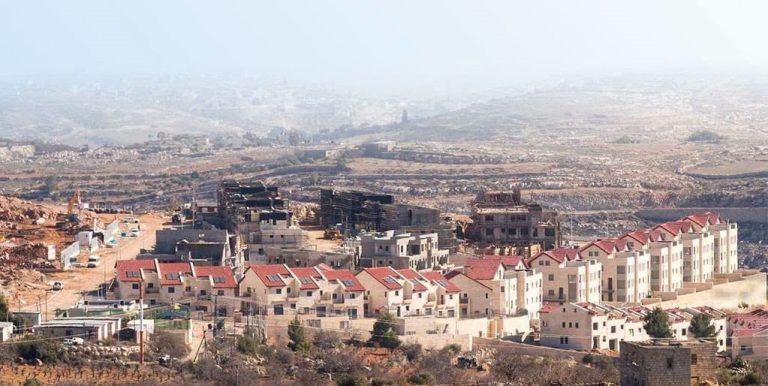
WEST BANK, (Palestine Foundation Information Center), Hamas official Mahmoud Mardawi said Israel’s announcement of a new development plan to expand the Avnei Hefetz settlement, southeast of Tulkarem in the occupied West Bank, represents a dangerous escalation in settlement activity aimed at imposing new realities on the ground and displacing Palestinians from their land.
In a press statement, Mardawi stressed that continued settlement expansion would not grant Israel any legitimacy over occupied Palestinian territory.
He said such plans would fail in the face of Palestinians’ steadfastness and determination to defend their national and historical rights, accusing the Israeli government of openly sponsoring the expansion of settlements across the West Bank.
Mardawi called on Palestinians in Tulkarem and other West Bank governorates, particularly young activists, to mobilize against settlement expansion through all available means and confront settlers and Israeli forces to protect Palestinian land and holy sites.
He also urged Palestinian factions to unify their efforts and intensify resistance to Israeli annexation and settlement plans, insisting that Palestinians’ determination to remain on their land would continue to obstruct the Israeli government’s policies.
Earlier, Israeli authorities announced a new development plan to expand the Avnei Hefetz settlement, southeast of Tulkarem. The plan was published through Israel’s planning authorities.
Israel issues tender for 732 settlement units near Bethlehem
In a separate development, Israeli authorities issued a new tender for the construction of 732 settlement housing units in Gvaot, a settlement built partly on Palestinian land west of Bethlehem.
The move marks another step toward implementing the first phase of the settlement project and expanding its residential, commercial, and service infrastructure.
According to the Wall and Settlement Resistance Commission, the tender, numbered 261/2026, sets December 1, 2026, as the opening date for bids and December 28 as the submission deadline.
The commission said the project includes multi-story residential buildings, commercial spaces, public buildings, and community facilities, according to documents published in the Israeli Land Authority’s tender registry.
The residential tender was issued alongside a separate nonresidential tender, numbered 263/2026, offering another plot of land at the same location for commercial activities, employment facilities, and services.
The commission said the simultaneous publication of both tenders indicates an effort to expand the settlement beyond housing by establishing economic infrastructure and services intended to strengthen its long-term presence on Palestinian land.
Settlement plans move toward implementation
The Wall and Settlement Resistance Commission explained that issuing the tenders represents a transition from the approval of development plans to the marketing of land and the invitation of bids from companies and developers.
However, it clarified that the publication of a tender does not mean construction has begun or that contracts have been awarded.
Rather, the process represents an advanced administrative and legal step toward implementing previously approved settlement plans.
According to the commission, Israeli authorities published at least 28 land-marketing tenders across the occupied West Bank, including Occupied Jerusalem, between the beginning of 2026 and November 8.
Of these, 18 included residential components totaling 7,815 settlement housing units, while another 10 were designated for nonresidential and commercial purposes.
The latest developments come amid continued Israeli settlement expansion around Bethlehem and other Palestinian governorates.
Through the expansion of existing settlements and the introduction of new residential and commercial projects, Israeli authorities are extending settlement infrastructure and consolidating control over additional Palestinian land.
The commission warned that these measures risk establishing increasingly entrenched settlement realities on the ground, further undermining Palestinian communities’ access to their land and prospects for territorial continuity.