
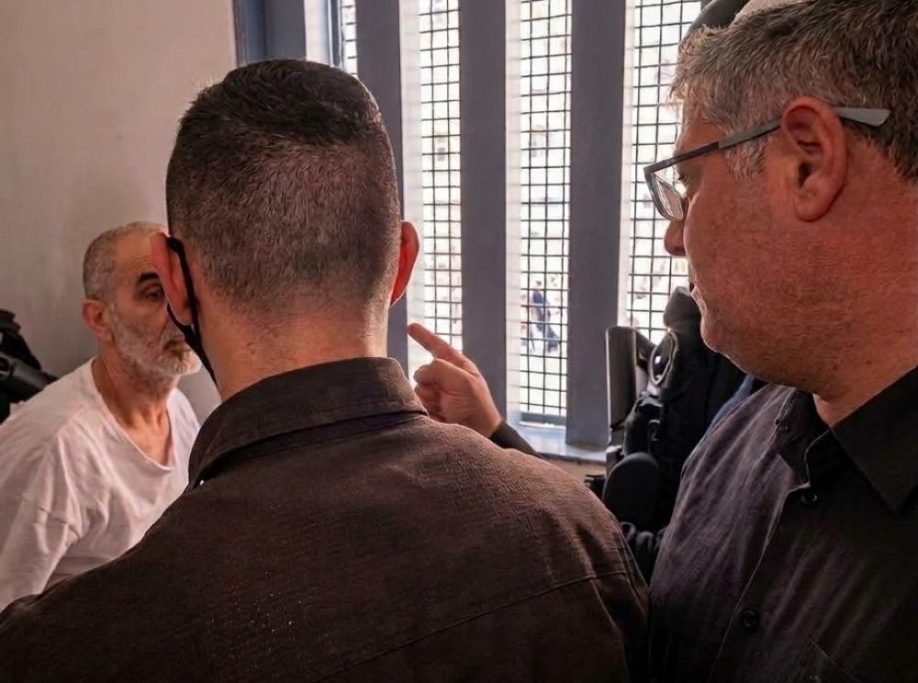
WEST BANK, (Palestine Foundation Information Center), For Ghofran Zamel, the image of Palestinian prisoner Hassan Salameh appearing after years out of public view was far more than a passing moment. It answered many of the questions she had carried about the toll that years of imprisonment, solitary confinement, and abuse had taken on his body and appearance.
In an interview, Zamel, Salameh’s fiancée, said it was the first image she had seen of Salameh in three years. She explained that during every visit by his lawyer, she would ask about the details of his appearance, his face, features, and physical condition, trying to imagine from those descriptions how years of imprisonment and isolation had changed him.
What struck her most in the image, she said, was not simply the visible toll of his long years behind bars, but his gaze, which she described as remaining unwavering and strong despite everything he had endured.
They wanted to show him broken
Zamel said she said the image was intended to be a “scene of humiliation,” adding that Israeli National Security Minister Itamar Ben-Gvir sought to use it for propaganda and portray Salameh as broken before the power of his jailers.
But she said the result was the opposite. Salameh’s expression reflected steadfastness, strength, and resilience rather than the image Israel sought to present, she further said.
She noted that Salameh had endured years of solitary confinement and had lost family members, friends, and fellow prisoners. His cell had been raided, and while imprisoned he had received news of the deaths of people close to him. Yet, she said, he faced those circumstances “with the steadfastness of a man who knows that death cannot defeat those who stand for their rights.”
A gaze three decades could not change
Zamel said the image brought her back to an earlier moment when she saw Salameh inside a courtroom as he was sentenced to life imprisonment.
Decades separated the two scenes, years marked by suffering, torture, solitary confinement, war, and loss.
“One thing has not changed,” she said, referring to the unwavering and powerful gaze she remembered.
Zamel said years of imprisonment, isolation, and absence had failed to extinguish Salameh’s spirit or break him. The only thing missing from the scene, she added, was the opportunity for Salameh himself to respond to Ben-Gvir.
Imagining what he might have said, she stated, “You came to boast that you made my life hell. Then stand before the camera and say it, just as you said it to me, in your own name, in your official capacity, and with full responsibility for your words.”
Dignity is not a gift from jailer
Zamel stressed that Salameh does not bargain over his rights and does not regard his freedom or dignity as a “gift” granted by his jailer.
She said that in confronting overwhelming military power, what a prisoner retains is his steadfastness and a will that cannot be taken away.
If Salameh had been allowed to respond, she said, his message would have been, “I am beyond your humiliation, more steadfast than your threats, and stronger than the fear you seek to instill in me.”
She added that the years had not changed him and that he remained as steadfast as Palestinians had always known him.
Zamel’s remarks came after Salameh appeared in a video published by Ben-Gvir, showing the Israeli minister inside his cell directing threats of killing and execution at him. Salameh’s appearance after years of imprisonment and isolation drew widespread attention, particularly because of the visible toll his years behind bars appeared to have taken on him.
Hassan Salameh is one of the Palestinian prisoners serving some of the longest sentences in Israeli prisons. He was sentenced to 48 life terms and has spent nearly three decades in Israeli custody, including years in solitary confinement.