WEST BANK, (Palestine Foundation Information Center), The Israeli occupation forces (IOF) and settlers carried out 13 attacks against Palestinian olive harvesters across four governorates in the West Bank on Tuesday, targeting farmers, agricultural land and property during the annual olive harvest season.
The Palestinian Wall and Settlement Resistance Commission documented the attacks between Tuesday morning and 6 p.m., reporting injuries, assaults, detentions, crop theft, damage to vehicles and restrictions preventing farmers from reaching their land.
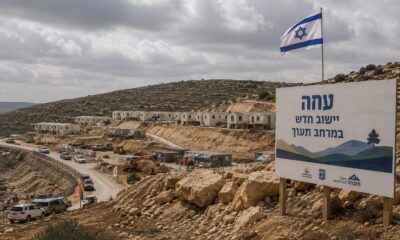
The attacks coincided with the establishment of a new Israeli settlement outpost amid olive groves, raising concerns about further land seizures and the displacement of Palestinian farmers.
Farmers attacked, detained in Ramallah and al-Bireh
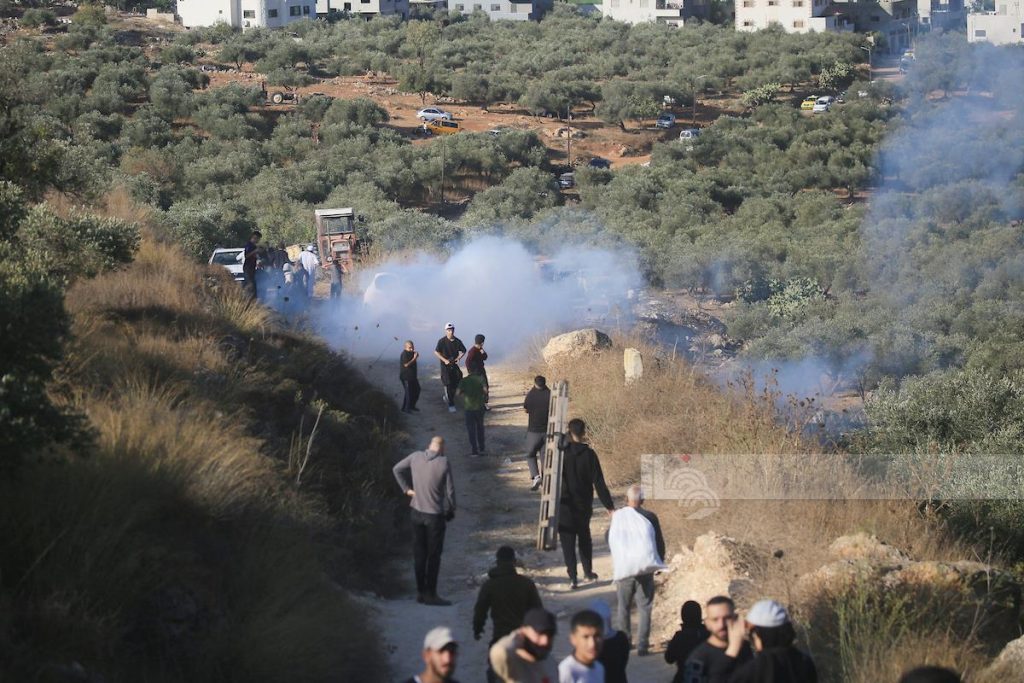
In the Ramallah and al-Bireh governorate, the IOF troops and settlers detained dozens of Palestinians and international solidarity activists in the eastern part of Turmus Ayya.
They prevented farmers from reaching their olive groves, including fields located only a few dozen yards from their homes, and damaged vehicles in the area.
In Sinjil, a Jewish settler released livestock onto agricultural land in the town’s plains, while residents continued to face restrictions preventing them from accessing large areas of their property.
In al-Mughayyir, settlers stormed farmland belonging to the Abu Shafiq family and carried out provocative patrols near the home of an elderly resident known as Abu Atta. Meanwhile, Israeli military bulldozers continued leveling land in the Sahl al-Rafid area.
In the al-Harayiq area of Deir Jarir, settlers attacked olive harvesters under the IOF protection. One Palestinian suffered from tear gas inhalation, while an elderly man sustained a deep wound to his hand.
Israeli forces also arrested Anas Shuja’iyya after assaulting him.
Settlers attacked farmers on the outskirts of Ein Yabrud, attempted to drive them from their land and brought livestock into their fields.
In Beit Ur al-Tahta, several Palestinians and international solidarity activists suffered from tear gas inhalation during an attack by settlers accompanied by Israeli forces.
The attack involved physical assaults, the firing of tear gas canisters and live ammunition, the forced removal of international activists and the detention of others.
Settlers assault farmers and steal olive harvests in Nablus
In Nablus governorate, Jewish settlers attacked olive harvesters in the Wadi al-Shami area of Asira al-Qibliya, smashing a vehicle and forcing farmers to leave their land.
In nearby Madama, an armed settler expelled four Palestinian families from their farmland while they were harvesting olives in the northern part of the town.
The attacks extended to the Khallat Mahra area of Tell, near the Havat Gilad settlement outpost, where settlers assaulted farmers and stole harvested olives.
In Beita, settlers physically assaulted farmers in the al-Dhahra area and seized their olive harvests and harvesting tarps.
In Burqa, a 50-year-old Palestinian farmer was severely beaten while harvesting olives. Palestinian Red Crescent crews transported him to a hospital for treatment.
New settlement outpost established in Salfit
In Salfit governorate, Jewish settlers established a new settlement outpost in the Wadi al-Ahmar area between the villages of Yasuf and Marda.
The outpost was set up amid extensive agricultural land planted with olive trees, threatening farmers’ ability to access and cultivate their property.
In Jenin governorate, the IOF imposed severe restrictions on farmers in the Barta’a area, preventing them from reaching their agricultural land behind Israel’s separation wall to complete the olive harvest.
Attacks threaten Palestinian farmers’ access to their land
The Wall and Settlement Resistance Commission warned that the continuing attacks during the olive harvest demonstrate a growing connection between assaults on Palestinian farmers and efforts to establish new settlement footholds on agricultural land.
The commission pointed to the simultaneous occurrence of physical attacks, detentions, crop theft, land leveling, settlement outpost construction and restrictions on access to olive groves.
It said the establishment of a new outpost between Yasuf and Marda, alongside continued land leveling in Sahl al-Rafid, indicated that attacks on farmers were being used to expand Israeli control over Palestinian land and change its use.
The commission emphasized that targeting farmers even on land adjacent to their homes, while detaining and assaulting them under Israeli military protection, undermines Palestinian agricultural livelihoods and creates conditions that pressure landowners to leave.
It warned that continued restrictions could turn the temporary loss of an olive harvest into permanent exclusion from agricultural land and sources of income.
The commission called on the international community to intervene, stop the attacks, hold those responsible accountable and guarantee Palestinian farmers safe access to their land.
More than 11,000 Israeli attacks recorded in first half of 2026
The latest attacks come amid repeated Israeli military and settler attacks targeting Palestinian olive harvests in recent years.
These attacks have included physical assaults, restrictions on access to farmland, the uprooting and burning of olive trees, and the theft of harvested crops, often under the IOF protection.
According to the Wall and Settlement Resistance Commission, the IOF and settlers carried out approximately 11,074 attacks against Palestinians and their property during the first half of 2026.
Jewish settlers were directly responsible for 3,488 of those attacks.
The commission also documented 2,051 attacks against Palestinians, their land and property across the occupied West Bank and Jerusalem during September 2026.
The commission warned that continued attacks on olive harvesters threaten not only the current agricultural season but also the long-term ability of Palestinian families to remain on and cultivate their ancestral land.