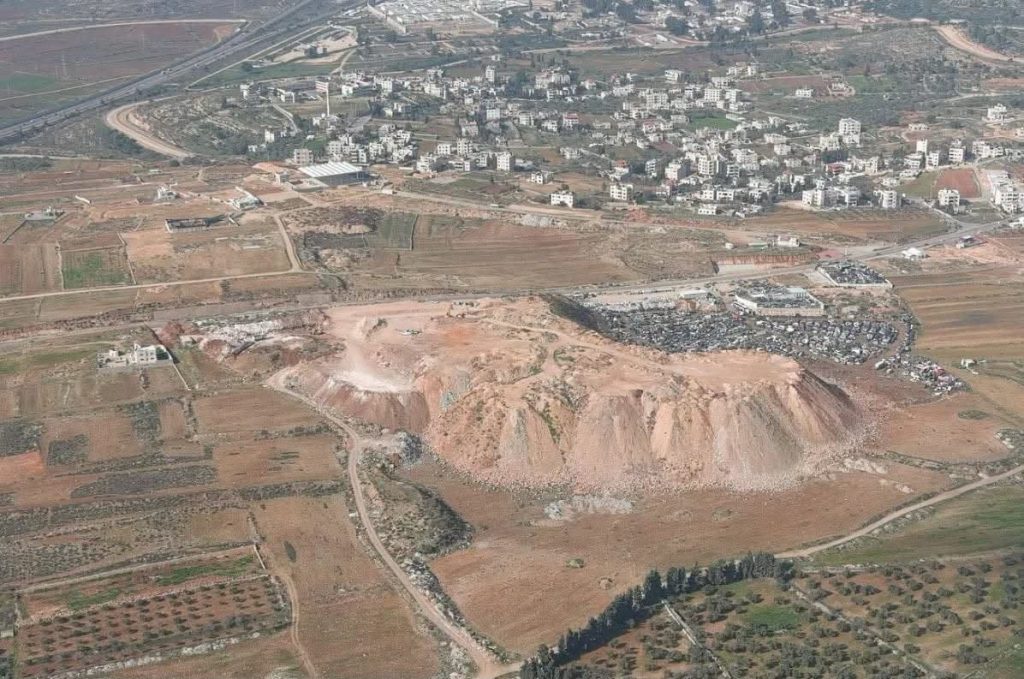
WEST BANK, (Palestine Foundation Information Center), Israeli occupation authorities (IOA) decided on Monday to seize approximately 180 dunums of land in the Jabal al-Ras area of the village of Qalandiya, north of Occupied Jerusalem, in preparation for establishing an agricultural and pastoral settlement outpost aimed at expanding control over Palestinian land.
The Jerusalem Governorate said in a statement that the targeted land lies between the villages of Qalandiya and Rafat, along the Ramallah road and the villages northwest of the occupied city, noting that the plan aims to establish a settlement outpost deep within a Palestinian residential area.
The governorate described the decision as part of a policy of confiscating land and using it to serve settlement expansion, imposing new realities on the occupied territory and threatening the Palestinian presence in the area.
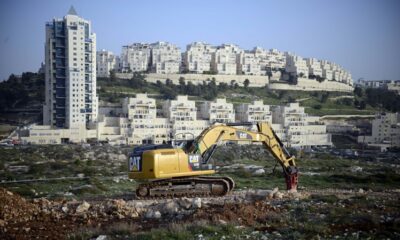
The decision comes amid an escalation in land seizures across the Jerusalem Governorate and the West Bank through the establishment of agricultural and pastoral outposts that gradually become tools for controlling vast areas of land, encircling Palestinian communities and isolating them.
Data from the Palestinian Central Bureau of Statistics indicates that the IOA has taken control of approximately 18% of the West Bank’s total area over the past two years, alongside the establishment of 185 pastoral settlement outposts.
In the same context, a report by the Armed Conflict Location & Event Data Project (ACLED), based on data from the Israeli organization Peace Now, documented the establishment of 259 settlement outposts between 2023 and September 11, 2026, including 186 agricultural outposts.
According to the report, settlers control more than 1.1 million dunums in areas classified as Area C, equivalent to approximately one-third of its total area.
The danger posed by pastoral outposts lies in their gradual expansion strategy. They begin with limited areas before extending into surrounding land, using livestock grazing to establish facts on the ground, alongside harassment and attacks targeting Palestinian farmers and shepherds, preventing them from accessing and making use of their land.
The effects of this policy extend beyond land confiscation to threaten the livelihoods of rural and Bedouin communities and the foundations of their continued existence. Shepherds are prevented from accessing grazing lands, agricultural land is seized, and livestock are attacked. These practices increase pressure on residents and threaten to force them from their homes through forcible displacement.