
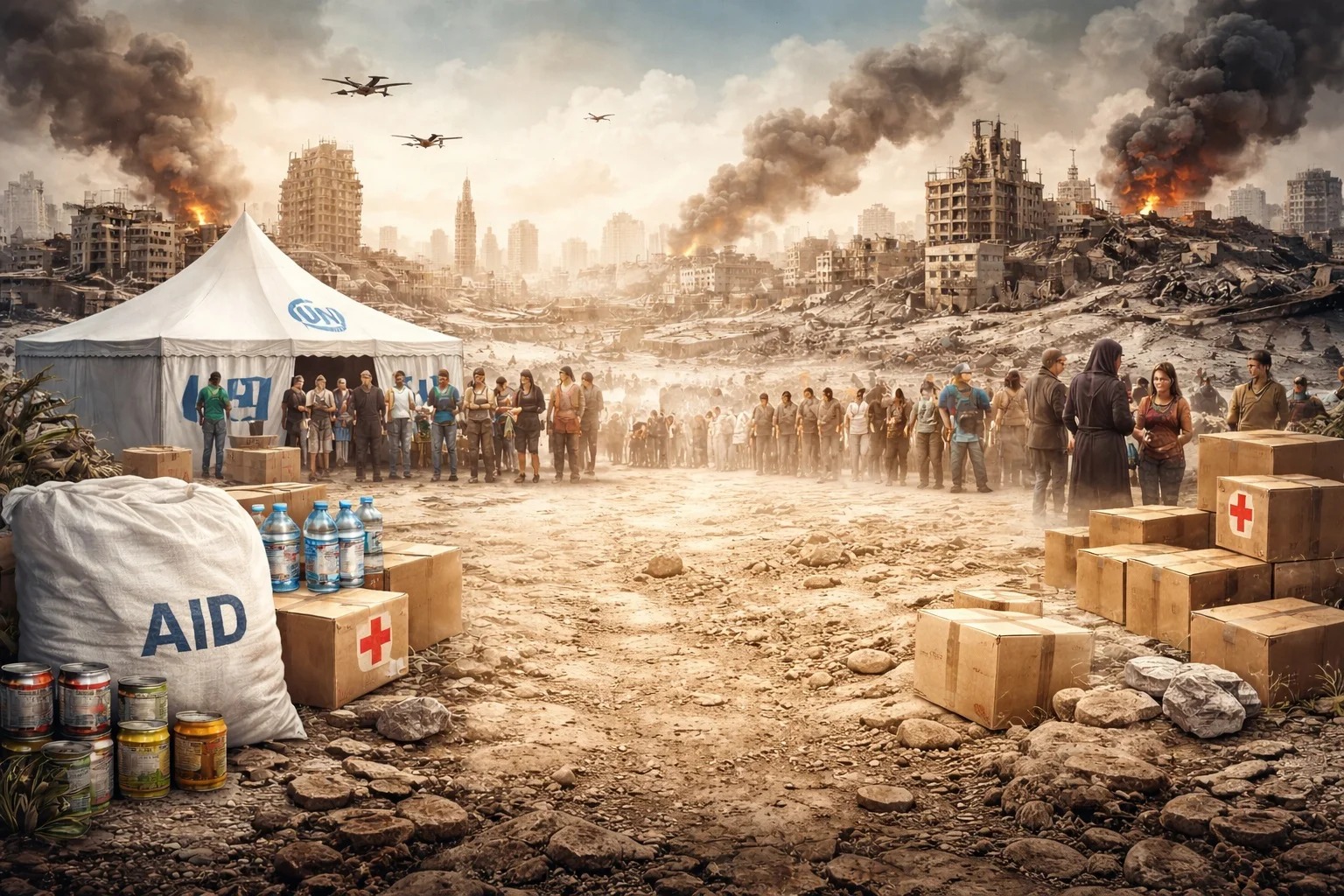
GAZA, (Palestine Foundation Information Center), Israeli restrictions on the entry of fuel, lubricants and vehicle spare parts into the Gaza Strip are threatening to bring humanitarian aid trucks to a halt and further paralyze the territory’s already devastated transportation system.
The crisis extends beyond public transportation, affecting the delivery of humanitarian supplies and essential services amid widespread destruction of vehicles, roads and critical infrastructure.
Anis Arafat, spokesperson for Gaza’s Ministry of Transport and Communications, warned that continued restrictions on fuel, engine oils, spare parts and tires could force more vehicles out of service, including trucks transporting urgently needed humanitarian assistance.
In a press statement, Arafat said the ongoing closure of border crossings and restrictions on essential operational supplies were deepening a transportation crisis caused by extensive destruction during Israel’s genocidal war on Gaza.
He explained that preliminary field assessments conducted by ministry teams indicate that more than 70% of Gaza’s approximately 70,000 registered vehicles before the war have been destroyed or rendered unusable, either through complete destruction or severe damage.
The destruction has affected not only privately owned vehicles but also public transportation buses, heavy machinery and engineering equipment belonging to municipalities, Civil Defense teams and the Ministry of Transport.
Ambulances have also been destroyed, further complicating emergency rescue operations, medical evacuations and efforts to reopen damaged roads.
Arafat said restrictions on the entry of spare parts, engine oils, tires and batteries have forced thousands of vehicles out of service, even when their mechanical problems could ordinarily be repaired.
With replacement parts unavailable, vehicle owners and mechanics have resorted to dismantling damaged cars and salvaging usable components to keep essential vehicles operating.
These efforts have focused particularly on ambulances and water delivery vehicles, which remain indispensable to Gaza’s emergency response and basic services.
Arafat also warned of the worsening shortage of diesel and gasoline, saying some drivers have been forced to use waste cooking oil and fuel products refined through makeshift methods as substitutes.
Such practices, he explained, accelerate engine damage, increase environmental pollution and pose serious safety risks to drivers and passengers.
The transportation crisis has been compounded by extensive damage to Gaza’s main road network, particularly Salah al-Din Street and al-Rashid Street, the two principal routes connecting the northern and southern parts of the territory.
According to Arafat, large sections of these roads have been bulldozed by Israeli military machinery, destroying asphalt surfaces and underground infrastructure, including water, sewage and electricity networks.
Bombardment has also left deep craters, while accumulated rubble and earthen barriers have blocked roads and obstructed movement in numerous areas.
The destruction has turned travel between Gaza’s governorates and within its cities into a difficult and often dangerous daily ordeal.
Residents are increasingly forced to use rough, unpaved secondary roads or rely on rudimentary transportation methods, including animal-drawn carts, to travel long distances.
These conditions have significantly increased the physical and financial burdens on civilians, particularly patients, injured people and older residents who depend on reliable transportation to reach healthcare facilities and essential services.
Arafat emphasized that the deteriorating road network and shortage of operational vehicles have directly affected humanitarian relief convoys, slowing the movement of aid and delaying deliveries to vulnerable communities.
He warned that continued restrictions on fuel and maintenance supplies could bring additional trucks and transport vehicles to a standstill, further disrupting the distribution of food, water, medical supplies and other essential assistance.
The situation is particularly critical as Gaza’s humanitarian needs remain severe and much of the population depends on regular relief deliveries.
The loss of transportation capacity also undermines the work of municipalities, emergency responders and humanitarian organizations attempting to maintain basic services amid widespread destruction.
Gaza’s Ministry of Transport and Communications renewed its appeal to the international community and humanitarian organizations to urgently press for the reopening of border crossings and the unrestricted entry of fuel, lubricants, spare parts, tires and heavy engineering machinery.
The ministry stressed that these supplies are essential to restoring damaged vehicles, rehabilitating destroyed roads and ensuring that civilians can travel and humanitarian aid can reach communities throughout the Gaza Strip.
Without immediate intervention, officials warn, the continued deterioration of Gaza’s transportation system could further isolate vulnerable communities, obstruct emergency services and threaten the flow of lifesaving humanitarian assistance.