JORDAN VALLEY, (Palestine Foundation Information Center), Twenty-seven Palestinian families in the Bedouin community of Ras al-Ahmar, southeast of Tubas in the occupied West Bank, face the threat of forced displacement as Israeli restrictions cut off access to water, livestock feed and surrounding farmland, while settlers continue threatening residents with eviction.
The humanitarian situation in the northern Jordan Valley community has deteriorated sharply, with 20 Palestinian families already forced to leave their homes amid escalating settler attacks and Israeli restrictions.
The remaining 27 families are struggling to survive under increasingly difficult living and security conditions, raising fears that the community could be emptied of its Palestinian residents.
Israeli forces seal off community, cut access to essential supplies
Settlement affairs researcher Aref Daraghmeh said the restrictions imposed on Ras al-Ahmar are part of a broader campaign targeting Bedouin communities across the northern Jordan Valley.
Speaking to Quds Press, Daraghmeh said Israeli measures have intensified over the past three years, progressively isolating the community and blocking the roads connecting it to surrounding areas.
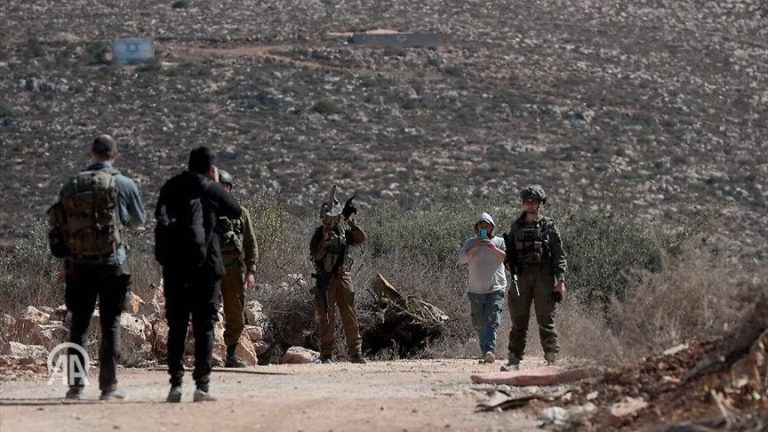
He explained that Israeli forces closed the community’s last remaining access route in mid-September 2026, after other dirt roads had already been blocked for more than two months.
Israeli forces also dug a deep trench at the remaining entrance, severely restricting residents’ movement and preventing essential supplies from reaching the community.
Daraghmeh warned that the restrictions were designed to make daily life increasingly difficult and pressure Palestinian families into abandoning their homes.
Restrictions threaten livestock farming and Palestinian livelihoods
Residents of Ras al-Ahmar depend primarily on sheep and livestock farming, along with grazing-based agriculture, for their livelihoods.
According to information cited in the report, local herders previously relied on approximately 360,000 dunums of natural grazing land to sustain their flocks.
However, Israeli restrictions have resulted in the seizure of, or denial of Palestinian access to, approximately 90 percent of the land associated with the community.
The loss of grazing areas has severely undermined the local economy, forcing livestock owners to seek costly alternatives to feed their animals.
At the same time, restrictions on the delivery of animal feed and other essential supplies have made it increasingly difficult for residents to maintain their herds.
Daraghmeh warned that continued isolation, combined with restrictions on access to farmland, water and livestock feed, could accelerate the displacement of the remaining families.
He said threats to evict residents from their homes further increased the danger of the community being forcibly emptied.
Water shortages deepen humanitarian crisis
Ras al-Ahmar resident Mohammed Sawafteh said daily life has become increasingly difficult as families struggle to secure drinking water and supplies for their livestock.
He explained that water tankers and trucks carrying animal feed can no longer easily reach the community, threatening residents’ primary source of income.
The water crisis has worsened following the cutting and damaging of supply lines, according to human rights reports.
Water tankers carrying supplies for drinking and agricultural use have reportedly been prevented from reaching the community for approximately a month.
The shortages affect not only families’ daily needs but also hundreds of livestock that require regular access to water.
With grazing land increasingly inaccessible and animal feed deliveries restricted, residents face growing difficulties keeping their animals alive and maintaining their livelihoods.
Sawafteh warned that the deteriorating conditions could force additional families to leave.
Human rights groups demand urgent international intervention
Palestinian human rights organizations, including the Al-Baydar Organization for the Defense of Bedouin Rights, have called for urgent international intervention to end the restrictions imposed on Ras al-Ahmar.
The organizations urged international agencies and the International Committee of the Red Cross to help reopen access roads, ensure the delivery of water and animal feed, and protect Palestinian families and their property.
Al-Baydar reported that Israeli measures have prevented water tankers, livestock feed and other essential supplies from entering the community.
It also documented restrictions on humanitarian teams and solidarity activists attempting to reach residents, along with incidents involving the detention and arrest of Palestinians and the pursuit of activists.
The organization said the restrictions have compounded the humanitarian crisis and left families increasingly isolated from essential services and outside assistance.
Settlers threatened 47 families with eviction
The restrictions have coincided with direct threats from Israeli settlers against the 47 Palestinian families who originally lived in Ras al-Ahmar.
According to Al-Baydar, settlers gave residents until the evening of October 11, 2026, to evacuate their homes.
Since then, 20 families have left the community, while the remaining 27 continue to face pressure, isolation and uncertainty over their future.
Human rights organizations warn that the combination of settler threats, blocked roads and restrictions on basic supplies is creating conditions that could lead to further forced displacement.
More than 5,500 settler attacks reported in 2026
The developments in Ras al-Ahmar come amid escalating Israeli settler violence across the occupied West Bank, including occupied Jerusalem, since October 2023.
According to figures from the Palestinian Colonization and Wall Resistance Commission, settlers carried out 5,561 attacks against Palestinians, their land and property between January and September 2026.
The commission’s figures also indicate that approximately 750,000 Israeli settlers live in the occupied West Bank, spread across 194 settlements and around 400 settlement outposts.
The continuing expansion of settlements and settler attacks has increased pressure on Palestinian communities, particularly in rural areas where families depend on access to agricultural land and grazing areas.
Remaining families face growing threat of forced displacement
For the 27 families still living in Ras al-Ahmar, the crisis extends far beyond shortages of water, animal feed and basic services.
The closure of access roads, loss of grazing land and continued threats from settlers have placed the community’s future at risk.
With 20 families already displaced, residents and human rights organizations fear that continued restrictions could force the remaining families to abandon their homes and livelihoods.
The situation highlights growing concerns over forced displacement in the northern Jordan Valley, where Palestinian Bedouin communities face mounting pressure on their land, freedom of movement and ability to sustain their traditional way of life.