GAZA, (Palestine Foundation Information Center), Testimonies from Israeli soldiers and officers who participated in the Gaza genocide have revealed widespread abuses, including the killing of unarmed Palestinian civilians, the destruction of residential neighborhoods, the burning of homes, and the use of Palestinians as human shields. The accounts describe military orders and inflammatory rhetoric that fueled a desire for revenge against Gaza’s population.
A documentary broadcast by Al Jazeera highlighted these testimonies, some of which were given by Israeli military personnel whose identities were concealed for their protection.
The film offers firsthand accounts from within the Israeli military about rules of engagement, battlefield operations, and the role of military commanders and religious figures in justifying violations. It also examines the lack of accountability and the Israeli media’s failure to adequately report the suffering of Palestinians.
Several soldiers said the anger that followed the October 7, 2023, attacks evolved into a desire for revenge within military units, with Gaza’s civilian population becoming a target regardless of individual involvement in armed activities.
They recalled that one military rabbi called for revenge against everyone, including civilians, and urged soldiers to focus on what he described as the spirit of the Israeli military rather than international law.
Participants also said some recruits joined the military out of a desire to kill Arabs. Within certain units, they added, a belief had taken hold that every Palestinian man of fighting age should be considered a potential terrorist, even without evidence that he was armed or involved in combat.
Shooting unarmed civilians and destroying buildings without military objectives
The testimonies included accounts of unarmed Palestinians, including teenagers, being killed simply for entering areas designated as restricted by Israeli forces or because their movements were considered suspicious.
One soldier described an attack in which a building was targeted because a man was standing on its roof hanging laundry. An Israeli officer classified the man as a military observer despite the absence of any indication that he was armed or posed a threat.
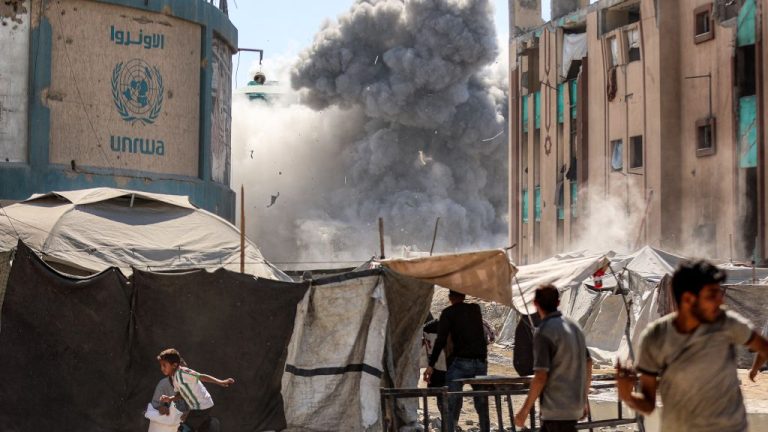
According to the testimonies, the abuses extended to the destruction of buildings and entire residential neighborhoods and the burning of homes without clear military objectives.
Soldiers also documented acts of vandalism and the destruction of Palestinian property, sharing footage of their actions on social media. One soldier told the documentary that members of his unit had burned dozens of homes. Another described smashing the contents of a Palestinian house simply because he could, reasoning that the building would eventually be destroyed anyway.
He expressed disgust and shame over those actions. Citing United Nations figures, the documentary reported that approximately 60% of Gaza had been damaged or destroyed during the first year of the war, while 85% of the population had been displaced.
The destruction coincided with extensive demolition operations intended to establish buffer zones under Israeli control.
Palestinians used as human shields inside tunnels
Among the most serious reports documented in the film was the Israeli military’s use of Palestinians as human shields during combat operations.
The practice, reportedly known within the military as the “Mosquito Protocol,” involved forcing Palestinians to enter tunnels and explore them ahead of Israeli troops.
Those compelled to carry out these missions were equipped with phones that transmitted their location coordinates to Israeli forces.
One soldier confirmed that the practice had spread across military units and that Palestinians, including minors, were forced to undertake these dangerous missions over several days.
He said members of his unit attempted to stop the practice after realizing that it constituted a war crime and violated international law. However, according to his testimony, the battalion command rejected their objections and instructed them to focus on the spirit of the Israeli military rather than international law.
Other participants described the use of drones to track and kill Palestinians without evidence that they were carrying weapons.
One account concerned a Palestinian man who was monitored for approximately half an hour in the Netzarim Corridor before an order was issued to shoot him, despite no weapon having been detected.
Israeli soldiers describe shooting Palestinians seeking humanitarian aid
The documentary also revealed accounts of Palestinians being targeted while attempting to reach humanitarian assistance near distribution sites operated by the Gaza Humanitarian Foundation (GHF), which began operations in May 2025 with backing from the United States and Israel.
One soldier described witnessing two Israeli soldiers shoot and kill two young Palestinian men who were running away from one of the distribution sites.
Another recounted an incident in which an Israeli tank fired a shell at a civilian vehicle carrying four Palestinians near an aid distribution location.
According to United Nations figures cited in the documentary, at least 944 Palestinian civilians were killed while attempting to obtain humanitarian assistance near GHF distribution sites.
The film also noted that the Israeli military announced in June 2025 that it had opened an investigation into reports that soldiers had fired on Palestinians seeking aid.
However, no subsequent developments in the investigation had been announced, according to the documentary.
Lack of accountability and criticism of Israeli media coverage
Israeli soldiers and officers interviewed in the documentary criticized the military’s handling of reports concerning violations.
They said investigations often began with denials of responsibility before incidents were ultimately classified as operational mistakes, with little meaningful accountability for those involved.
The participants also criticized Israeli media coverage of the war, accusing news outlets of promoting a one-sided narrative that portrayed soldiers as heroes facing danger while largely overlooking the killing of Palestinian women and children and the extensive destruction caused by military operations in Gaza.
Some interviewees argued that the military campaign had moved far beyond its stated objectives and evolved into a campaign of collective revenge against Gaza’s civilian population. One participant went further, describing the Israeli military’s actions as genocide against Palestinians.
The documentary concluded with testimonies from soldiers who expressed deep shame and regret over actions in which they had participated.
Several said they had lost their sense of pride in serving in the Israeli military, while others questioned what future remained for Gaza’s residents and how ordinary life could ever resume amid the enormous destruction and rubble covering entire cities and residential neighborhoods.