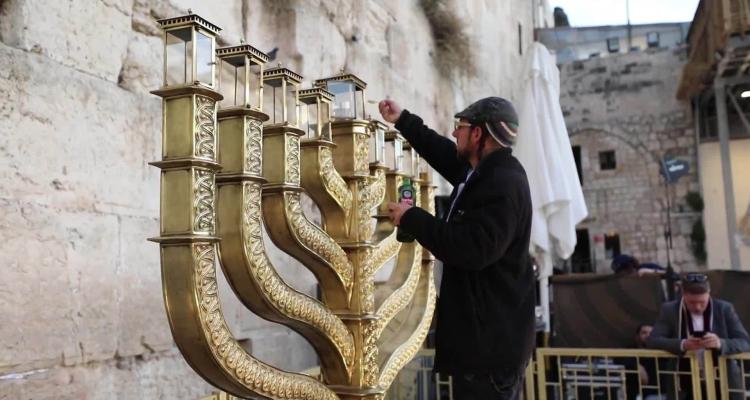
OCCUPIED JERUSALEM, (Palestine Foundation Information Center), Israeli Temple groups are mobilizing settlers for large-scale incursions into the Aqsa Mosque compound during the Jewish holiday of Hanukkah, from December 4 to 12, amid calls to bring menorahs into the compound and perform candle-lighting rituals.
The groups are intensifying campaigns to increase settler participation, extend incursion hours and introduce Jewish religious symbols and ceremonies into the Mosque’s courtyards and surrounding areas, including its gates and the adjacent al-Buraq Square.
Palestinian officials warn that these efforts are aimed at imposing new realities and altering the Mosque’s historical and legal status quo.
Hanukkah, known as the Festival of Lights, involves lighting candles over eight nights on a special candelabrum called a hanukkiah. Temple groups have repeatedly attempted to introduce these rituals into the Aqsa Mosque compound.
According to reported figures, settler incursions during Hanukkah increased from 2,567 in 2024 to 2,779 in 2025.
Sharp rise in incursions during 2026
Figures released by the Jerusalem Governorate show that 27,830 settlers entered the Aqsa Mosque compound during the third quarter of 2026, alongside 13,113 visitors admitted under the designation of tourism.
During the Jewish holiday season, from Rosh Hashanah through October 1, the governorate recorded 11,409 settler incursions, including 593 during Rosh Hashanah, 1,678 during Yom Kippur and 9,138 during the first five days of Sukkot.
The governorate also documented collective prayers, full prostration, shofar blowing and the introduction of religious objects and ritual offerings, with Israeli ministers, Knesset members and rabbis participating under police protection.
Meanwhile, approximately 900 orders banning Palestinians from the Mosque have been issued since the beginning of 2026, alongside tighter restrictions on Muslim worshipers, Islamic Waqf employees and mosque guards.
Palestinian officials warn that the escalating incursions and religious activities threaten the Islamic identity and longstanding status quo of the Aqsa Mosque.
The entire 144-dunum compound, including its prayer halls, courtyards and buildings, is an Islamic place of worship administered by the Jerusalem Islamic Waqf Department under Jordanian custodianship.