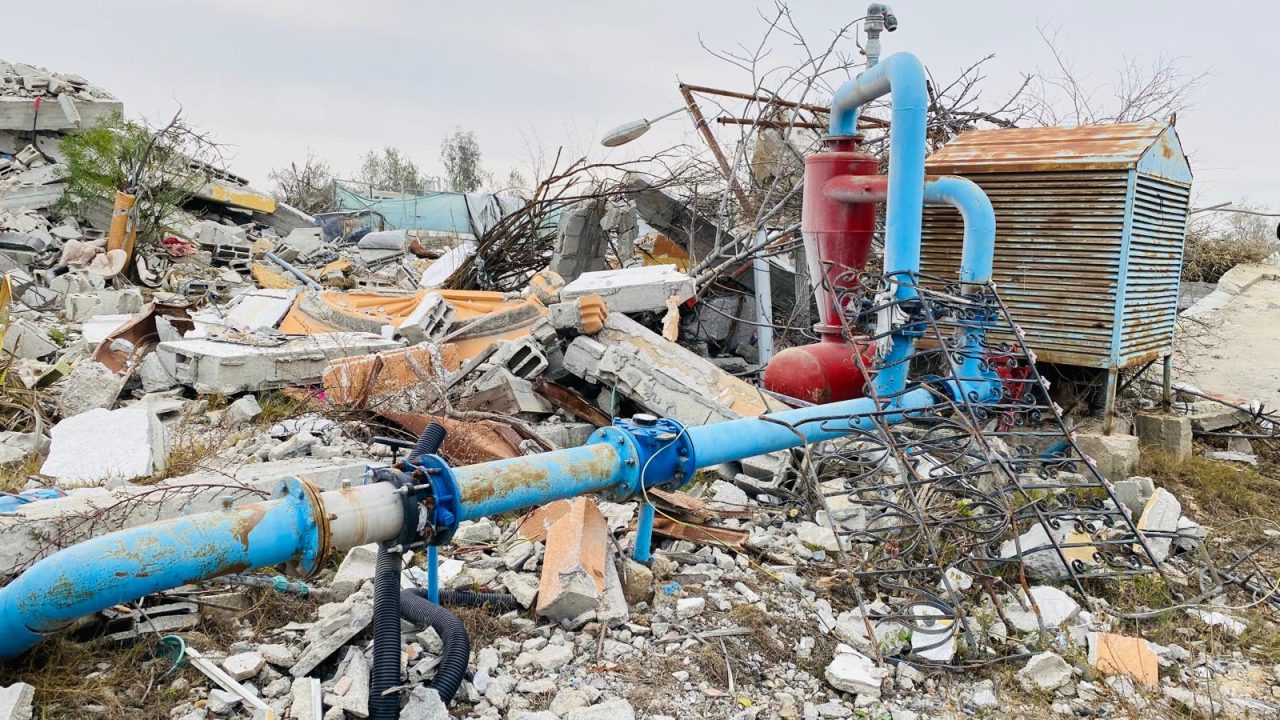
GAZA, (Palestine Foundation Information Center), The water and sanitation control official in the Gaza Strip, Saeed Al-Aklouk, warned of the worsening water and environmental disaster in the Strip, amid the destruction of over 80% of water and sanitation networks, accompanied by a sharp decline in water production and rising contamination risks.
Decline in water production
Al-Aklouk said, in a radio interview on Sunday, that water production in the Gaza Strip declined from around 300,000 cubic meters daily to only 123,000 cubic meters, while the per capita share of water dropped to between 21 and 22 liters daily.
This decline reflects the scale of damage suffered by the water system, at a time when the facilities in the Strip face great difficulties in operating and repairing damaged networks.
Sewage leakage threatens the underground aquifer
Al-Aklouk warned that the destruction of sanitation networks and damage to their infrastructure lead to sewage leaking into the underground aquifer, raising contamination levels and threatening one of the most important water sources in the Strip.
He explained that the continued leakage of sewage into the soil and groundwater worsens environmental risks, especially with the limited available resources to treat damages and control pollution sources.
Lack of sterilization materials worsens risks
The severity of the situation increases, according to Al-Aklouk, amid the lack of sterilization materials and limited capabilities necessary to test water quality, making it difficult to monitor water sources and ensure their safety.
The damage to water and sanitation networks, along with the weak ability to test and treat water, leaves the Strip facing growing risks linked to contamination and the spread of health hazards.
A water crisis turning into a health and environmental hazard
Al-Aklouk emphasized that the continued deterioration of the water and sanitation system exacerbates the humanitarian and environmental crisis in the Gaza Strip, warning that the continuation of the current situation could lead to further contamination and higher health risks.
These warnings come at a time when the repercussions of infrastructure destruction are not limited to water shortages, but extend to the environment and public health, with a declining ability to treat sewage, monitor water quality, and supply sterilization materials.
Thus, Gaza faces not only a crisis in available water quantities, but a comprehensive crisis in the water and sanitation system, which begins with network destruction and does not end with declining production, but extends to the underground aquifer, environment, and public health.