By Dr. Sabir Abu Maryam
Secretary-General, Palestine Foundation Pakistan
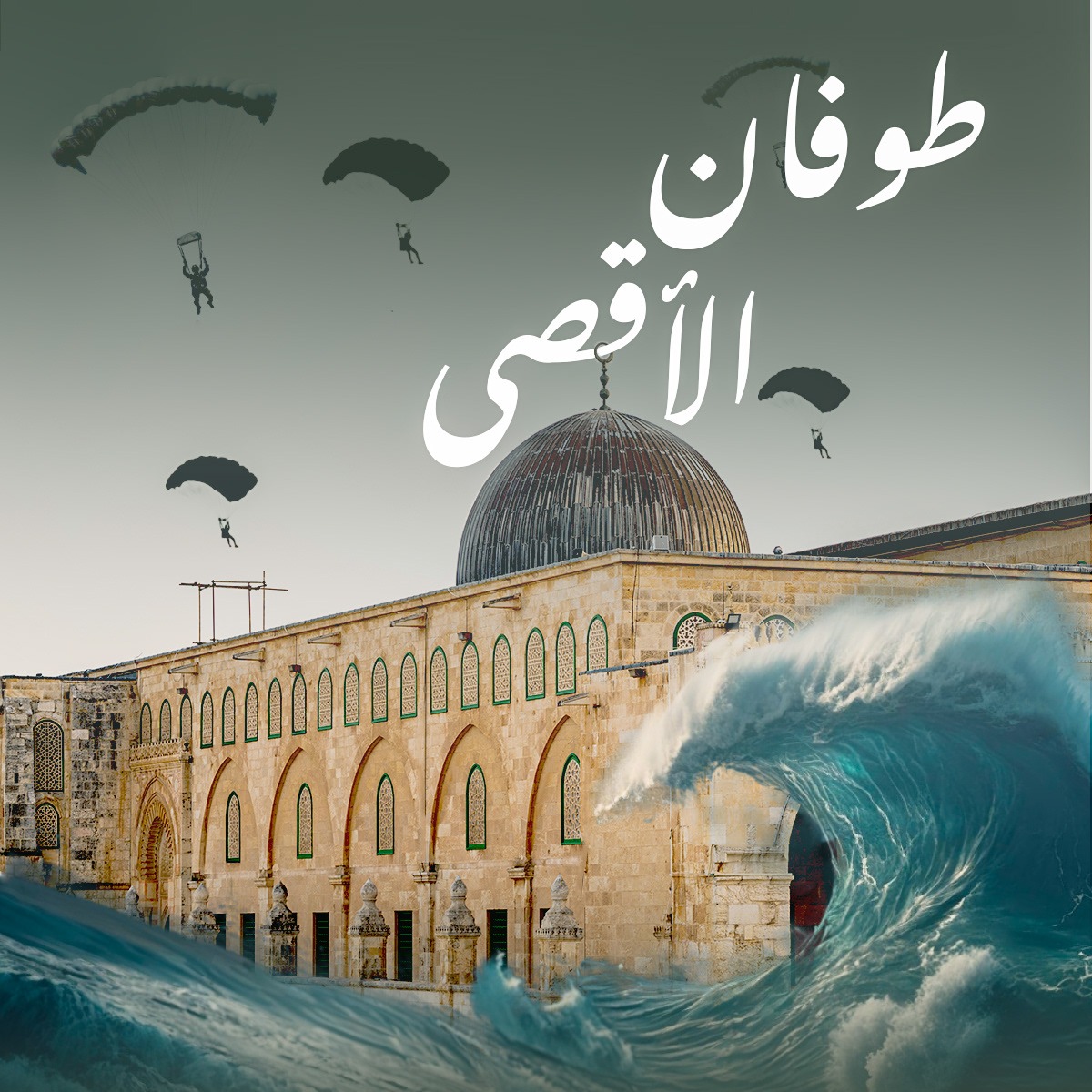
(Palestine Foundation Information Center), The Al-Aqsa Flood operation, launched from Palestine on October 7, 2023, has not only transformed the military and political landscape of West Asia but has also shaken the foundations of the global order. The assertion that “Operation Al-Aqsa Flood is changing the future of the world” is increasingly reflected in the changing international environment, the moral decline of Western powers, and the helplessness of international institutions. This confrontation is emerging as a precursor to a major geopolitical and strategic realignment, with particularly far-reaching consequences for the Western world and the international system it has established.
Three years have now passed since this confrontation began, yet no one can credibly claim that Al-Aqsa Flood was confined to October 7 alone. Rather, people observing global developments increasingly recognize that its repercussions remain ongoing. This is the reality.
The unreserved support extended by Western countries, particularly the United States and European nations, to the occupying Zionist state has exposed the hollowness of the international order built around supposedly universal rules and laws. For decades, the West has promoted human rights, democracy, press freedom, and international law. However, the destruction of Gaza and the genocide there have called these principles into question.
The Western approach of disregarding the rulings of the International Court of Justice (ICJ) and evidence-based reports issued by United Nations bodies has severely damaged the credibility of international law. As a result, the world is moving more rapidly toward a multipolar system in which Western dominance is being openly challenged.
This confrontation has also created a profound ideological and generational divide within the political and social structures of Western countries. For the first time in history, a major wave of public awareness has emerged on the streets and at universities and educational institutions across the United States and Europe, challenging the Zionist narrative and state domination. The younger generation, particularly Generation Z, increasingly relies on independent and direct sources of information rather than Western mainstream media and has rejected the narrative promoted by the occupying Zionists. Pro-Palestinian voices and student movements across the West are likely to have far-reaching implications for domestic politics, elections, and foreign policy in the years ahead.
On the global economic and strategic front, tensions in the Red Sea, Bab al-Mandab Strait, and Gulf shipping routes following Al-Aqsa Flood have created significant economic challenges. Disruptions to supply chains, rising costs of international maritime trade, and fluctuations in fuel prices have placed additional pressure on Western economies already struggling with inflation and economic crises.
The practical demonstration of control over some of the world’s most important maritime routes by Yemen’s armed forces and other resistance fronts in the region has shown that Western dominance is no longer the world’s sole decisive force. Future global economic and military balances will have to take the interests of emerging regional powers into account.
As the Al-Aqsa Flood confrontation continues, several important developments are becoming apparent regarding the future of the Palestinian liberation movement and the transformation of the global order. These developments are significant for supporters of the Palestinian cause and represent major achievements from their perspective.
One such development is the weakening of Zionist propaganda in international media and across digital platforms, allowing the Palestinian narrative and the suffering of Palestinians to reach audiences worldwide and challenge Western ideological dominance. Emerging powers and regional blocs are also strengthening their positions against the dominance of Western countries and the Zionist bloc. These developments are unfolding in the aftermath of Al-Aqsa Flood, reinforcing the argument that the confrontation is reshaping the future of global politics.
Another important development is the growing body of evidence concerning alleged war crimes and human rights violations by the occupying Zionist government, documented for use in international courts. This record has become an important element of the Palestinian narrative. The next step, according to this perspective, should be to use this evidence to bring an end to the foundations of occupation.
Changes in public opinion across Western countries are another consequence of the ongoing confrontation. Such changes could make political and economic support for Israel an increasingly difficult burden for future governments.
Al-Aqsa Flood has demonstrated that even advanced military capabilities and Western political and military backing cannot necessarily suppress a struggle for self-determination and freedom. The world has entered a new era in which the decline of colonial powers and the liberation of oppressed peoples are increasingly viewed not merely as aspirations but as outcomes that may become possible through changing global circumstances.
This is the future associated with Al-Aqsa Flood and why it is increasingly described as a force reshaping the world’s political landscape. Today, European leaders face growing challenges as they approach elections. The article argues that they are aware that opposing the Palestinian narrative could lead voters to reject them at the ballot box.
A similar challenge, according to this analysis, confronts US President Donald Trump, whose public approval rating, the article claims, has fallen from 34 percent to as low as 23 percent.
In conclusion, Al-Aqsa Flood continues to reverberate across the region and the world, increasingly becoming a significant milestone in the transformation of the international order. Its consequences extend beyond the battlefield, influencing global politics, public opinion, economic relationships, and debates over the future balance of power.