BEIRUT, (Palestine Foundation Information Center), The central leadership of the Palestinian Forces Alliance affirmed its commitment to Palestinian national rights and rejected exclusion, unilateralism and the monopolization of representation, calling for a broad national partnership that ensures the participation of various Palestinian forces, factions and figures in upcoming elections.
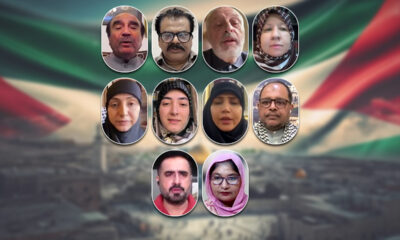
The statement came at the end of meetings held in the Lebanese capital, Beirut, in the presence of senior Hamas official Ali Baraka, who attended as an envoy of Hamas political bureau chief Dr. Khalil al-Hayya.
The meetings discussed the latest developments in the Palestinian cause, the situation in the Gaza Strip, the occupied West Bank and occupied Jerusalem, conditions in refugee camps and the diaspora, and the Palestinian elections file and its implications, amid the continued Israeli aggression against the Palestinian people, their land and holy sites.
Condemnation of continued aggression on Gaza
The central leadership strongly condemned the continuation of the Israeli aggression on the Gaza Strip, including killing, assassination, the targeting of civilians, the destruction of homes and facilities, the siege and starvation.
It held Israel responsible for violating the ceasefire agreement announced in Sharm el-Sheikh in October 2025, under the sponsorship of US President Donald Trump and with guarantees from mediators in Egypt, Qatar and Türkiye. It said continued violations undermine efforts to consolidate the ceasefire and end the suffering of the Palestinian people.
Condemnation of settlement expansion, displacement in the West Bank
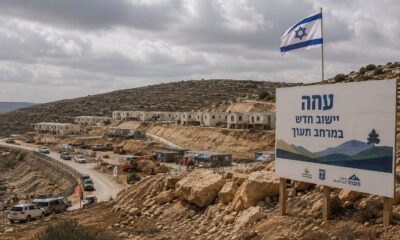
The central leadership also condemned daily Israeli attacks on the Palestinian people and their land in the occupied West Bank, particularly attacks by settlers backed by the Israeli occupation army, land and property seizures, home demolitions and the imposition of settlement facts on the ground.
It said these practices fall within a plan aimed at displacing Palestinians from their land and property and annexing the occupied West Bank, stressing that such attacks will not undermine the steadfastness of the Palestinian people or their attachment to their land and national rights.
Warning over escalation at the Al-Aqsa Mosque
The leadership warned of the danger of continued attacks and violations against the Al-Aqsa Mosque, condemning raids carried out by settlers under the protection of the Israeli army and police.
It said these practices aim to impose a new reality at the Al-Aqsa Mosque, including attempts to divide it temporally and spatially as a prelude to imposing full control over it and Judaizing it.
The leadership stressed that the Al-Aqsa Mosque, including all its courtyards and prayer halls, is an exclusive right of Muslims, and that any change to its historical and legal status constitutes an aggression against the Arab and Islamic nation.
Targeting UNRWA targets the refugee issue
On the issue of the UN Relief and Works Agency for Palestine Refugees (UNRWA), the central leadership condemned Israel’s ongoing attacks on the agency, its institutions and its facilities, particularly in occupied Jerusalem, West Bank refugee camps and the Gaza Strip.
It pointed to the targeting, destruction and systematic attacks against UNRWA facilities and staff, saying this comes as part of a plan to end the agency’s role, liquidate the Palestinian refugee issue and erase their right of return.
The leadership stressed that UNRWA is not merely an agency that provides humanitarian services, but an international witness to the Palestinian refugee issue and to the international community’s responsibility for their suffering. It said ending the agency’s work or stripping it of its substance does not erase the refugee issue or cancel the right of return.
Palestinian elections and renewal of legitimacy
Regarding Palestinian elections, the central leadership discussed the file from political, legal and national angles, affirming the Palestinian people’s right to elect their representatives in various national institutions, foremost among them the Legislative Council, the presidency of the Palestinian Authority and the Palestinian National Council, in a free, fair, transparent and democratic process.
It stressed the need to ensure the participation of all national forces, factions and figures without exclusion or marginalization, and rejected what it described as exclusion, unilateralism, monopolization of popular representation, or the imposition of conditions and restrictions on resistance factions and Palestinian political forces.
It also rejected using elections to reproduce division or entrench political domination, stressing that the electoral process should serve as an entry point for renewing legitimacy, unifying institutions and strengthening national partnership.
Call for a broad Palestinian national alliance
The central leadership called for forming the broadest possible Palestinian national alliance to participate in upcoming elections, including Legislative Council and Palestinian National Council elections, based on a unifying national program and genuine partnership.
It stressed the need to ensure the representation of various forces, currents and national figures, and to exclude no Palestinian component, especially the resistance forces.
In this context, the alliance leadership decided to form follow-up committees in diaspora arenas to defend the Palestinian people’s right to elect their representatives to the Palestinian National Council.
Commitment to Palestinian national rights and rejection of displacement
The central leadership of the Palestinian Forces Alliance renewed its commitment to the full, inalienable and legitimate national rights of the Palestinian people, foremost among them the right to self-determination, the establishment of an independent Palestinian state with Jerusalem as its capital, and the right of Palestinian refugees to return to the homes from which they were displaced.
It also affirmed its rejection of resettlement, displacement, annexation and liquidation projects targeting the Palestinian cause, stressing that there will be no compromise on any Palestinian national constants.
Call for international pressure on Israel
The central leadership called on Arab and Islamic countries and the international community, particularly the mediators and sponsors of the Gaza ceasefire agreement, to shoulder their political, legal and humanitarian responsibilities.
It demanded serious pressure on the Israeli government to stop its aggression and crimes, oblige it to respect signed agreements and understandings, halt settlement expansion and displacement, and stop attacks on Islamic and Christian holy sites.