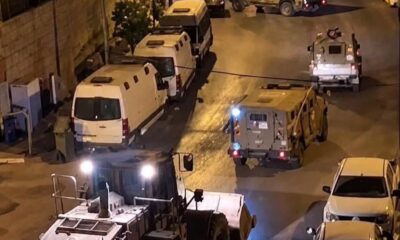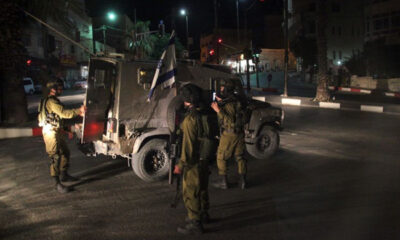
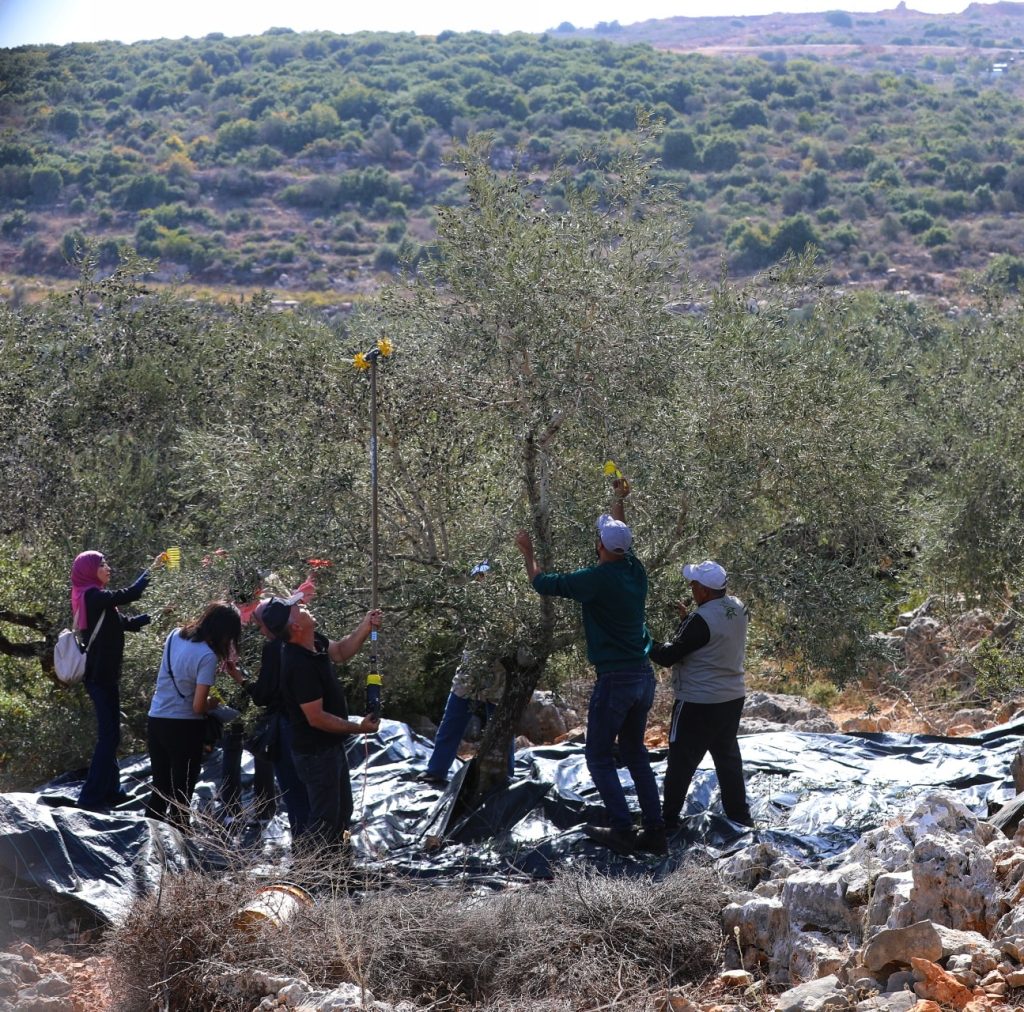
WEST BANK, (Palestine Foundation Information Center), The Palestinian Wall Resistance Commission documented 21 attacks carried out by Israeli occupation forces (IOF) and settlers against olive harvesters and their agricultural land across six governorates in the occupied West Bank on Friday in less than 12 hours.
The commission described the attacks as an escalation targeting the Palestinian olive harvest season and threatening farmers’ ability to access, cultivate, and benefit from their land.
The reported attacks included live gunfire, physical assaults, the burning and cutting down of olive trees, and the theft of harvested olives. Farmers were also prevented from reaching their land or forced to leave under threat of armed violence.
Ramallah: Olive trees burnt, harvests stolen
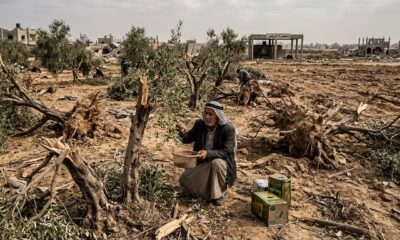
In the Ramallah and al-Bireh Governorate, Israeli settlers set fire to and cut down dozens of productive olive trees in the al-Qibla area of Burqa village.
According to the commission, Israeli military restrictions and the presence of settlers prevented Civil Defense teams and local residents from reaching the affected area.
Attacks were also reported in Sinjil, Turmus Ayya, and Marj Si’, where settlers assaulted olive harvesters and broke branches from productive trees.
In Silwad, settlers stole olives from Palestinian-owned farmland, while in Kafr Malik, settlers released livestock onto olive groves, damaging agricultural land.
Nablus: Three farmers injured in settler attack
In the Nablus Governorate, three farmers, including a 17-year-old boy, suffered head injuries after Jewish settlers threw stones at Palestinians harvesting olives in the town of Burin, south of Nablus.
Cases of breathing difficulties were also reported, and the injured farmers were taken to a hospital for treatment.
In Osarin, settlers fired live ammunition to force farmers off their land.
Meanwhile, tear gas canisters fired by Israeli forces started fires among olive trees in the agricultural plains of Salem and Beit Furik.
Additional incidents were reported in al-Lubban ash-Sharqiya, Qaryut, Asira ash-Shamaliya, and Jamma’in, where farmers faced attempts to prevent them from completing the harvest and force them to leave their fields.
Settlers also stole olives from farmland between Talfit and Jalud while under IOF protection.
Bethlehem: Families forced off their land at gunpoint
In the Bethlehem Governorate, Israeli forces detained members of the al-Qassas family on their farmland near the Elazar settlement and forced them to leave at gunpoint.
The soldiers threatened to arrest the family members if they returned to harvest their olives.
Palestinian farmers and international solidarity activists were also forced to leave Wadi Abu Nujaym.
In the village of al-Minya, settlers released livestock onto agricultural land, damaging several trees.
Salfit: Farmers and international activists threatened
In the Salfit Governorate, settlers accompanied by Israeli forces pursued Palestinian olive harvesters and international solidarity activists in the Wadi Yasuf area.
The settlers threatened the farmers and activists in an effort to force them to abandon their land.
Jenin: Military closures prevent access to farmland
In the Jenin Governorate, Israeli forces closed iron gates leading to villages in the eastern part of the governorate.
The closures restricted residents’ movement and prevented farmers in Barta’a from accessing agricultural land isolated behind Israel’s separation barrier.
Qalqilya: Olive harvesters detained and expelled
In the Qalqilya Governorate, Israeli forces used force to remove Palestinian farmers from their agricultural land.
Soldiers detained olive harvesters in the al-Jabal area of Kafr Qaddum and prevented farmers in the village of Immatin from continuing their harvest, forcing them to leave their fields.
Commission warns of long-term displacement from agricultural land
The Palestinian Wall Resistance Commission warned that the increasing attacks are no longer limited to disrupting the annual olive harvest.
Instead, the commission said, the incidents are increasingly threatening Palestinians’ ability to remain on their land, cultivate it, and maintain their agricultural livelihoods.
It pointed to a pattern of violence, intimidation, crop theft, destruction of trees, and restrictions on access to farmland.
The commission stressed that attacks against farmers, including on land close to their homes, and the use of armed threats to force them to leave indicate efforts to expand settlement control and deny landowners the ability to exercise their basic rights.
It also argued that the involvement of Israeli forces in protecting settlers or preventing farmers from reaching their land demonstrates a connection between military restrictions and settler attacks.
According to the commission, these practices contribute to land appropriation and undermine the foundations of Palestinian agricultural life.
The commission warned that allowing such attacks to continue without accountability could turn temporary restrictions on olive harvesting into the long-term exclusion of Palestinian farmers from their land.
It called on the international community to take concrete measures to stop the attacks and provide effective protection for Palestinian farmers during the olive harvest season.