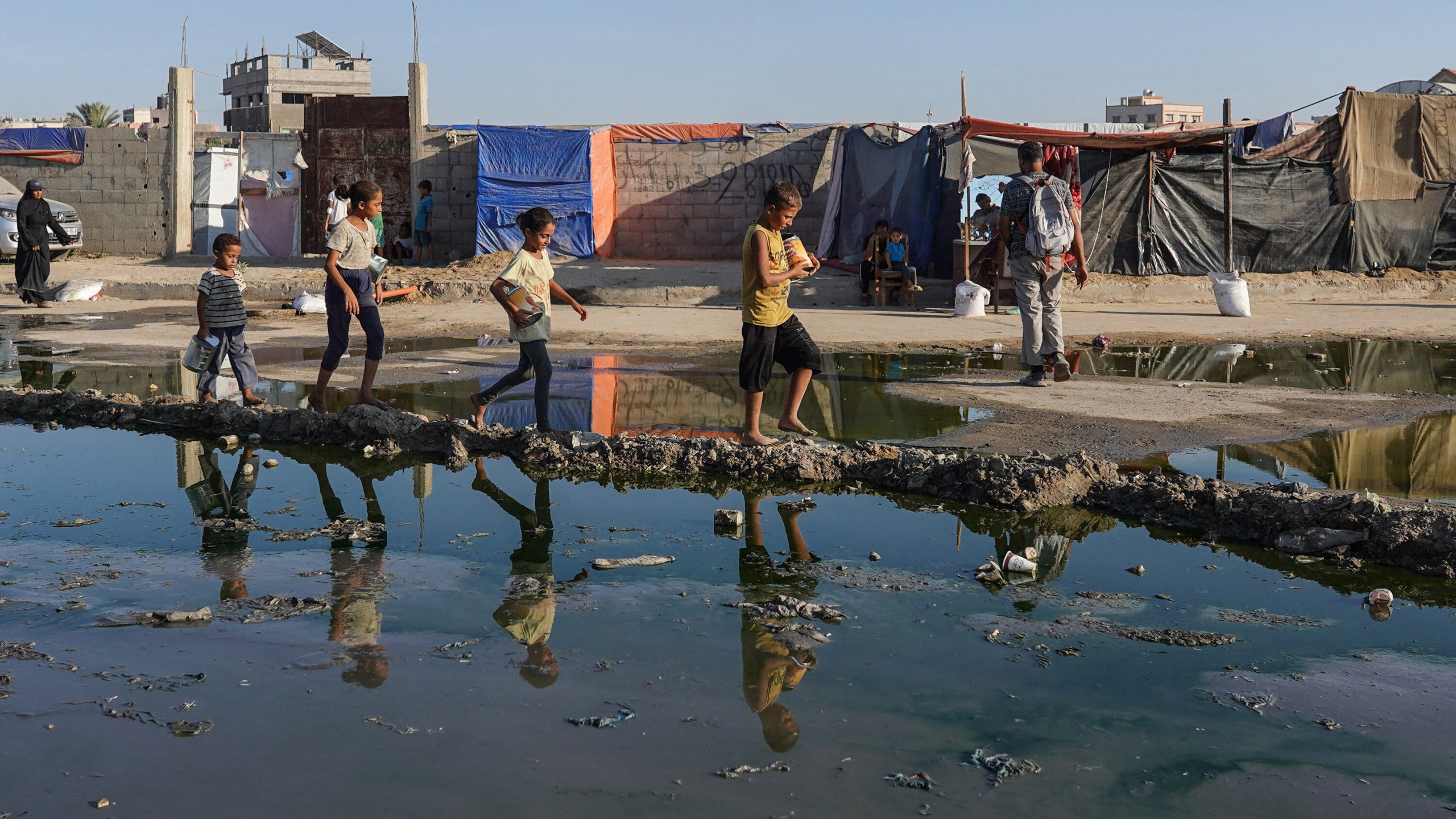
GAZA, (Palestine Foundation Information Center), Gaza’s sewage crisis has reached unprecedented levels amid the widespread collapse of the wastewater treatment system, threatening public health and the environment while increasing the risk of contamination of the sea and water sources.
The Palestinian Water Authority said on Wednesday that around 55,000 cubic meters of untreated sewage are being discharged every day. Of that amount, 40,000 cubic meters are pumped directly into the sea, while another 15,000 cubic meters leak into the environment through cesspits and damaged sewage networks.
Sewage system collapses
The Water Authority said all five of Gaza’s main wastewater treatment plants are out of service, while only 18 pumping stations are operating, partially out of around 74 that were functioning before the crisis.
The percentage of Gaza’s population served by sewage networks has fallen from more than 85% to around 45%, according to the authority.
Wastewater treatment capacity has also collapsed from 185,000 cubic meters per day before the crisis to virtually zero today, except for rehabilitation work underway at the Sheikh Ajlin treatment plant.
Urgent rehabilitation efforts
The authority said emergency measures are underway to support functioning pumping stations and provide fuel, while around 20 pumping stations and critical sewage networks have been repaired.
Emergency teams have also addressed around 900 locations identified as environmental and public health priorities.
The response has included emergency sewage pumping and removal using heavy equipment, as well as damage assessments covering 44 pumping stations and around 385 kilometers of sewage networks.
Rehabilitation plans are focused on restoring operations at the Sheikh Ajlin wastewater treatment plant in two phases.
With support from the International Committee of the Red Cross, the first phase is expected to restore an initial treatment capacity of around 22,000 cubic meters per day, before capacity is later increased to approximately 65,000 cubic meters per day.
The work also includes rehabilitating the Sheikh Radwan pumping station and pumping stations and pressure lines connected to the Sheikh Ajlin treatment plant, along with repairs to damaged sewage networks with support from UNICEF.
Growing environmental and health threat
The Water Authority called for a regular supply of fuel, pumps, generators, spare parts, sewage suction and cleaning trucks, and heavy equipment, as well as materials needed to build sewage networks and temporary sanitation systems.
It also called for expanding sanitation services at displacement sites, deploying scalable wastewater treatment units, and securing adequate funding and safe, sustained access for workers and equipment.
The authority warned that the continued discharge of untreated sewage is worsening pollution of the sea and surrounding environment and posing a growing threat to public health.
It stressed that restoring Gaza’s sewage system and rehabilitating its infrastructure are urgent priorities for protecting Palestinians and the environment and creating the conditions necessary for Gaza’s recovery.