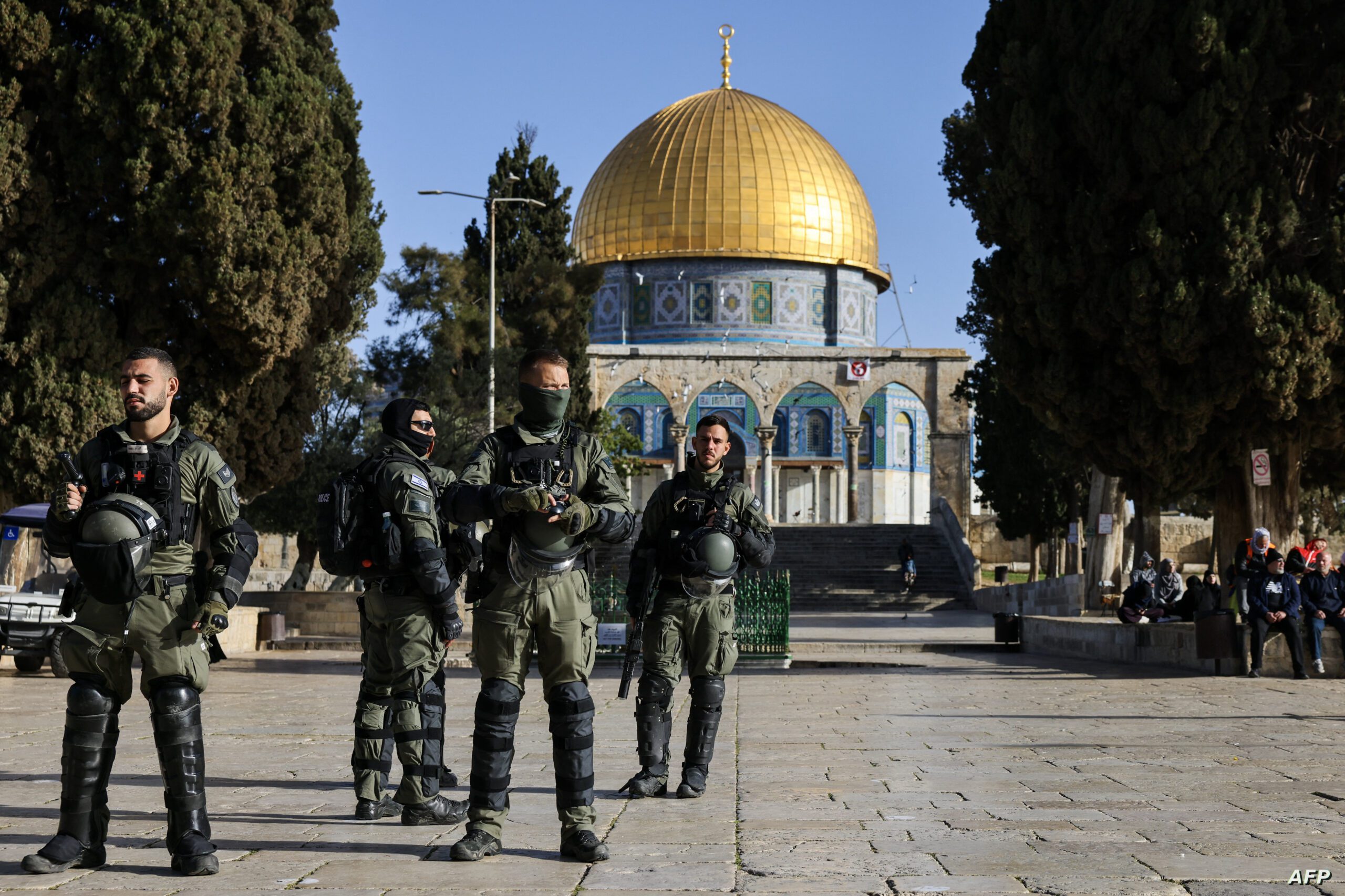
OCCUPIED JERUSALEM, (Palestine Foundation Information Center), The Israeli authorities have continued to shut down the Aqsa Mosque compound for the sixth consecutive day, citing a state of emergency and the ongoing regional conflict. Palestinians in Jerusalem and observers have described the move as part of a broader assault on the sanctity of the site and on freedom of worship.
Israeli authorities have barred worshippers from accessing the Mosque, preventing them from performing the evening and Tarawih prayers during the holy month. At the same time, Israeli officials have claimed that the measures are intended to “protect” the site, an assertion critics say contradicts the reality of restricting the worshipers who seek to pray there.
Observers say Israeli authorities may be attempting to exploit regional developments, including tensions linked to the Zio-American aggression against Iran, to advance long-standing plans aimed at restricting Muslim presence at the compound and expanding settlement and Judaization policies in Jerusalem.
Hamas condemns Aqsa closure
The Hamas Movement condemned the continued closure of Aqsa Mosque, describing it as a “blatant violation of freedom of worship.” The Movement said the measures form part of a broader effort by Israeli authorities to impose full control over the Mosque and create new realities on the ground under the pretext of emergency measures.
Hamas warned Israeli leaders against escalating such policies, stressing that Palestinians who maintain a presence at the site would continue to resist attempts to empty the Mosque and facilitate incursions into the compound.
Calls for mobilization
In response to Aqsa closure, Palestinian religious and national bodies in Occupied Jerusalem have called on Palestinians to increase their presence in the city and at the Aqsa Mosque.
The calls stressed the need to break the Israeli siege on the holy site and urged people to stand firm at its gates and in the streets of the Old City.
They also appealed to the Arab and Muslim worlds to take urgent action and assume their responsibility toward the site, which holds deep religious significance as Islam’s first qibla and the third holiest mosque.