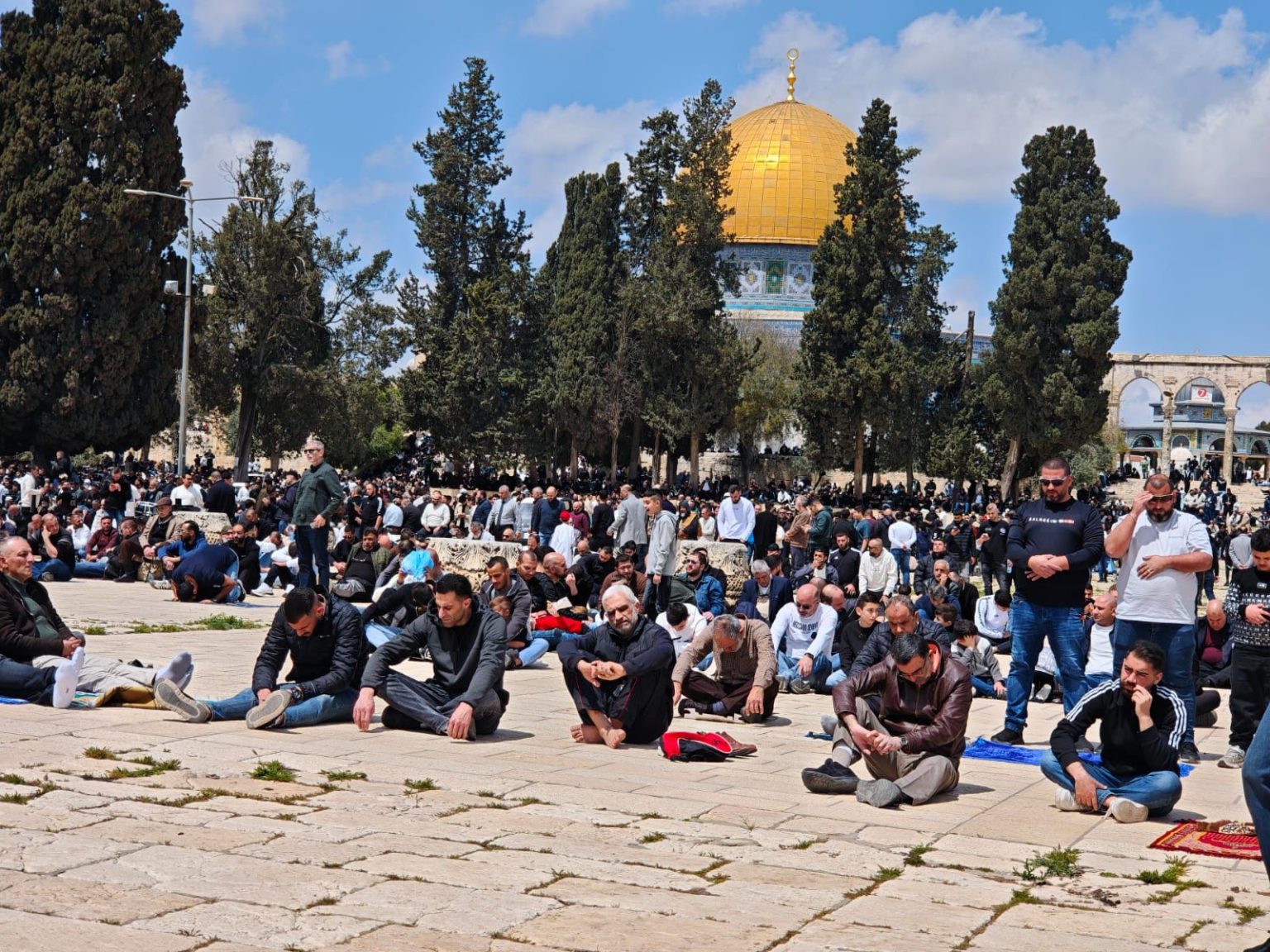
OCCUPIED JERUSALEM, (Palestine Foundation Information Center), Tens of thousands of Palestinians performed Friday prayer at Aqsa Mosque in Occupied Jerusalem despite heightened restrictions imposed by Israeli police forces on worshipers entering the city.
The Islamic Waqf Department in Occupied Jerusalem confirmed that tens of thousands of worshipers attended the Friday prayer at the Aqsa Mosque compound.
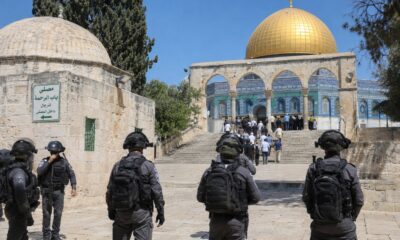
Palestinian media reported that thousands of worshipers began arriving at the Mosque early Friday morning, while Israeli forces imposed tight security measures around the compound, deploying large numbers of officers at its gates and throughout Jerusalem’s Old City.
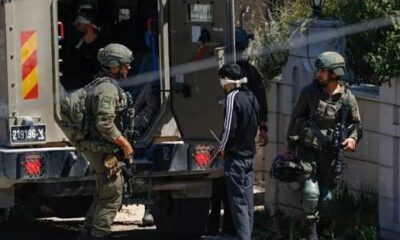
Israeli police also erected military checkpoints across the city, inside the Old City and around Aqsa Mosque. Officers stopped dozens of young Palestinians, checked their identification documents and prevented many from entering the Mosque.
Jerusalem groups call for mass attendance at Aqsa Mosque
On Thursday, Jerusalem-based organizations renewed their calls for mass mobilization and increased attendance at Aqsa Mosque ahead of Friday prayer, urging Palestinians to gather in its courtyards to protect the holy site and resist Israeli occupation and settler plans.
Grassroots organizations called on residents of Occupied Jerusalem, Palestinians living inside Israel and those able to reach the Mosque from the occupied West Bank to maintain a strong presence at Aqsa and participate in prayer and peaceful gatherings.
The groups said the mobilization was intended to counter attempts to impose new measures aimed at Judaizing the Aqsa Mosque compound and changing its existing status.
Jerusalem-based organizations warned of the dangers facing the Mosque amid escalating incursions, systematic attacks on worshipers and Palestinians maintaining a presence at the site, and continued Israeli efforts to impose a temporal and spatial division of the compound.
The groups stressed that maintaining a continuous Palestinian presence at Aqsa represents the first line of defense against plans pursued by Israeli authorities and groups commonly referred to as Temple Mount organizations.
They emphasized the importance of continuing religious retreats and maintaining a strong presence throughout the Mosque’s courtyards and prayer areas.
These calls come as Israeli occupation forces tighten military restrictions at the Aqsa Mosque’s gates and the entrances to Jerusalem’s Old City, limiting worshipers’ access to the compound.
Israeli authorities have also continued targeting Palestinians who maintain a regular presence at the Mosque, issuing orders barring them from entering the site.
Jerusalem-based organizations renew their calls for mass attendance and prayers at Aqsa every week, reaffirming the Mosque’s Islamic identity and rejecting Israeli restrictions and attempts to erase the Arab and Islamic character of the holy city.
Israeli restrictions continue to limit Palestinian access
Israeli occupation authorities continue to restrict Palestinian access to Aqsa Mosque through stringent entry procedures, the confiscation or temporary retention of worshipers’ identification documents at the compound’s outer gates, and orders banning hundreds of Palestinians from entering the Mosque for varying periods.
These measures prevent many Palestinians from freely reaching their place of worship.
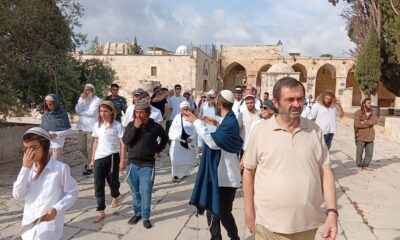
Israeli settlers continue to storm the Aqsa Mosque compound almost daily, except on Fridays and Saturdays, amid calls by settler organizations to expand Israeli control over the site.
These incursions coincide with ongoing Israeli measures targeting worshipers, Palestinians maintaining presence at the Mosque and the broader Palestinian presence within the compound.
The developments have heightened Palestinian concerns that Israel is seeking to establish new realities at Aqsa Mosque and undermine its longstanding historical and legal status quo.
Those concerns have intensified amid organized settler incursions, the performance of Talmudic rituals in the Mosque’s courtyards and continuing restrictions on Palestinian worshipers’ access to the holy site.