By Dr. Sabir Abu Maryam
Secretary-General, Palestine Foundation Pakistan
(Palestine Foundation Information Center), To understand the decline of Zionist occupation and domination, we must particularly examine the current political and military position of the Zionist bloc, led by the United States and its allies, and then assess whether the American-Zionist bloc is stronger than before or has weakened and is moving towards decline. The decline of any power or ideology is not a story that unfolds in a single day or over a few days. It requires a prolonged struggle, perseverance, and steadfastness. In the contemporary era, if we look for a movement that embodies resistance, perseverance, patience, struggle, and the determination to stand firm against an adversary, we find it in the Palestinian resistance axis. This axis includes Palestine, Iran, Lebanon, Yemen, Iraq, and their respective resistance forces. In other words, Hamas and Islamic Jihad in Palestine, Iran’s Quds Force, Hezbollah in Lebanon, Ansar Allah in Yemen, and Iraq’s Popular Mobilization Forces (Hashd al-Shaabi) are collectively described as the Palestinian resistance axis.
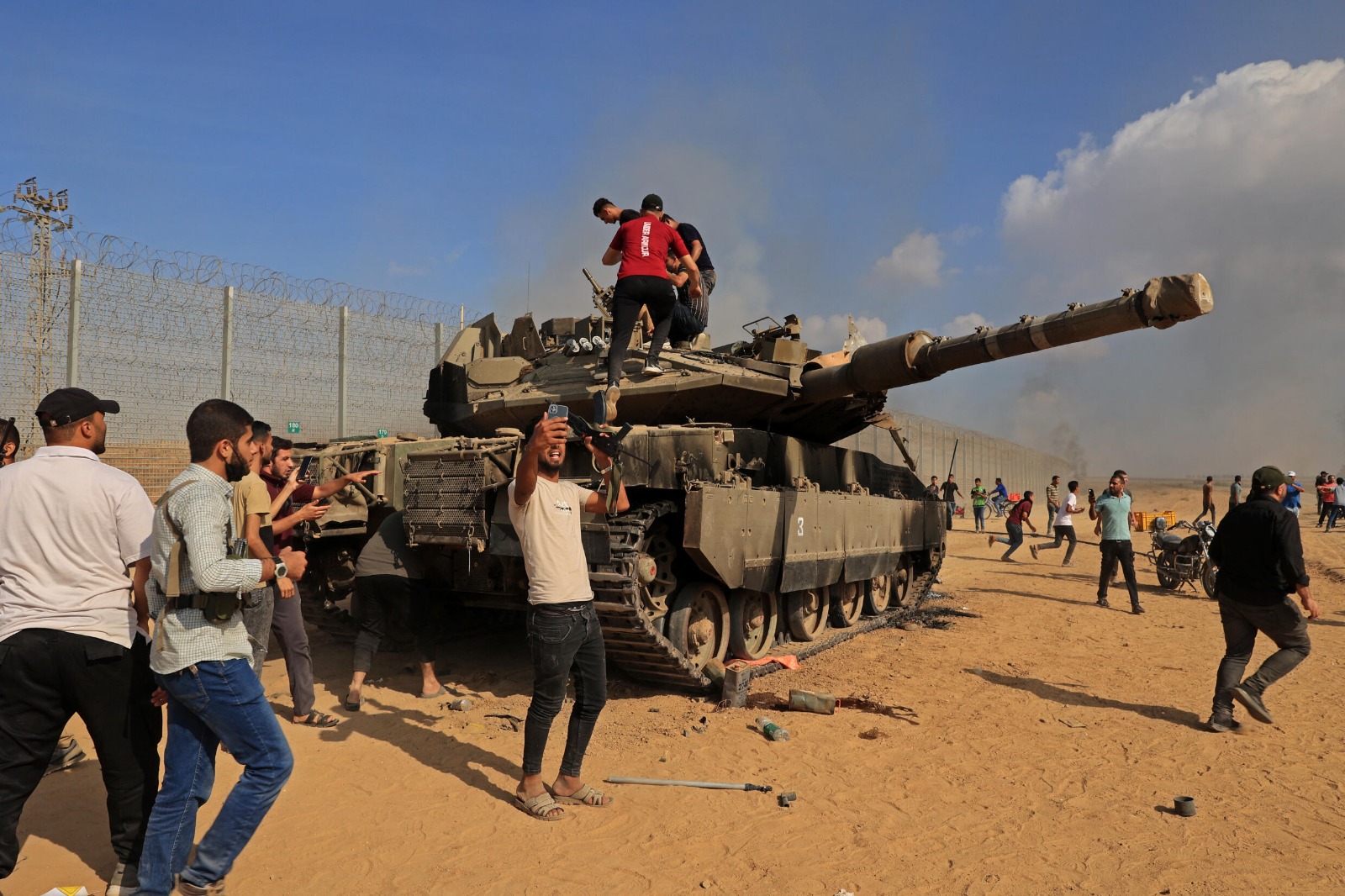
When discussing Zionist domination, we cannot overlook the Al-Aqsa Flood operation of October 7, 2023. This was a historic confrontation that not only shaped the prospects of Palestine’s future but also disrupted established political calculations across the world. Al-Aqsa Flood left deep imprints on the political, military, and geopolitical landscape of West Asia that cannot easily be erased through a temporary agreement or military domination.
Today, Yemen has emerged as a rising force within this resistance axis, extending support to oppressed peoples around the world. The detailed address delivered by Sayyed Abdul-Malik Badr al-Din al-Houthi, the leader of Ansar Allah in Yemen, on the occasion of October 7 provides a clear indication that this confrontation is no longer confined to a single geographical area. Rather, it has brought resistance movements across the region together under a coordinated and carefully defined strategy.
For decades, the occupying Israeli state had operated under the assumption that it was invincible. Through the Abraham Accords, it had also developed the illusion that it could secure acceptance across the Arab world without restoring the rights of the Palestinian people. Al-Aqsa Flood fundamentally undermined this perception. In reality, the confrontation marked the beginning of a revival of the Palestinian cause and a shift in the regional balance of power.
One of the most significant aspects of this confrontation is the clear and unwavering declaration by Palestinian and Lebanese resistance organizations that they will not abandon the path of resistance despite the enemy’s brutal actions, continuous bombardment, and the martyrdom of their leaders. Hezbollah in Lebanon, along with the Qassam Brigades and the al-Quds Brigades in Gaza, have demonstrated through their actions that resistance is not merely a military structure; it is an ideology and a cause that does not disappear when individuals change.
Reports from human rights bodies and international institutions, including the United Nations Human Rights Council (UNHRC) and fact-finding reports by various international rights organizations, have documented allegations of war crimes and collective punishment by Israeli forces during the war imposed on Gaza. Despite this, Lebanese and Palestinian resistance forces have continued to confront their adversary on the battlefield, demonstrating that the foundation of any lasting political solution must be the right to self-determination and the realities on the ground.
Within this broader ideological and military continuity, the role of Yemen’s armed forces and Ansar Allah has given this confrontation an international and economic dimension. As Sayyed Abdul-Malik al-Houthi explained in his address, the effective blockade of Israeli, American, and British shipping in the Bab al-Mandab Strait and the Red Sea constitutes practical support for the oppressed people of Gaza. International trade data and port authority reports indicate that the blockade in the Red Sea has brought activities at the Israeli port of Eilat to an almost complete standstill and forced global shipping companies to take the longer route around the Cape of Good Hope, substantially increasing international logistics costs.
This demonstrates that resistance movements in the region have developed the capacity to exert pressure on their adversary through economic and commercial restrictions. In the future, this capacity could become a significant economic shield for the Palestinian struggle for freedom. This is why resistance should not be understood solely as armed confrontation; it encompasses resistance across all spheres of life. The Palestinian resistance axis has demonstrated this broader approach in practice.
This confrontation has also established several fundamental directions for strengthening the Palestinian liberation movement in the future. The first is to further organize and expand the global Boycott, Divestment and Sanctions (BDS) movement so that its economic impact on Israel becomes more sustained. The second is to pursue ongoing cases at the International Court of Justice (ICJ) and the International Criminal Court (ICC) with greater political and legal engagement, with the aim of challenging the moral and legal legitimacy of occupation and domination before the international community. The third, and most important, is to strengthen coordination among the people of the Muslim world and forces struggling for freedom. Such coordination can play a significant role on diplomatic and media fronts by challenging the Zionist narrative, breaking through news censorship, and bringing the realities on the ground to the attention of the international public.
In conclusion, the geopolitical changes taking place across the region are having a profound and far-reaching impact on the Palestinian cause. At the same time, Palestinian resistance is also exerting a significant influence on regional conditions and the global political landscape. In the past, some Arab countries viewed the establishment of relations with Israel as a political necessity. However, following the bold positions adopted by Ansar Allah and other resistance movements in the region, openly strengthening ties with the occupying Israeli state has become considerably more difficult for them.
The narrative promoted by the occupying Israeli state—that it is the region’s foremost guarantor of security, military defence, and intelligence—has been seriously undermined. The emerging regional balance of power indicates that Palestine and the various resistance movements associated with it will have to be recognized as central stakeholders in shaping the future regional order.
These developments, as presented in this analysis, point towards the possible end of an era of colonial domination and the decline of the American-Zionist bloc. They also suggest that the Palestinian people’s aspiration to reclaim their land, protect their First Qibla, Al-Aqsa Mosque, and establish an independent sovereign state is increasingly being viewed as an achievable political objective.