By Dr. Sabir Abu Maryam
Secretary-General Palestine Foundation Pakistan
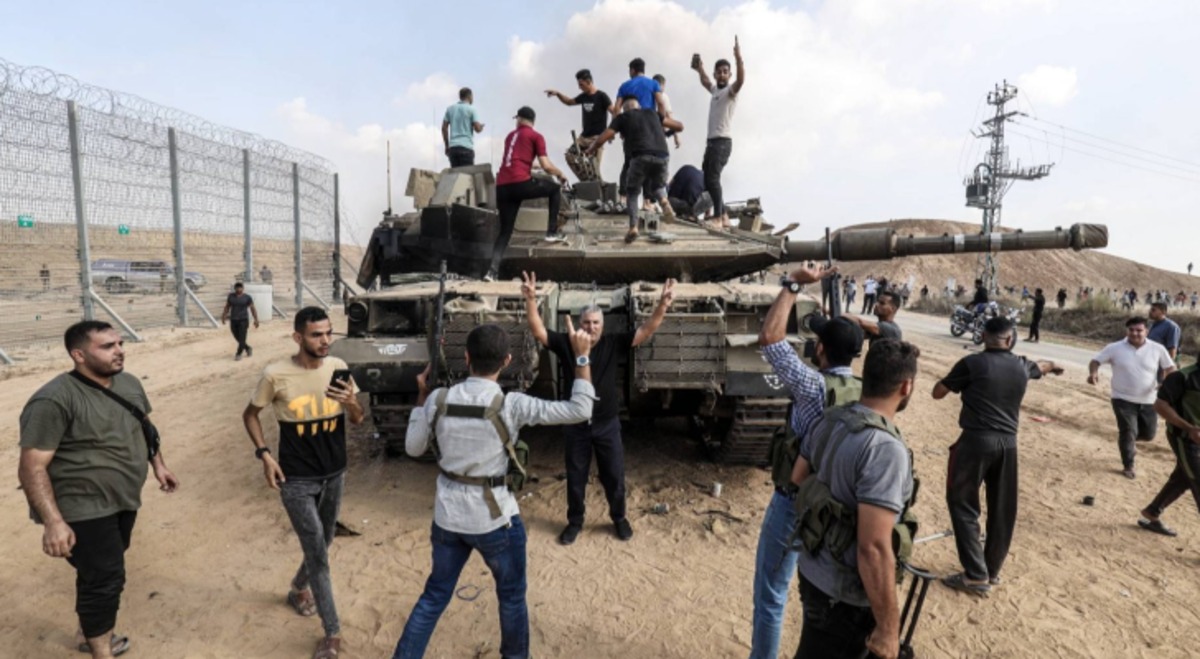
In human history, there are battles that do not remain confined to geographical boundaries. Instead, they alter the course of history, tear away the mask from falsehood, and give the oppressed a new lease on life. The Al-Aqsa Flood, which began on October 7, 2023, is one such historic turning point. After three years of a continuous and arduous struggle, it has demonstrated that the arrogance of falsehood is destined to perish and that the light of truth can never be extinguished. The Holy Quran declares: “And say: Truth has come, and falsehood has vanished. Indeed, falsehood is bound to vanish.”
Three years on, if we examine the impact and outcomes of the Al-Aqsa Flood, it becomes evident that this battle has not remained confined to the Gaza Strip or the borders of Palestine. Rather, it has evolved into a global movement.
One of the greatest achievements of the Al-Aqsa Flood is that it has brought freedom-loving people around the world together around a common cause. The storm that arose from the soil of Gaza is today surging with full force through the Red Sea in the form of Yemen’s Ansar Allah, through Hezbollah’s steadfast resistance in Lebanon, through the determined fighters of Iraq, and through Iran’s principled and steadfast support.
Nor is this movement confined to the region. It resonates in the hearts of the people of Pakistan in Asia, where millions of Muslims have associated their voices with the Palestinian cause. Even more remarkable has been the scene witnessed in the West, where millions of non-Muslims have gathered under the Palestinian flag on the streets of the United States and Europe and around historic universities such as Cambridge, Oxford and Columbia, protesting against the Israeli occupation.
The Al-Aqsa Flood has demonstrated that the liberation of Palestine is no longer merely an Arab or Islamic issue; it has become one of the most prominent symbols of humanity’s awakening.
Before the Al-Aqsa Flood, global imperial powers and the Zionist lobby had devised strategies aimed at burying the Palestinian issue permanently. Through the Abraham Accords, efforts were underway to push the Arab world toward normalization and accommodation with Israel, while attempts to turn Palestine’s place in history into a relic of the past had reached their peak.
However, the Al-Aqsa Flood overturned these imperial plans and schemes. It brought an issue that had been pushed into the shadows to the center of global politics. Today, there is hardly an international forum, court or diplomatic table where the Palestinian issue is not being discussed.
Israel’s decades-long campaign portraying itself as the victim has been severely challenged, and the world has increasingly recognized that lasting peace cannot be achieved as long as the Palestinian issue remains unresolved.
One of the greatest achievements of the Al-Aqsa Flood has been that it has exposed the hypocritical and decayed faces within human society, particularly among the Muslim world. The Holy Quran states: “Allah is not going to leave the believers in the state in which you are until He separates the impure from the pure.”
This battle has made it clear who genuinely stands for the welfare of the Muslim Ummah and who serves imperial interests. Governments and social classes that claimed to champion human rights, freedom and democracy remained largely silent as the children and women of Gaza were killed.
The battle transcended sectarian, national and geographical boundaries and created a united front of those who stood for what they regarded as justice, while exposing those who facilitated the policies of oppression.
The Al-Aqsa Flood also shattered the image of Israel as an invincible state and destroyed the aura of military superiority upon which it had based its regional dominance. Israel’s advanced technology, intelligence networks—including Mossad and Aman—and its army, long considered highly powerful, faced the guerrilla tactics and determination of Palestinian fighters.
Despite three years of continuous war, Israel failed to fully achieve the military objectives it had declared, including eliminating the resistance and securing the return of Israeli captives. Ultimately, it was compelled to come to the negotiating table over the issue of the captives, which the author regards as a major setback for Israel.
The deep political crisis within Israel, public anger toward the Netanyahu government, and the large number of Israelis confined to shelters have also been presented as signs of internal strain.
Proceedings and allegations concerning Israeli leaders before international judicial institutions, including the International Court of Justice (ICJ) and the International Criminal Court (ICC), as well as international boycott campaigns, have further increased diplomatic, legal and economic pressure on Israel.
Israel and its imperial backers also believed that by assassinating major resistance leaders in Palestine and Lebanon—whether Ismail Haniyeh and Yahya Sinwar in Palestine, or Sayyed Hassan Nasrallah, Sayyed Hashem Safieddine and their comrades in Lebanon—they could bring an end to the resistance movement.
But, the author argues, Israel failed to understand the lessons of history and divine tradition. The Holy Quran states: “And do not consider those who are killed in the way of Allah to be dead. Rather, they are alive with their Lord, receiving provision.”
The blood of resistance leaders did not signal the decline of the resistance; rather, it became a powerful message of its revival. History has shown that the blood of martyrs can inspire renewed determination among nations.
Following the deaths of resistance leaders, fighters from Palestine to Lebanon reorganized with renewed determination and continued confronting Israel. Rather than weakening the movement, the losses, according to the author, have deepened and strengthened its foundations.
In conclusion, the three years since the Al-Aqsa Flood have, in the author’s view, demonstrated that the rule of oppression is temporary while the victory of truth is destined. The sacrifices of the oppressed yet steadfast Palestinian people, the steadfast resistance fighters of Lebanon and freedom supporters around the world will not be in vain.
The day is not far, the author concludes, when Al-Quds will be liberated, the Israeli occupation will come to an end in the sacred land, and the world will once again witness the dawn of justice and fairness.
The Quran promises: “Is the morning not near?” (Surah Hud: 81)