By Dr. Sabir Abu Maryam
Secretary General, Palestine Foundation Pakistan
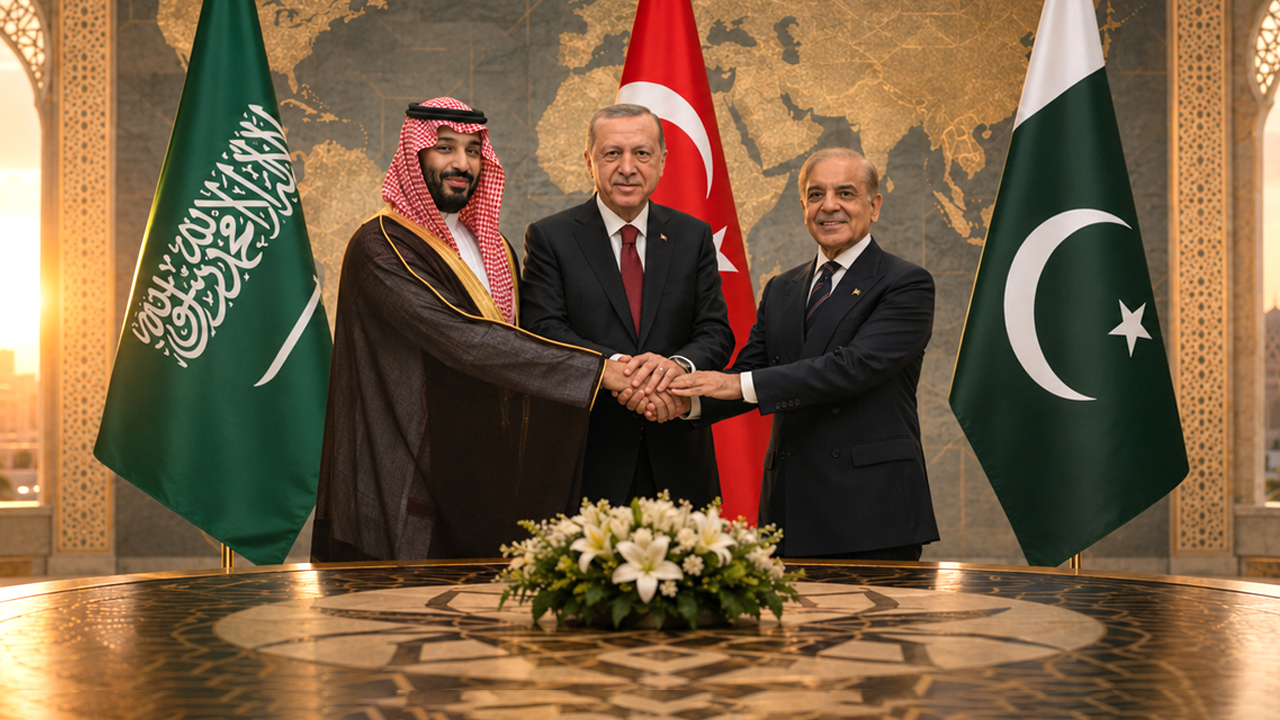
(Palestine Foundation Information Center), The global political landscape is shifting at a rapid pace, making the formation of new alliances and rapid geopolitical realignments an almost daily occurrence. The evolving dynamic in West Asia, particularly through joint defense agreements negotiated among Gulf nations, Pakistan, Saudi Arabia, and Türkiye, marks a major turning point in the region’s security and diplomatic architecture. In this context, the Makkah Joint Defense Agreement stands out as a historic milestone.
However, the long-term sustainability, efficacy, and ultimate success of this pact directly depend on whether Saudi Arabia can systematically phase out its reliance on foreign, particularly American, military presence and bases. The continued presence of U.S. bases not only invites international conflict for Riyadh but also poses a severe hurdle to building a lasting, cohesive alliance with Pakistan and neighboring regional partners such as Iran.
Recent developments demonstrate that U.S. bases within Saudi Arabia have been actively utilized in military operations against Iran. During past escalations when Iran launched retaliatory strikes against Israel, U.S. forces positioned on Saudi soil used regional infrastructure and assets to intercept incoming Iranian missiles bound for Israeli targets. Subsequently, Washington launched full-scale offensive operations against Iran directly from these bases.
From a historical perspective, the roots of the American military presence in Saudi Arabia stem from the 1951 Defense Cooperation Agreement (DHA) and the 1991 Gulf War, which saw the deployment of U.S. forces to strategic locations like Prince Sultan Air Base and Eskan Village. While contemporary Saudi strategy aims to avoid regional conflict, using these bases against Iranian interests or other regional actors remains a major point of friction. It has now become glaringly clear to the global community that these U.S. bases exist not to defend Saudi Arabia, but to safeguard Israel in the region. Should aggressive expansionist ambitions, such as the “Greater Israel” concept ever extend toward Saudi borders, Riyadh would find itself virtually incapable of resisting, as the pre-positioned U.S. infrastructure is built to facilitate those very geopolitical ambitions.
Under international law and Article 51 (Chapter VII) of the United Nations Charter, if a state allows its territory to be used as a launchpad for military aggression against another sovereign nation, the targeted country retains the inherent Right to Self-Defense. If U.S. forces continue to conduct operations against Iran or other neighbors from Saudi territory, any retaliatory response will directly compromise Saudi Arabia’s national security. Following the signing of the Makkah Agreement, the brunt of this diplomatic and military fallout could fall squarely on Pakistan, placing Islamabad in a precarious position.
Pakistan and Saudi Arabia share a deep history of defense and security collaboration, anchored by the 1982 Security Agreement and reinforced by the recent Makkah Agreement. Under these frameworks, an attack on or security crisis in one nation inherently impacts the other. If U.S. bases in Saudi Arabia become flashpoints for regional conflict, a potential Iranian response would force Pakistan into an extremely difficult posture.
Pakistan shares a direct border with Iran, and Islamabad has consistently sought brotherly ties and border tranquility with Tehran. In such a crisis, the Pak-Saudi defense pact would subject Pakistan to intense diplomatic and military pressure to choose sides.
Pakistan firmly opposes any situation that pits it against a neighboring brotherly Islamic country. Guided by core foreign policy principles, Pakistan has traditionally abstained from taking part in intra-Arab military conflicts. For instance, in 2015, when Saudi Arabia initiated aggression in Yemen, the Pakistani Parliament voted against deploying troops, reinforcing the national policy of refraining from military action against any Muslim state.
The most viable resolution following the tri-lateral defense alignment between Pakistan, Saudi Arabia, and Türkiye is for Riyadh to take bold, decisive measures. Such steps would relieve diplomatic pressure on Pakistan and usher in a new era of friendly, constructive relations with all regional partners, including Iran.
The essential first step for Saudi Arabia is to announce the closure of U.S. military bases and demand the full withdrawal of American troops following the Makkah Agreement. Ending U.S. military presence and dominance yields several strategic advantages:
• *Economic Relief:* For decades, Riyadh has funneled billions of dollars into Washington for weapons procurement and security coverage. Terminating these arrangements will remove an unnecessary financial drain, redirecting valuable capital toward national economic initiatives like Saudi Vision 2030.
• *Restoration of Sovereignty:* The primary objective of Western military deployment in West Asia has long been to safeguard Tel Aviv and maintain Western hegemony. A U.S. military withdrawal would restore genuine regional sovereignty, benefiting Iran, Pakistan, Türkiye, and the broader Islamic world.
• *Strengthening Mutual Defense:* If the vast financial resources currently allocated to American defense procurements were redirected toward an integrated defense framework among Muslim nations, the benefits would be transformative. Redirecting Saudi security expenditures to strategic partners like Pakistan, for joint defense production, co-development, and training missions, would offer immense stability to Pakistan’s economy.
The Pakistan Armed Forces, as a modern and battle-tested military entity, possess the capability to provide Saudi Arabia with complete security coverage without relying on foreign powers. Furthermore, removing U.S. forces would dismantle the prevailing environment of fear and mistrust, laying the groundwork for a stable, neutral Islamic bloc comprising Pakistan, Saudi Arabia, Iran, and Türkiye capable of guaranteeing lasting peace in the Middle East.
In summary, the true potential of the Makkah Agreement cannot be realized until the region liberates itself from foreign military umbrellas. Shutting down American bases and reallocating security investments away from Washington toward close brotherly partners like Pakistan will not only secure Saudi Arabia’s territorial sovereignty and revitalize Pakistan’s economy, but also lay the foundation for enduring peace, unity, and stability across the entire Muslim world.
End