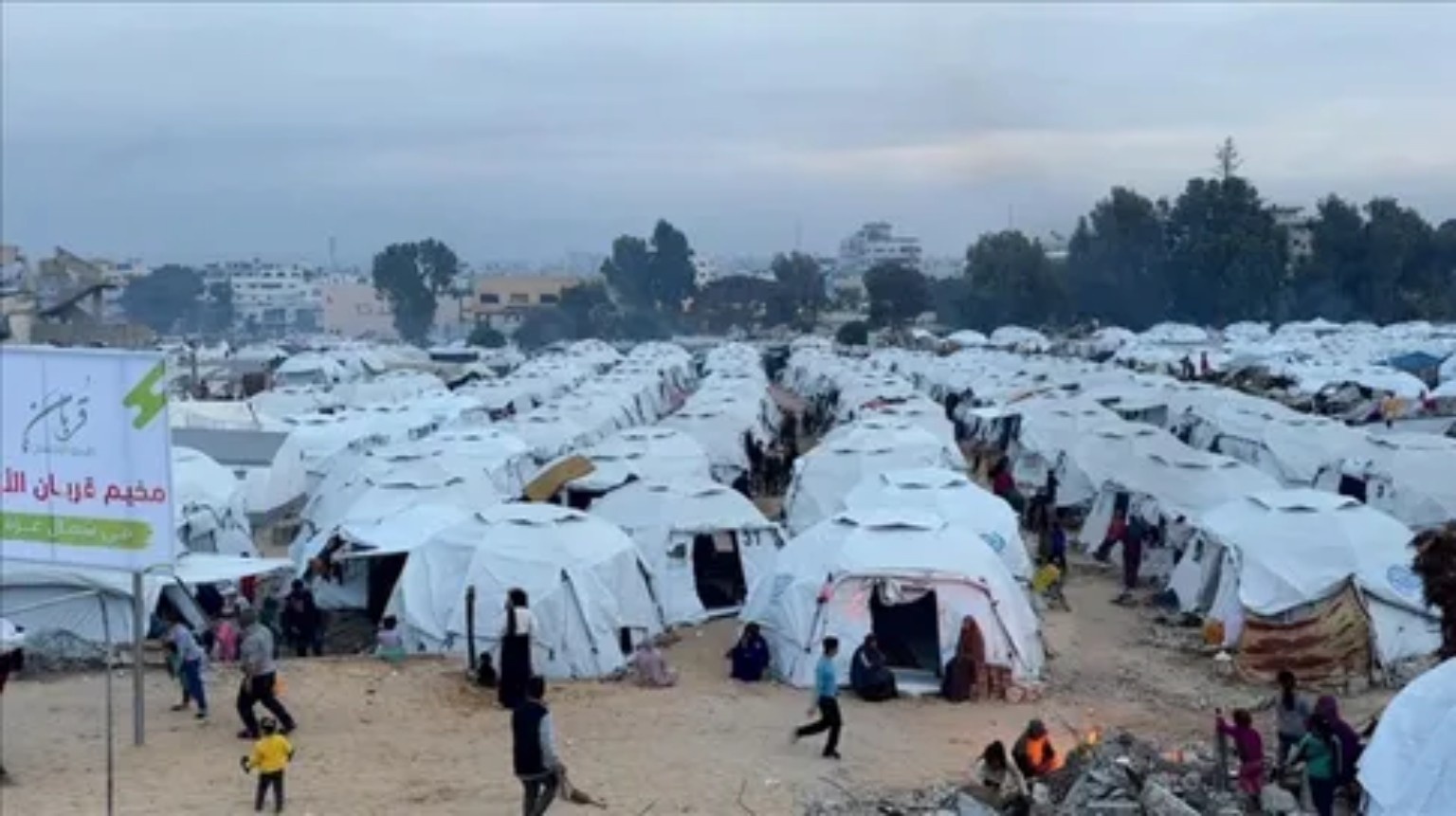
GAZA, (Palestine Foundation Information Center), Hundreds of thousands of Palestinians in the Gaza Strip face a new winter under harsh humanitarian conditions, as the displacement crisis continues and adequate shelter remains absent, after dilapidated tents turned into makeshift homes for hundreds of thousands of families for the 4th consecutive year, amid fears that their suffering will escalate due to rain, cold, and the shrinkage of areas available to residents.
The UN Human Rights Office in the Occupied Palestinian Territory (OHCHR-OPT) warned that displacement in the Gaza Strip has become an “acute and chronic nightmare,” as Israeli occupation forces continue to push Palestinians into smaller geographical areas, coinciding with the destruction of civilian infrastructure and the targeting of sites housing displaced people.
Ajith Sunghay, head of the OHCHR-OPT, said in a report issued on Friday that most Palestinians are entering their 4th year of displacement and the 4th winter inside frail tents that cannot withstand rain, while they remain vulnerable to bombardment and security threats.
Sunghay called for an end to this suffering, expressing hope that the current winter will be the last in which Palestinians are forced to face these conditions, pointing out that displaced people who left their areas before the announcement of the ceasefire have no clear horizon for returning to them, given the inability to access vast areas located behind what is known as the “Yellow Line,” and the continuation of repeated waves of displacement within the Strip.
Shrinking spaces and expanding military control
The UN report explained that Israeli occupation forces (IOF) continue to shrink the spaces available to Palestinians by expanding their military deployment westward, coinciding with the destruction of the remaining infrastructure and attacking gatherings of displaced people, warning that these practices raise serious concerns of pushing toward forced displacement and ethnic cleansing.
It noted that the IOF announced targeting the expansion of its military deployment area to reach about 70% of the area of the Gaza Strip, while the area of territories under its control rose, according to data included in the report, from about 53% under ceasefire arrangements to nearly 63% during the following year.
The office pointed out that over the past two weeks, it documented the expansion of Israeli military deployment areas toward the west in the Shuja’iyya neighborhood and other areas of Gaza City, along with areas east of Al-Bureij camp, Deir al-Balah city, and Al-Maghazi refugee camp in the central Strip.
Displaced camps under targeting
In a related context, the report pointed to receiving reports of at least two Israeli attacks targeting displaced camps in the Shuja’iyya neighborhood east of Gaza City during the past period, coinciding with the IOF use of explosive robots to destroy the few remaining buildings in the area.
These developments reflect the magnitude of the complexities facing hundreds of thousands of displaced people, who find themselves trapped between the expanding scale of destruction and the shrinkage of areas available for residence, at a time when places of displacement lack the components of protection and safe housing, with the onset of winter and the risks of rain, cold, and floods it brings.
The UN warning comes at a time when the issue of the return of displaced people to their destroyed areas remains pending, due to the continuation of Israeli military control over vast areas of the Strip, a matter that worsens the displacement crisis and turns temporary tents into an extended forced situation, without clear guarantees to end it.