GENEVA, (Palestine Foundation Information Center), The UN has warned of the growing dangers posed by unexploded ordnance in the Gaza Strip to the lives of civilians, especially children, stressing that it hampers long‑term reconstruction efforts.
Gaza, which has suffered widespread destruction due to the war, has become heavily contaminated with remnants of unexploded ordnance, which repeatedly cause civilian deaths and injuries, according to the UN on Friday.
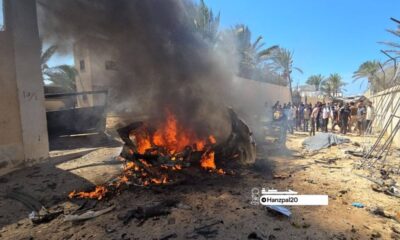
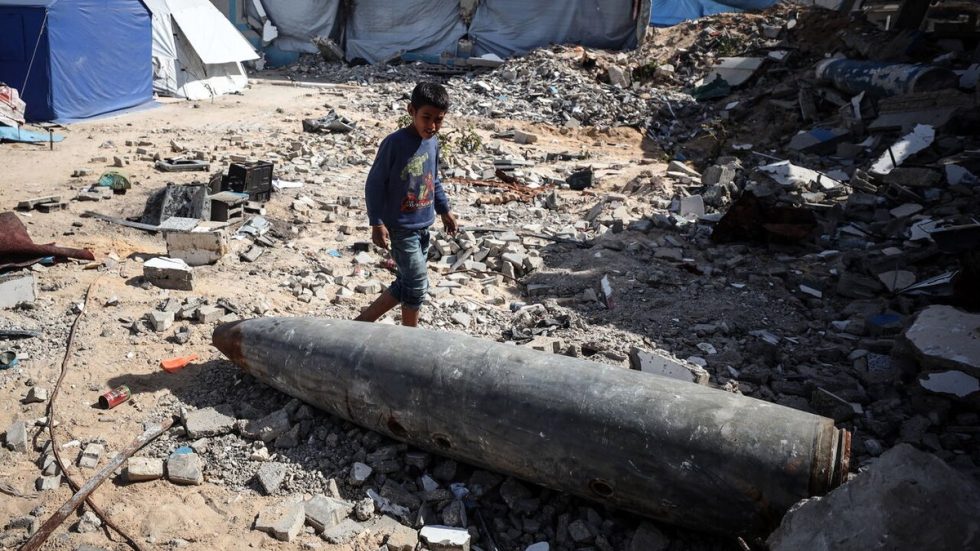
Unexploded ordnance, ranging from undetonated bombs or grenades to simple bullets, has become a common sight across the Gaza Strip since the start of Israel’s genocidal war in the besieged Palestinian territory
The UN Mine Action Service (UNMAS) said it had data suggesting that since the start of the Israeli war, more than 1,000 people had been killed in Gaza due to “indirect conflict,” from the remnants of war.
Julius Van der Walt, UNMAS chief in the occupied Palestinian territory, stressed that this number of fatalities from the remnants of war was certainly a severe underestimate.
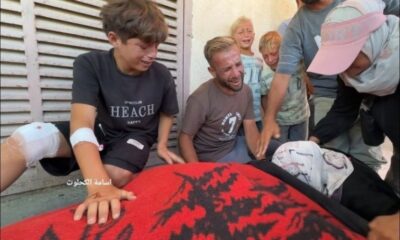
Half of the known casualties were children, he told reporters in Geneva.
Speaking alongside him at a news conference on mine action work worldwide, Narmina Strishenets of Save the Children UK, also highlighted the heavy toll on children.
A report by the organization published last year found that in 2024, the use of explosive weapons in Gaza left an average of 475 children each month with potentially lifelong disabilities, including amputations.
Today, Strishenets said, Gaza has “the largest cohort of child amputees” in the world.
Van der Walt said UNMAS had so far been unable to conduct an extensive survey of the full scope of the problem, but “the evidence already suggests a high density of explosive ordnance contamination across the Gaza Strip.”
So far, UNMAS had identified “more than 1,000 items of explosive ordnance,” during missions conducted over the past 2.5 years.
Compared to Gaza’s small geographic size, that means there is about one piece of explosive ordnance “every 600 meters,” he pointed out.
“Explosive weapons are being used all across the territories, including in densely-populated refugee camps,” he said, pointing to a recent case where explosive ordnance was found inside a tent where people had been living for several weeks.
At the same time, “humanitarian convoys risk detonation as they travel throughout the Gaza Strip, and early recovery efforts are essentially stalled before they can even begin,” he said.
Van der Walt pointed to an assessment that, in a best case scenario, it will cost around $541 million to address the explosive ordnance threat, if all necessary permissions are granted and the equipment required is accessible.
He warned that this contamination, including within piles of debris, was so vast and so varied, that it was “very close to impossible to do a full assessment,” and that ordnance would likely remain a problem for decades to come.
He pointed to the World War II bombs that continue to be discovered during construction projects in Britain.