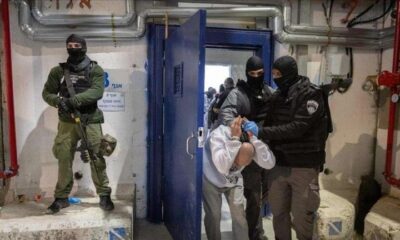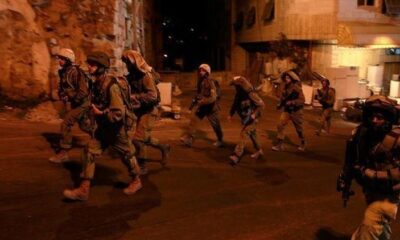
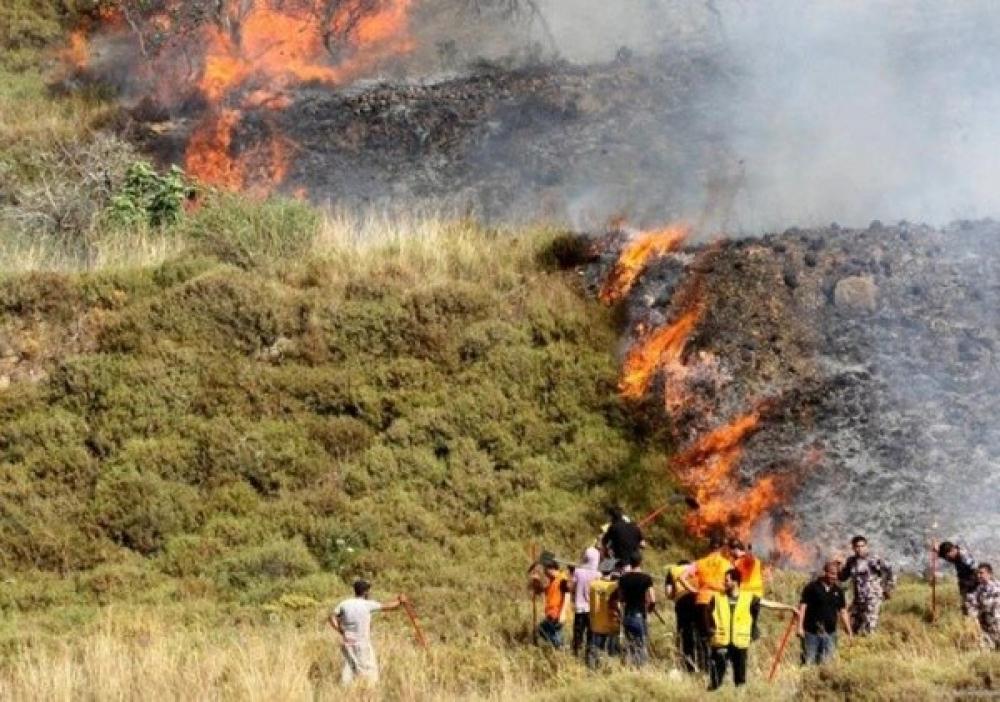
WEST BANK, (Palestine Foundation Information Center), The occupied West Bank is witnessing simultaneous escalation on two fronts. The first is the continued Israeli military operations in the northern West Bank, particularly in Jenin, Tulkarem and their refugee camps. The second is the rising wave of settler attacks targeting Palestinians, their property, agricultural land, infrastructure and sources of livelihood.
As Israeli military operations continue in Jenin, Tulkarem and their camps, their impact on residents is also deepening, with more than 40,000 refugees displaced from the Jenin, Tulkarem and Nur Shams camps amid widespread destruction of homes, infrastructure and public facilities.
Northern West Bank camps: Continued displacement and destruction
A large part of the Israeli military operations has focused on Jenin camp, where demolitions and destruction have affected more than 600 homes and residential and commercial structures, either fully or partially. Direct losses have been estimated at around $30 million.
The destruction has not stopped with what has already been demolished. Israeli forces have issued notices and plans to demolish between 95 and 100 additional homes and structures, while their bulldozers have carved around 15 roads and passages inside the camp under the pretext of opening military routes.
Israeli forces have also blown up dozens of homes collectively in several neighborhoods of the camp, while thousands of displaced residents remain outside their homes, amid uncertainty over whether they will be able to return.
In Tulkarem, military operations have continued in the city and its camps, alongside the ongoing siege and destruction. The impact of the assault has extended to basic services, including water, electricity, sewage and communications networks.
The continuation of these measures has turned large parts of the camps into areas that residents can hardly access, while thousands of displaced people have been prevented from returning to their homes or even checking what remains of them.
Available data indicates that around 11,500 Palestinians have been displaced from Tulkarem governorate alone, while the number of people displaced from northern West Bank camps has exceeded 40,000.
The targeting has not been limited to homes and structures. Holy sites have also been affected, with Israeli forces raising the Israeli flag over the minaret of Abu Ubaida Mosque in Nur Shams camp. Access to several mosques in the Tulkarem and Nur Shams camps remains impossible, making it difficult to assess the extent of the damage due to the siege.
Settlers expand the circle of attacks
In parallel with the military operations, West Bank governorates witnessed a new wave of settler attacks over the past 24 hours, focusing on agricultural land, property, infrastructure, water and electricity sources, as well as incursions into residential areas and holy sites.
In Nablus governorate, settlers attacked the eastern area of the town of Beita and set Palestinian vehicles on fire, while others cut off the water line to a home in Beit Imrin.
Settlers also cut electricity supplies to the al-Masoudiya area and prevented the local council from reaching the site to repair the damage.
In the village of Awarta, settlers stormed an Islamic shrine and performed Talmudic rituals inside under the protection of Israeli soldiers, while carrying out provocative tours among Palestinian homes in Huwwara.
In Ramallah and al-Bireh, settlers plowed Palestinian land in Marj Sia plain between al-Mughayyir and Abu Falah, as Israeli forces closed the entrance to al-Mughayyir.
Large groups also stormed Jabal al-Ras in Um Safa, while other groups roamed among residents’ homes in Burqa.
In Tubas, settlers released their livestock near Palestinian homes in the Yarza community east of Tayasir. In Masafer Yatta, south of al-Khalil, settlers detained Palestinian workers and attempted to seize livestock.
Settlers also drove their livestock into residents’ land and grazing areas in several Palestinian hamlets and communities.
Agriculture and livelihoods targeted
The attacks directly affected the agricultural sector, with settlers cutting down around 350 guava trees in the town of Farasin, between Jenin and Tulkarem, during the harvest season, causing losses to farmers and threatening their income.
Palestinian land was also plowed in Marj Sia plain, while livestock was used in several areas to graze inside Palestinian land and among homes, adding economic and living pressure on residents.
The attacks do not stop at material damage. Several parts of the West Bank have witnessed incursions and provocative movements, including the placement of Israeli flags along the bypass road between al-Jalama checkpoint and Deir Ghazala, east of Jenin.
Escalation in numbers
The figures reflect the expanding scope of settler attacks. The Palestine Information Center, Muta, documented 4,357 settler attacks from the start of 2026 until the end of August, compared with 3,818 attacks recorded during all of 2025.
The Colonization and Wall Resistance Commission also documented 628 settlement-related attacks in August alone, as part of 2,030 attacks carried out by Israeli forces and settlers against Palestinians, their land and their property during the same month.
These figures indicate that what is happening in the West Bank is not limited to scattered field confrontations. Rather, it is taking the form of sustained pressure on residents, combining military operations, displacement, home demolitions and infrastructure destruction with settler attacks targeting agricultural land, water and electricity sources and private property.
Amid this reality, Palestinian fears are growing that the continued parallel military and settlement tracks could gradually alter the geographic and demographic reality of the West Bank, especially in areas surrounding targeted camps, villages and Palestinian communities, and push more residents to leave their land and homes.
Palestinians in the West Bank now find themselves facing two parallel tracks of pressure: Israeli forces continue siege, demolition, displacement and infrastructure destruction, while settlers expand attacks on land, property and sources of livelihood. Together, these measures threaten to deepen the displacement crisis and reshape the reality of many Palestinian communities.