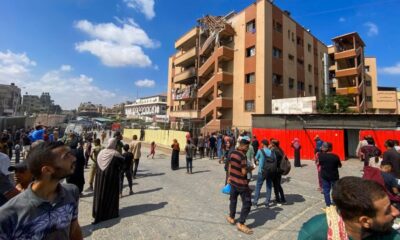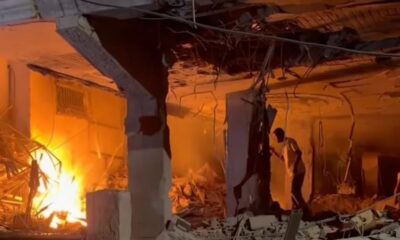

GAZA, (Palestine Foundation Information Center), Civil Defense crews in the Gaza Strip continue their difficult work of recovering the bodies of Palestinians from beneath the rubble of buildings and residential blocks destroyed by Israeli forces during the genocide. Nearly three years after the Al-Taj Building massacre, renewed recovery operations in Gaza City’s Al-Yarmouk neighborhood have once again brought the scale of the tragedy to the surface.
On Thursday evening, the Civil Defense announced that its crews had recovered the bodies of 14 Palestinians from beneath the rubble of the Al-Taj Building in Al-Yarmouk. Search operations are continuing to locate all those who remain buried beneath the site.
The Civil Defense said the search and recovery operation is being carried out in cooperation with the Egyptian committee, while rescue teams continue to face severe difficulties because of the enormous scale of destruction and the challenges involved in reaching victims trapped beneath the rubble.
A massacre buried beneath rubble
The Al-Taj Building massacre dates back to October 25, 2023, when Israeli warplanes launched intense strikes on Al-Taj 3 Building and the surrounding residential block on Al-Yarmouk Street in central Gaza City.
Around 20 missiles were used in the attack, destroying the building and surrounding homes over their residents. The strikes also hit the adjacent street, a bakery and civilian property, killing more than 40 Palestinians and injuring others.
Nearly three years later, the victims of the massacre are still being recovered. Continuing searches have uncovered more bodies of Palestinians who remained buried beneath the ruins of homes destroyed in the Israeli attack.
Thousands of bodies remain missing
The Al-Taj Building is far from an isolated case in Gaza. According to estimates announced in early August by Omar Nofal, head of the government committee responsible for following up on missing persons, around 15,000 Palestinians are believed to remain beneath the rubble of destroyed buildings across the Gaza Strip.
The figure reflects the enormous human toll of the genocide and the widespread destruction of entire neighborhoods and residential blocks. Civil Defense and ambulance crews continue recovery operations with limited resources and equipment inadequate for the scale of the task.
Each recovery reopens the grief of Palestinian families still waiting for their loved ones to be found, as the ruins of homes have become mass graves holding thousands of Palestinians.
A long battle beneath rubble
Rescue crews face immense challenges in searching for the missing, including damaged infrastructure, massive concrete slabs and severe shortages of the heavy and specialized equipment needed to reach bodies believed to be buried deep beneath destroyed buildings.
The passage of time and the complexity of excavation operations have prolonged the anguish of families, while recovery efforts continue at dozens of sites across Gaza where victims of Israeli attacks are still believed to lie beneath the rubble.
The continuing recovery of bodies stands as a lasting testament to the scale of destruction inflicted on Gaza and to a tragedy that did not end when the bombing stopped. Thousands of families are still waiting for their loved ones to be brought out from beneath their destroyed homes, as rescue crews continue the long and painful task of recovering the dead and giving families the chance to finally lay them to rest.