GAZA, (Palestine Foundation Information Center), Search and recovery operations continue across the Gaza Strip for the bodies of Palestinians trapped beneath the rubble of homes and buildings destroyed during Israel’s genocidal war on the Strip.
A severe shortage of equipment and heavy machinery, however, continues to prevent Civil Defense crews from reaching many victims, even long after the areas where they were killed were attacked.
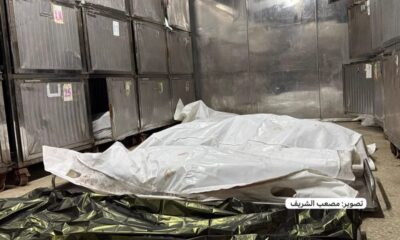
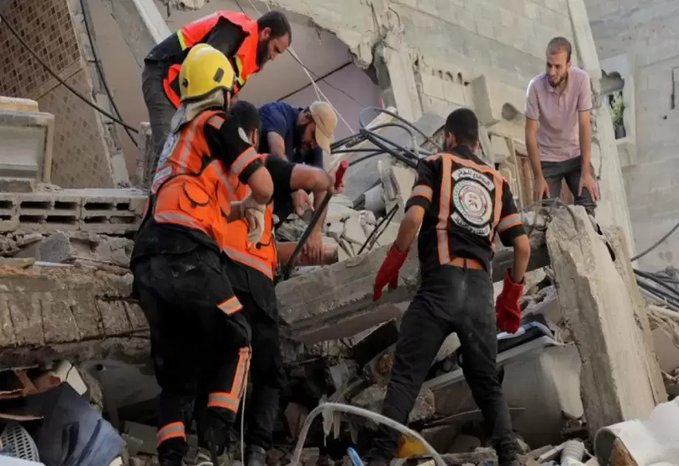
Palestinian Civil Defense crews recovered 55 bodies and human remains from beneath the rubble of a building belonging to the Malka family in the Al-Zaytoun neighborhood, east of Gaza City. The building had been sheltering dozens of displaced Palestinians who sought refuge there from Israeli bombardment.
Crews continued searching the site for a third consecutive day, with estimates indicating that more than 60 bodies could be buried beneath the remains of the building.
Mohammad Abu Dan, the Civil Defense official responsible for body-recovery operations, said crews had recovered most of the bodies in preparation for a collective funeral procession expected to take place early next week. Search operations are continuing for those who remain trapped beneath the rubble.
The operation offers a glimpse into a much larger tragedy across Gaza. The Civil Defense estimates that approximately 10,000 bodies remain beneath the rubble. The figure is not considered a final count because many victims remain inaccessible and therefore cannot be officially registered.
Previous Civil Defense estimates have similarly indicated that more than 10,000 missing Palestinians remained buried beneath destroyed buildings and were not included in the Gaza Health Ministry’s official death toll because their bodies had not reached hospitals.
Thousands remain beneath rubble
Efforts to recover such an enormous number of bodies face extraordinarily difficult conditions on the ground. Rescue crews suffer from an acute shortage of the heavy machinery and specialized equipment required to remove massive slabs of concrete and reach locations where victims are believed to be buried. The entry of specialized equipment into Gaza has also been restricted.
Civil Defense crews are consequently working with extremely limited resources while confronting hundreds of tons of rubble. Recovery operations require excavators, bulldozers, trucks and other heavy machinery capable of lifting and transporting debris, but the equipment currently available is nowhere near sufficient for the enormous scale of destruction across the Gaza Strip.
The task becomes increasingly difficult with time. Bodies that remain trapped beneath rubble for extended periods decompose, and in many cases only human remains are left. Rescue workers must then conduct painstaking manual searches to locate and recover victims’ remains instead of relying on the faster debris-removal operations that heavy machinery would make possible.
Recent Civil Defense figures illustrate how severely its operational capacity has deteriorated. The agency has lost approximately 85% of its equipment and is operating at an estimated 5% to 7% of its prewar capacity. By the beginning of 2026, its crews had been able to recover only about 350 bodies from among the thousands believed to remain beneath the rubble.
Rescue teams also face continuing dangers while working inside destroyed and unstable buildings. Dozens of Civil Defense personnel have been killed or injured during search, rescue and body-recovery operations, while crews continue working at hazardous sites filled with unstable debris.
The current recovery operations are being carried out as part of a project supported by 800 working hours in coordination with the International Committee of the Red Cross. That capacity remains extremely limited compared with the scale of destruction and the enormous task facing Civil Defense teams throughout Gaza.
Families still waiting
The recovery of 55 bodies from a single building provides a stark illustration of a crisis extending across the entire Gaza Strip. Beneath thousands of destroyed buildings, the bodies of missing Palestinians remain beyond the reach of rescue teams, while the shortage of heavy machinery and specialized equipment prevents thousands of families from learning the fate of their loved ones and laying them to rest.
For those families, the consequences of Gaza’s destruction did not end when the bombardment stopped. Months, and in some cases years, can pass without a body being recovered. Families are left without a grave to visit, a funeral to hold or even final confirmation of where their loved ones lie.
Thousands of bodies remain beneath Gaza’s rubble, bearing witness to the enormous scale of destruction while rescue crews wait for the equipment needed to clear a path toward them.
For their families, recovery means more than removing bodies from destroyed buildings. It means bringing their loved ones out of the rubble that became their involuntary graves, giving them a proper burial and finally allowing families to say goodbye after months or years of waiting.