By: Dr. Sabir Abu Maryam
Secretary General, Palestine Foundation Pakistan
(Palestine Foundation Information Center), The West Asian region and its soil have historically proven to be a quagmire for imperialism and colonial powers, one from which no invader has ever managed to recover. What is unfolding today is undoubtedly history repeating itself, but this time, the scenario is far more severe.
Following the initiation of the war against Iran, an earthquake has struck the corridors of power in Washington and the military circles of the Pentagon, a tremor that social media users have aptly dubbed the “Iran Earthquake.”
The United States imposed this war on Iran, but all its calculated assessments failed the moment Iran retaliated. Not only did Iran strike back, but it also forced the U.S. into a defensive position where it now routinely relies on the shoulders of third-party countries just to salvage what remains of its global prestige.
The administration of U.S. Code President Donald Trump and the military command are currently facing a severe internal crisis. Disagreements over the execution and failed strategy of the Iran war have escalated to the point where top government and military officials are resigning like a house of cards. Ironically, this is the exact fate Washington had envisioned for Tehran; the U.S. had calculated that imposing a war would fracture Iran’s political and military leadership, leaving the rest of the job to be finished by American assets on the ground.
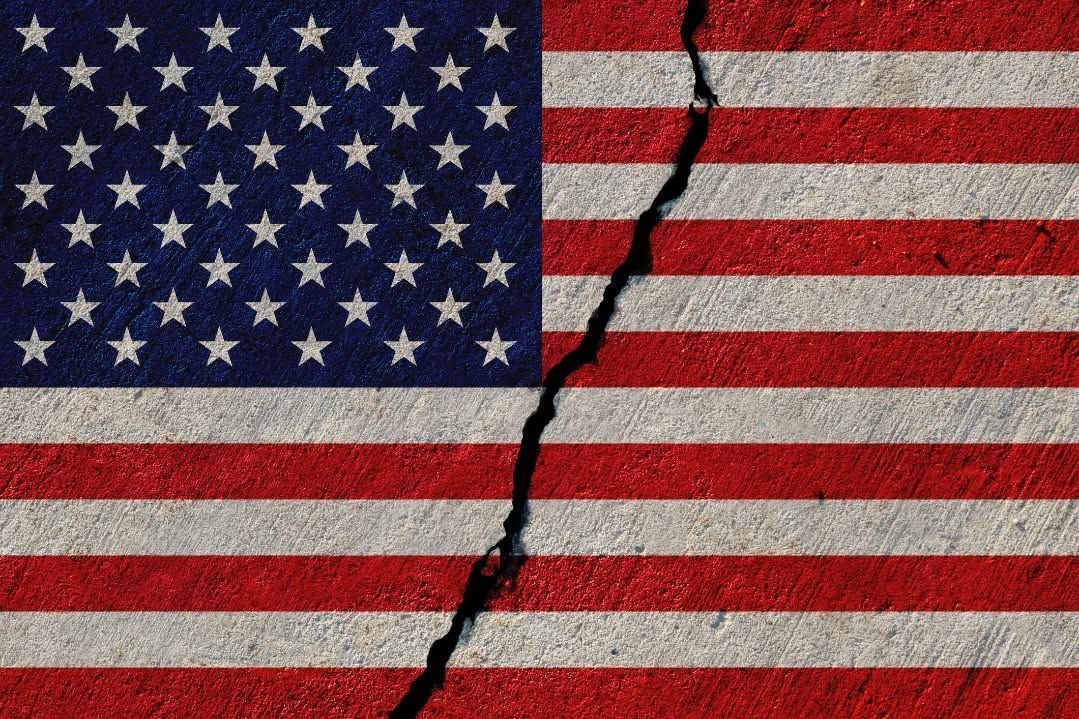
Today, however, reality has flipped. It is the political and military leadership within the United States that is deeply fractured, as the internal crisis continues to intensify. The latest and most seismic link in this chain of events is the recent resignation of the U.S. Director of National Intelligence (DNI), Tulsi Gabbard, a move that has shaken the very foundations of the White House.
As an influential figure overseeing all 18 agencies of the U.S. intelligence community, Tulsi Gabbard suddenly stepped down from her position.
Although her formal resignation letter cited her husband’s cancer diagnosis as the reason, international media and credible outlets like Reuters and The Washington Post report that the White House had placed immense pressure on her to resign.
Gabbard has long been a staunch opponent of foreign U.S. military interventions and regime-change wars. During congressional hearings, she openly contradicted President Trump’s claims that Iran posed an imminent threat to the United States. She explicitly informed the Senate committee that there was no evidence of Iran resuming its nuclear weapons program following U.S. strikes, effectively dismantling the Trump administration’s casus belli. Due to her dissenting stance, she was sidelined from crucial war-planning meetings, a marginalization that ultimately culminated in her departure.
Gabbard is far from an isolated case; a quiet, structured rebellion against the Iran war is brewing within the American establishment. To date, more than 30 senior military command officers and intelligence officials have either resigned in protest or been forced out due to their opposition to the conflict.
Among the prominent names is Joe Kent, the head of the National Counterterrorism Center (NCTC), who resigned in March 2026 in protest against the war, stating he could not bear the moral burden of a conflict against a nation that posed no immediate threat to the U.S. Similarly, Amaryllis Fox Kennedy, the Deputy Director of National Intelligence and a key intelligence figure, resigned in May 2026 over severe policy differences regarding Iran. Furthermore, Homeland Security Secretary Kristi Noem was removed from her post amid intense wartime pressure and perceived failures in domestic management, while Labor Secretary Lori Chavez-DeRemer chose to defect from the cabinet during this chaotic period.
Military commanders increasingly believe that the Pentagon rushed into a conflict against Iran without solid intelligence or a long-term strategy, actively placing American troops in harm’s way.
The war with Iran has exposed fundamental vulnerabilities in the American military and political infrastructure, flaws that were previously masked by the aura of its “superpower” status.
American media outlets are continuously broadcasting reports of an unprecedented trust deficit between the U.S. Intelligence Community (such as the CIA and ODNI) and the White House.
President Trump is widely seen as making wartime decisions based on personal political motives rather than ground realities, prompting principled military and intelligence experts to withdraw their support.
In response to American aggression, Tehran’s highly effective blockade of the Strait of Hormuz has severely disrupted the global economy and fractured American supply lines. Washington appears entirely incapable of restoring security to this vital maritime corridor, triggering a twin crisis of domestic economic strain and political instability within the United States.
The American public has grown deeply fatigued by the conflict; President Trump’s public approval ratings have plummeted to historic lows, and the ruling party is staring down the barrel of a major defeat in the upcoming midterm elections. Simply put, the American economy can no longer sustain the astronomical costs of this war.
Simultaneously, the U.S. President has found himself geopolitically isolated. Gulf nations and traditional European allies have exerted significant pressure on Washington to halt further strikes on Iran. Trump himself admitted that he was on the verge of launching another assault but held back at the request of Gulf allies. Whether entirely accurate or strategically framed, this admission reveals that the President is operating under intense pressure from his allies, who are refusing to back unilateral American military actions against Iran.
In conclusion, the steady stream of high-level resignations from the apex of American power serves as definitive proof that Washington is hollowing out from within. When intelligence chiefs and counterterrorism heads lose faith in their own government’s wartime policies, the war is lost in the corridors of power long before it is decided on the battlefield.
The Iran war has driven the United States into a strategic cul-de-sac from which the only exit appears to be the dismantling of its global hegemony.
It can be argued that by standing its ground, Iran has not only shattered the illusion of American global supremacy but has also decisively thwarted the geopolitical blueprints for a “Greater Israel” in the region.