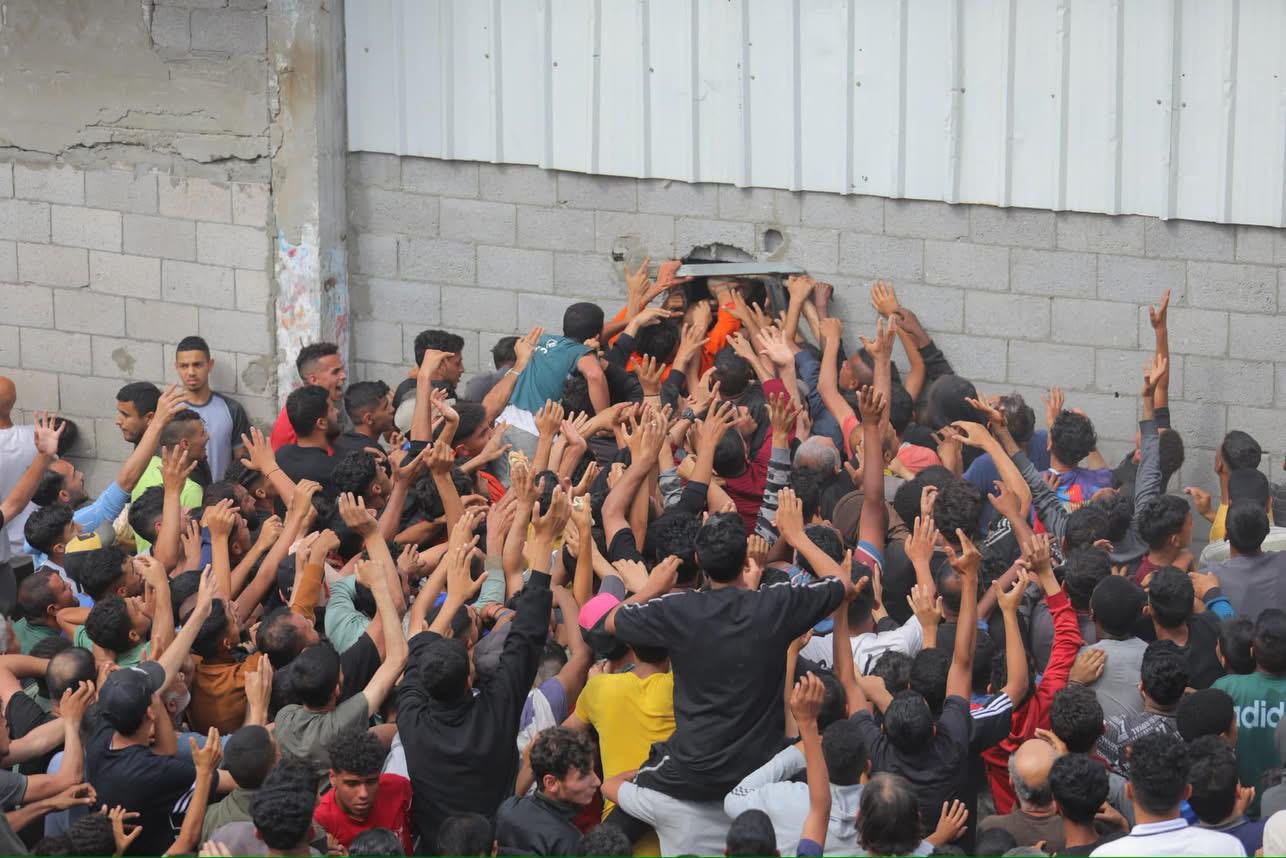
GAZA, (Palestine Foundation Information Center), The bread crisis in the Gaza Strip is widening as flour supplies decline and the deficit in meeting daily needs rises, amid reduced food aid and ongoing restrictions on the entry of goods and essential materials. This puts bakeries before growing challenges that threaten their ability to continue production and pushes thousands of citizens to wait for hours in front of them to secure their families’ bread needs.
The crisis goes beyond the limits of a temporary shortage in a basic food commodity, revealing a growing imbalance in the food supply system and local production, with the decline of subsidized flour, irregular commercial imports, and a shortage of bakery operating and maintenance supplies. This makes providing a loaf of bread linked to the daily flow of supplies and crossing movements, without a sufficient strategic stock to face emergencies.
Economic researcher Ahmed Abu Qamar warned, in a press statement on Thursday, of the worsening flour crisis in the Strip, confirming that the supply deficit exceeded 25% of total daily needs, whether from quantities arriving via commercial import or those provided within international aid programs.
Abu Qamar explained that the Gaza Strip’s flour needs amount to about 450 tons daily, while the currently available quantities are not enough to meet the actual needs of the market and bakeries, which widens the supply gap and increases pressures on citizens, especially amid the decline in subsidized food aid.
Aid cuts worsen the crisis
The flour shortage coincided with the World Food Program reducing its food aid during last October due to a lack of funding, which was directly reflected in the quantities of flour and bread available to families and bakeries.
According to Abu Qamar, the program reduced its aid by about 50%, and the number of beneficiaries dropped from 1.6 million to 1.1 million people, depriving nearly 500,000 people of the monthly aid they relied on to provide part of their food needs.
The reduction was not limited to the number of beneficiaries, as food rations were cut in half, so that a family now receives one food parcel instead of two, alongside reducing the size of the flour bag attached to the food parcels.
The reduction also extended to the quantities allocated to bakeries, as flour supplies provided by the program fell from more than 260 tons daily to between 125 and 135 tons only, a drop that directly reflects on the volume of subsidized bread production and the ability of bakeries to meet growing demand.
The decline in flour that used to reach citizens within food aid leads to increased reliance by families on the local market, raising demand for available commercial quantities and adding new pressure on a market already suffering from supply shortages and weak ability to build a reserve stock.
Crossings and strategic stock
Regarding commercial imports, Abu Qamar pointed out that the quantities entering the Strip do not provide a sufficient margin to build a strategic stock at bakeries, amid the decline in average supplies resulting from crossing closures and restrictions imposed on the entry of goods.
He confirmed that bakeries need the entry of at least 10 trucks of flour daily on a regular basis, alongside providing additional quantities that allow building a reserve stock sufficient for a period ranging between 12 and 14 days, to avoid halting production when crossings close or any delay occurs in the arrival of supplies.
He explained that the crossings operate according to arrangements that allow the entry of goods five days a week, while movement stops during holidays, making keeping a reserve stock necessary to ensure continued production and not link bakery work to the daily flow of trucks.
These data reflect the fragility of the flour provision system in the Strip, as irregular imports and the absence of sufficient stock make any halt in crossing movement a direct cause for widening the deficit, placing bakeries at risk of reducing production or stopping work.
Bread queues under the weight of shortages
The repercussions appear tangibly in the daily lives of residents, with waiting queues stretching in front of bakeries and citizens forced to spend hours trying to get bread, amid fears that quantities will run out before their turn arrives.
These queues do not represent a mere passing daily scene, but reflect the widening gap between available quantities and actual demand, at a time when a wide sector of families relies on bread as one of the basic components of daily food, especially with declining purchasing power and rising living costs.
With the decline of food aid and rising reliance on the market, the poorest families and the displaced become more vulnerable to the repercussions of the flour shortage, amid limited food alternatives and the ability to provide family needs regularly.
Shortage of oils and spare parts threatens bakeries
The bakery crisis does not stop at the flour shortage, but extends to operating and maintenance supplies, which constitute an essential factor in the continuation of the production process.
In this context, Abu Qamar pointed to a shortage in mineral oils necessary to operate equipment and generators, in addition to a scarcity of spare parts necessary to repair breakdowns and maintain production lines.
He explained that the absence of maintenance supplies pushes bakery owners to treat breakdowns with limited capabilities and primitive means, which raises the chances of machinery and equipment breaking down, increases operating costs, and limits the ability of facilities to maintain their production capacity.
He pointed out that the lack of oils and absence of periodic maintenance accelerate equipment wear and reduce its operational lifespan, especially with generators and machines operating for long periods in exceptional circumstances, and without providing the materials necessary to maintain their efficiency.
This means that bakeries face simultaneous pressures on more than one level; they need flour to continue production, fuel and oils to operate equipment, and spare parts to treat breakdowns, making the continuation of their work dependent on providing an integrated system of supplies and not just one material.
A crisis beyond the limits of bakeries
These developments indicate that the bread crisis in the Gaza Strip is linked to the overall economic and humanitarian conditions experienced by residents, amid declining aid, restrictions on the movement of goods, and weak ability to build food and production stocks that protect the market from sudden interruptions.
Furthermore, continuing to work with limited quantities of flour, without ensuring a regular flow of commercial and subsidized supplies, keeps bakeries vulnerable to stopping or reducing production whenever crossing movement falters, which threatens to widen the crisis of access to basic food.
Abu Qamar stressed that ensuring a sufficient and regular flow of flour, alongside providing fuel, mineral oils, and spare parts, represents an essential necessity to maintain the work of bakeries and prevent the bread crisis in the Strip from worsening.
While the daily needs of residents increase, the ability of bakeries to provide a loaf of bread remains linked to the regularity of supplies and removing obstacles to the entry of basic materials and operating supplies, at a time when the problem is no longer limited to the flour shortage, but has come to affect the ability of the entire food production system to continue.