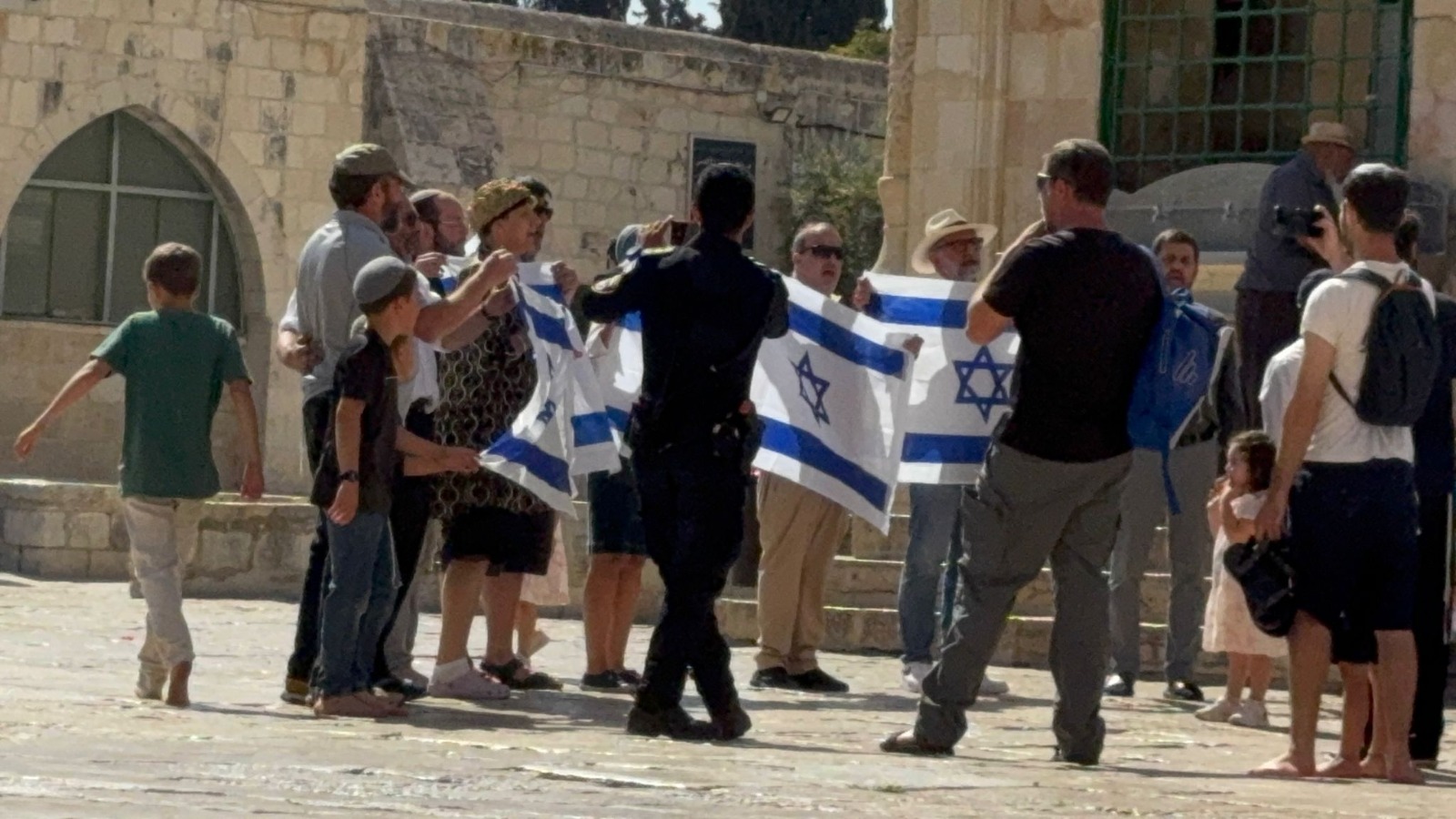
OCCUPIED JERUSALEM, (Palestine Foundation Information Center), The researcher specializing in Jerusalem affairs, Ziyad Ibhais, warned of extraordinary preparations being carried out by the Temple organizations and the Israeli occupation authorities, coinciding with the approaching Jewish holiday season, which begins on Saturday, September 12 of this year, considering that the upcoming season may constitute a long stage for escalating attacks on Al-Aqsa Mosque and attempting to impose new realities inside it and its surroundings.
Ibhais explained that the season extends across four main stages, starting with Rosh Hashanah on September 12 and 13, followed by the Ten Days of Repentance leading up to Yom Kippur on September 21, then Sukkot from September 25 to October 2, before concluding with Simchat Torah on October 3, which is the day linked to the anniversary of the Al-Aqsa Flood Operation in 2023.
According to the researcher, for over four decades, this season has remained the headline for the most severe waves of aggression against Al-Aqsa, and a stage for the explosion of uprisings and intifadas in defense of it, as Temple groups exploit the holidays to push toward imposing more Jewish manifestations and rituals inside the Mosque.
Ibhais pointed out that the Temple organizations are intensifying their movements this year through parallel paths, foremost of which is introducing the shofar, prayer books, and Torah tools into Al-Aqsa, within a path that began in 2018 and accelerated during 2026, reaching the point of experimenting with introducing the Siddur book, which includes general Torah rituals and prayers, starting from last August 16.
He noted that the occupation police are managing this experiment themselves, by allowing 15 settlers to receive the books before storming the Mosque, in a step he believes aims to bring about a major change in the status quo inside Al-Aqsa, despite the sensitivity of such procedures and what similar attempts previously caused in terms of uprisings and intifadas, including the Tunnel Uprising in 1996, attempts to impose electronic gates in 2017, and the control of the Bab al-Rahma prayer hall in 2019.
Endeavors to expand stormings temporally
In another path, a Jewish campaign continues demanding the opening of the Mosque to evening repentance prayer rituals, as a signature campaign in this regard began on August 10, with the aim of adding an evening storming period after the Isha prayer, thus expanding the scope of temporal division inside Al-Aqsa.
This coincided with previous steps to increase storming hours, after an hour was added to storming times during the past Ramadan, and half an hour to regular times following the reopening of Al-Aqsa on April 9, 2026, bringing the duration of stormings to six and a half hours daily from Sunday to Thursday, according to Ibhais.
As for the most dangerous new paths, it is represented in demanding the opening of the Mosque to stormings on Saturdays, a campaign that began on last July 16, before the Temple organizations formed what they called the Committee for Opening the Temple Mount on Saturday.
The Tiferet Yisrael Synagogue in the Old City of Jerusalem witnessed, on August 27, a conference dedicated to discussing this demand, with the participation of Israeli Communications Minister Shlomo Karhi and Knesset member for the Likud party Amit Halevi.
After the conference, the Temple organizations prepared special prayers to impose stormings on Saturday, and began calling for reading them collectively inside Al-Aqsa, while Rabbi Eliyahu Weber from the Temple Mount Yeshiva led the first of these circles on September 3, and it was repeated on September 10.
In a related development, the Temple organizations escalated their pressure on Israeli National Security Minister Itamar Ben-Gvir, taking advantage of the concurrence of three occasions of the holiday season with Saturdays, which are Rosh Hashanah, one of the days of Sukkot, and Simchat Torah, before submitting a petition on September 10 to the Israeli Supreme Court demanding the opening of the mosque to stormings on Saturday.
Ibhais believes that the concerned groups likely realize the difficulty of achieving this demand during the current season, but they treat it as a foundational step for a long path aimed at establishing stormings on Saturdays in the future.
Prayer outpost in front of Bab al-Rahma
Movements did not stop at the borders of the Mosque, as endeavors began to create a new prayer outpost in front of Bab al-Rahma from the outside, following a call launched by former army officer Uri Oron on August 15.
According to Ibhais, collective prayers began on August 27, and were repeated on September 3 and 10, accompanied by the blowing of the shofar, at a site opposite the shrines of the two Prophet’s companions Shaddad ibn Aus and Ubadah ibn al-Samit and above parts of the Bab al-Rahma cemetery.
He pointed out that the gathering point for settlers to reach the site is the Givati parking lot, established on Waqf land confiscated by the Israeli occupation authority.
Red heifers return to the fore
In a related context, attempts continue to strengthen the path of the red heifers linked to Torah beliefs among Temple groups, as those organizations announced on August 9 the birth of a third red heifer in the Moshav Mehola settlement in the northern Jordan Valley.
According to the researcher, the farmers summoned the Temple Institute staff to inspect the heifer, and it was isolated in a special barn and not vaccinated, while a team of rabbis and experts from the institute visited, on August 18, the farms where three red heifers were born, in Beit Rimon north of Nazareth, the Golan, and Moshav Mehola north of Tubas.
The Temple organizations considered the birth of these heifers during the war period as a religious indicator of what they describe as the manifestation of God’s will and His care for the path of re-establishing the Temple, in a step that reveals, according to Ibhais, the widening scope of preparations preceding the holiday season.
The researcher specializing in Jerusalem affairs concluded by warning that the Temple organizations enter the upcoming season working on more than one front, from introducing rituals and Torah books into Al-Aqsa, to expanding storming hours, seeking to open the Mosque on Saturdays, and establishing new prayer outposts around it, leading to strengthening the path of the red heifers.
This escalation places Al-Aqsa Mosque before a new season of attempts to impose facts and Judaization, at a time when the Temple organizations are betting on turning the Jewish holidays into an advanced stage to change the scene inside the Mosque and its surroundings, which makes the upcoming period a new test for the ability of these plans to impose realities that previous attempts had failed to establish.