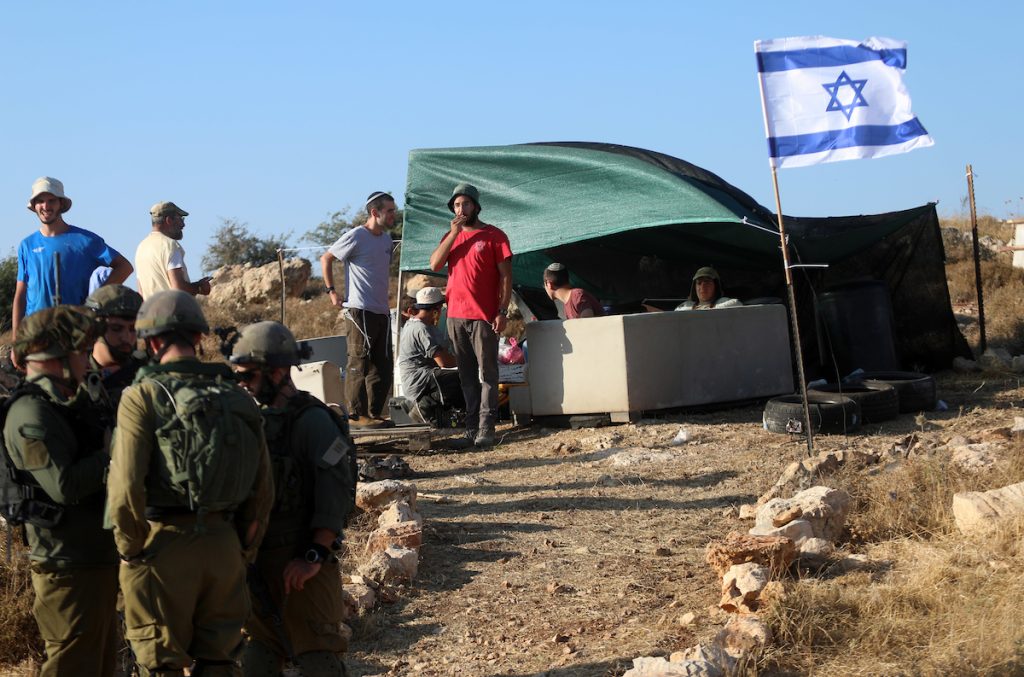
WEST BANK, (Palestine Foundation Information Center), Jewish settlers began building infrastructure on Sunday for a newly established settlement outpost in the al-Qarn area, east of the village of al-Minya, southeast of Bethlehem, while continuing to bulldoze large areas of land in the town of Nahalin, west of the governorate, amid escalating settlement activity aimed at expanding settlements and imposing new realities on the ground.
Ahmed Kawazbeh, head of the al-Minya Village Council, said infrastructure work at the newly established outpost was advancing rapidly, noting that land in the area had been bulldozed in preparation for expanding the outpost and turning it into a permanent settlement.
He added that residents of al-Minya have faced repeated settler attacks, including attacks on homes and vehicles, attempts to seize livestock, and deliberate noise and disturbances during nighttime hours.
Nahalin land bulldozed to expand Beitar Illit
In Nahalin, west of Bethlehem, Jewish settlers continued bulldozing large areas of land on Sunday in the Wadi al-Jamala and Ard al-Kabarat areas, below the fence of the Beitar Illit settlement, to expand the fence at the expense of Palestinian-owned land.
A local source said the bulldozing is targeting privately owned land belonging to residents of Nahalin and is being carried out under the direct supervision of the settlement administration, rather than as an individual initiative by settlers.
The source warned that the continued work threatens to result in the permanent seizure of dozens of dunams and prevent Palestinian landowners from accessing and using their land.
The developments come about a week after settlers established a new settlement outpost in the Jabal Ein al-Faqih area of Nahalin, alongside ongoing measures to demolish Palestinian homes under a previous decision targeting 14 homes and structures across different parts of the town.
The owners had previously pursued legal proceedings concerning the properties, which had been issued stop-work and demolition orders.
Settlement expansion extends beyond outposts to infrastructure
The developments come amid escalating settlement expansion across the occupied West Bank, not only through the establishment of new settlement outposts but also through their gradual transformation into more organized communities by building roads, installing water, electricity and sewage networks, and expanding the jurisdictional boundaries of existing settlements.
The Wall and Settlement Resistance Commission previously revealed that Israeli occupation authorities had approved 18 new or amended settlement jurisdiction areas across the occupied West Bank under orders signed by Israeli military Central Command chief Avi Bluth on August 25, 2026, after they were prepared by the Settlement Administration and the Civil Administration.
The measures include jurisdictional areas for new settlements approved by the Israeli cabinet, as well as areas intended to transform settlement outposts into independent settlements. They also include amendments and expansions to the jurisdictional boundaries of existing settlements and settlement councils.
What does expanding settlement Jurisdiction mean?
According to the commission, a settlement’s jurisdiction defines the geographical area within which a settlement or settlement council exercises its administrative and municipal authority.
Approving a jurisdictional area does not, by itself, confiscate land or immediately authorize construction. However, it provides an administrative and planning basis for future settlement expansion by incorporating land into a settlement’s planning reserves, allowing new master plans and detailed development plans to be prepared.
The measure also facilitates the expansion of road, water, electricity and sewage networks and allows settlement expansion projects to be linked to government budgets, eventually paving the way for tenders and construction.
The developments in al-Minya and Nahalin reflect this process, as the establishment of new settlement outposts coincides with land bulldozing and the expansion of infrastructure and jurisdictional boundaries, threatening further seizure of Palestinian land and changes to the geographic and demographic landscape of rural Bethlehem.