
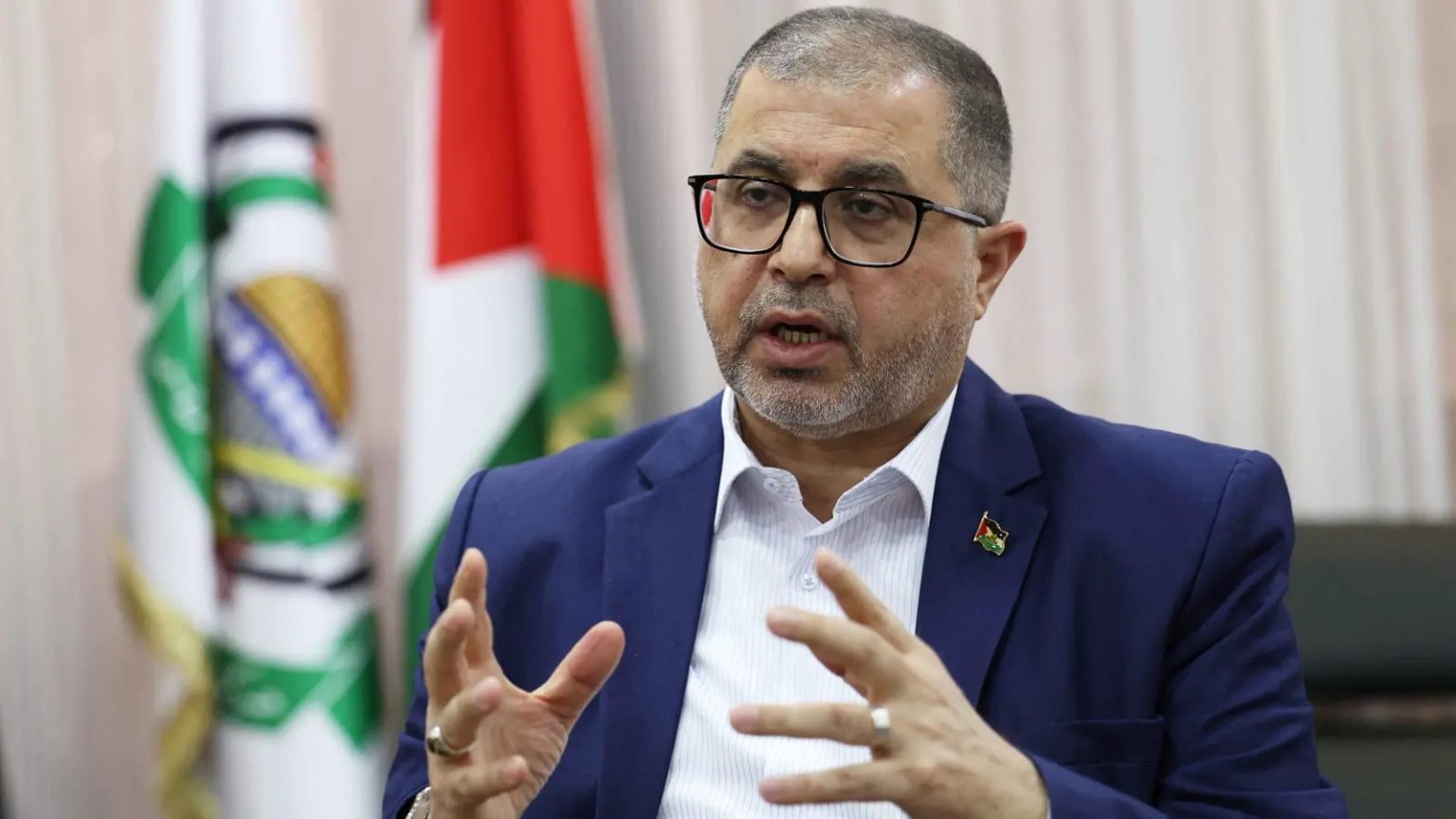
DOHA, (Palestine Foundation Information Center), Bassem Naim, a member of Hamas’s political bureau, revealed new details on Wednesday about the targeting of the Movement’s negotiating delegation in Doha, Qatar, marking the first anniversary of the September 9, 2025 assassination attempt.
Naim said in a press statement that on this day last year, Hamas received a proposal from US President Donald Trump, through Qatari mediators, to negotiate an end to the war. The movement was given 48 hours to respond.
He said the negotiating delegation met with several advisers to discuss the proposal and that the discussions were moving positively toward accepting it, although questions remained, particularly regarding guarantees and mechanisms for implementing an agreement.
Delegation targeted while discussing end to war
Naim said that while Hamas was working with various parties to end the war and reach an agreement, its negotiating delegation was suddenly targeted in Doha.
He accused another side of embracing a “dark and malicious ideology” that “can only live in seas of blood and destruction,” saying that it had sought to sabotage an opportunity to end the war and extinguish a “glimmer of hope” for millions of people.
Naim said the attack took place in the heart of the Qatari capital while the delegation was discussing a proposal aimed at reaching an agreement to end the war, which he said demonstrated Israel’s unwillingness to bring the conflict to an end.
Assassination attempt fails
Naim said Hamas had assessed that Israeli Prime Minister Benjamin Netanyahu viewed the war as a “personal battle for his survival” and could therefore seek to target the Movement’s leadership, particularly its negotiating delegation headed by Khalil al-Hayya.
He said Israel ultimately carried out the strike but “failed miserably,” with all members of the negotiating delegation surviving unharmed.
The attack did, however, kill several administrative staff members and aides, including Naim’s personal aide, Abdullah Abdul Wahid, who he said had accompanied him for more than 15 years.
Naim described the attack as a turning point in the war, affirming that it demonstrated that one side was interested only in “killing, destruction, starvation and displacement” rather than stability or peace, and had no respect for international law and norms.
First anniversary of Doha attack
Wednesday marks the first anniversary of the attempt to assassinate Hamas’s negotiating delegation in Doha. On September 9, 2025, the Israeli military targeted a meeting of the delegation, then headed by senior Hamas official Khalil al-Hayya, as it discussed a US proposal for Gaza ceasefire negotiations.
Hamas announced at the time that Jihad Labad, director of al-Hayya’s office; al-Hayya’s son, Hammam; and aides Abdullah Abdul Wahid, Moamen Hassouna and Ahmed Abdul Malik were killed in the attack.
The Movement also mourned Qatari internal security officer Badr al-Humaidi, who was killed in the strike.
Qatar said Israel had carried out a “cowardly” attack targeting residential buildings housing several members of Hamas’s political bureau in Doha.
From the Doha attack to the Sharm el-Sheikh agreement
Discussing developments following the attack, Naim said the United States, despite its “complicity” in the attack, began searching for a way out of the crisis after the operation failed and triggered international outrage.
He said Hamas responded positively to the plan subsequently proposed by President Trump, which eventually led to an end to the war and the signing of the Sharm el-Sheikh agreement.
Naim said Hamas had adhered to what was agreed in Sharm el-Sheikh and acted, in his words, with national responsibility despite continued Israeli attacks and violations, to protect Palestinians from the Israeli government’s plans.
Naim criticizes ‘Peace Council’
Naim said subsequent developments showed that Israel had not changed its positions or plans and was continuing, albeit with less intensity, a campaign of genocide and displacement.
He also criticized the “Peace Council,” saying it had so far failed to exert sufficient pressure on Netanyahu and his government to implement agreements and had allowed “death, destruction and hunger” to continue.
Naim concluded that this approach had repeatedly failed over decades, saying that its continuation had deepened the cycle of violence and instability, diminished hope and fueled frustration and extremism.